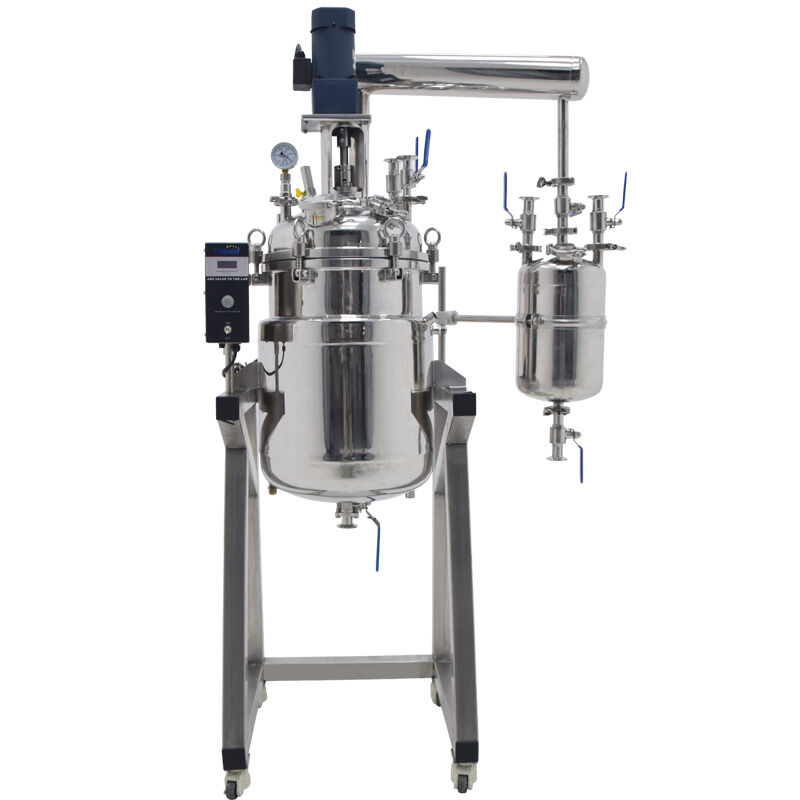
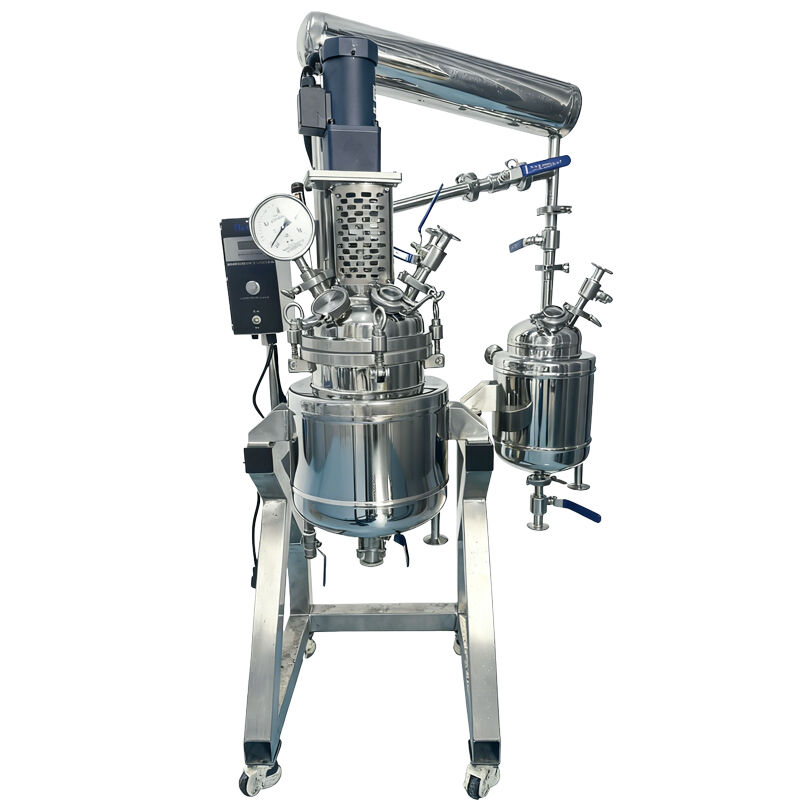
Laboratory Distillation Reactor: Advanced Scientific Equipment for Precise Separation and Purification

Get a Free Quote

Our representative will contact you soon.
Email
Name
Contact Number
Company Name
Message
0/1000

laboratory distillation reactor

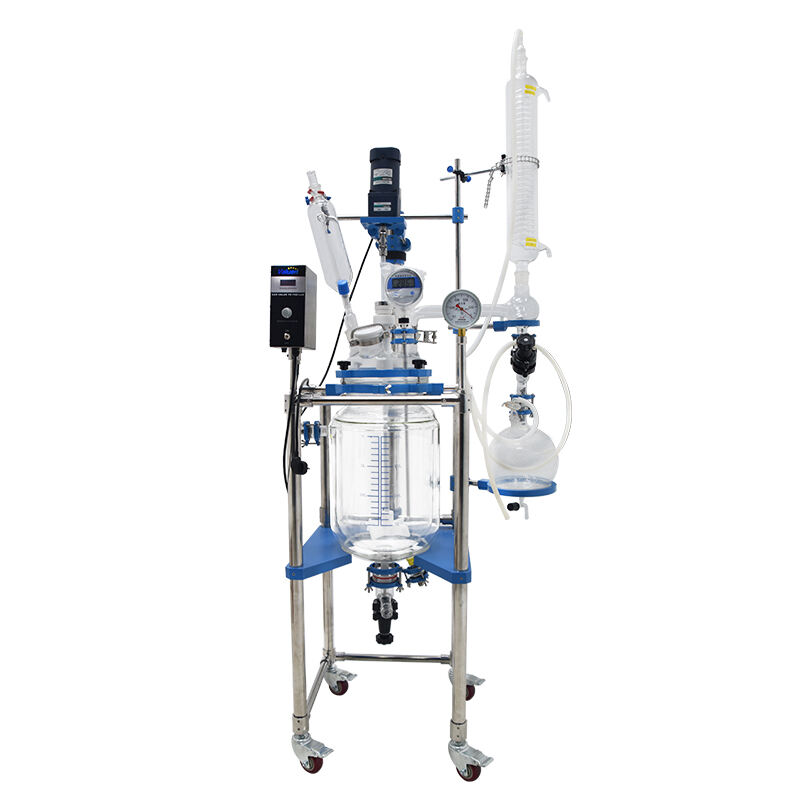
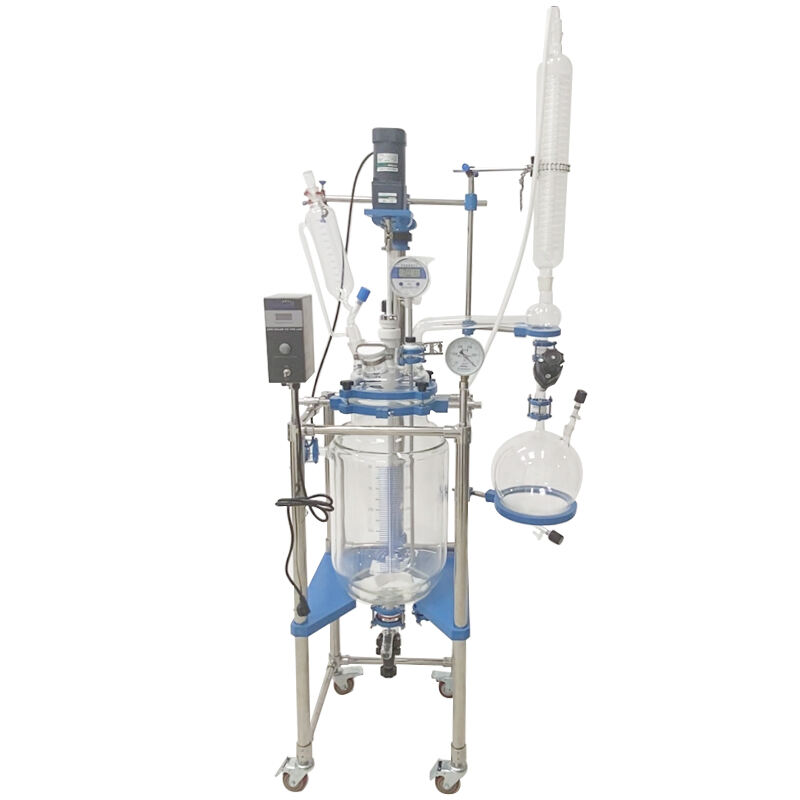
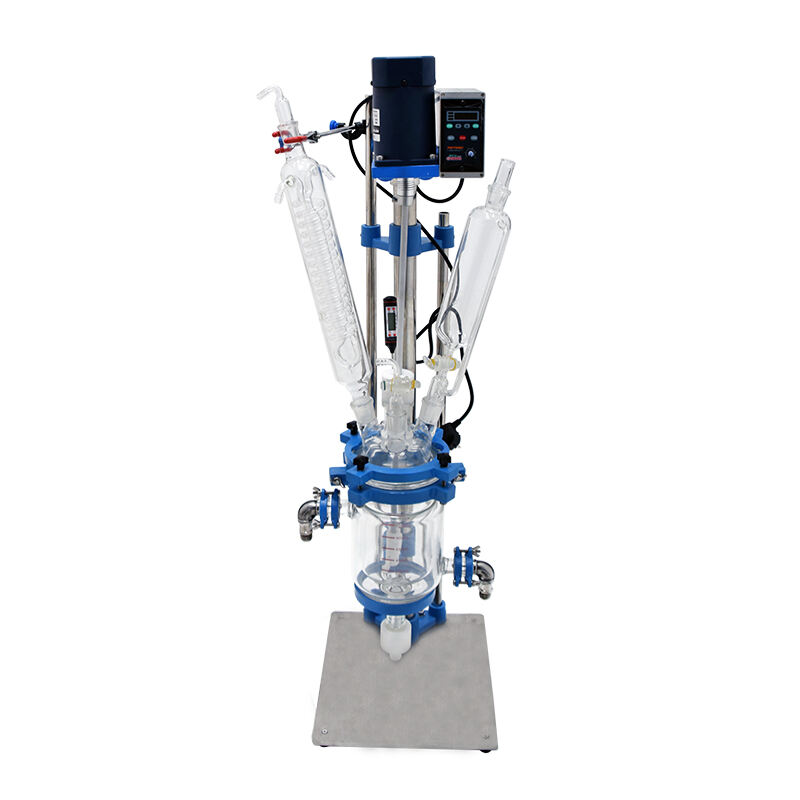
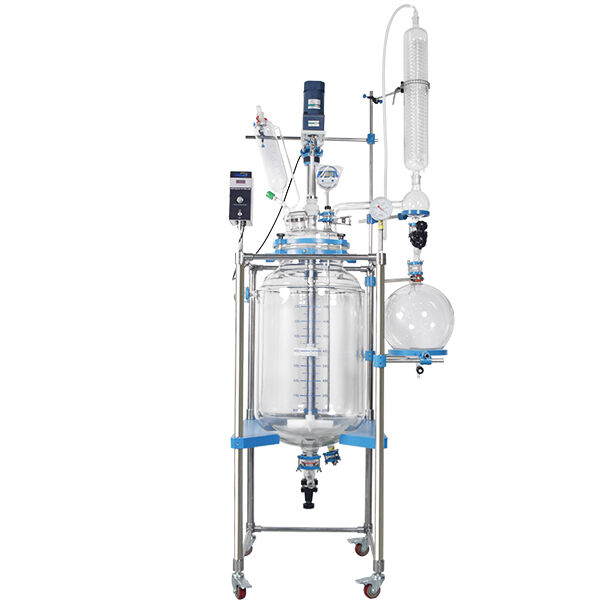
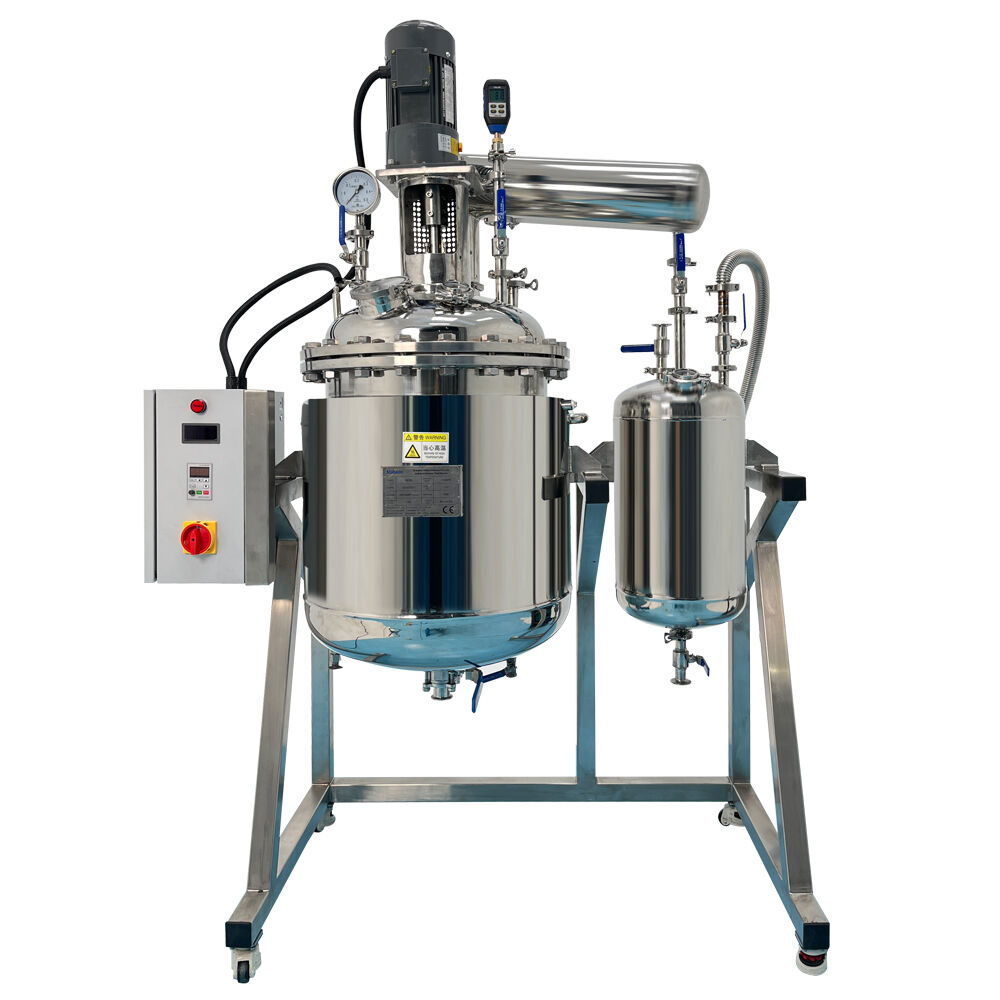
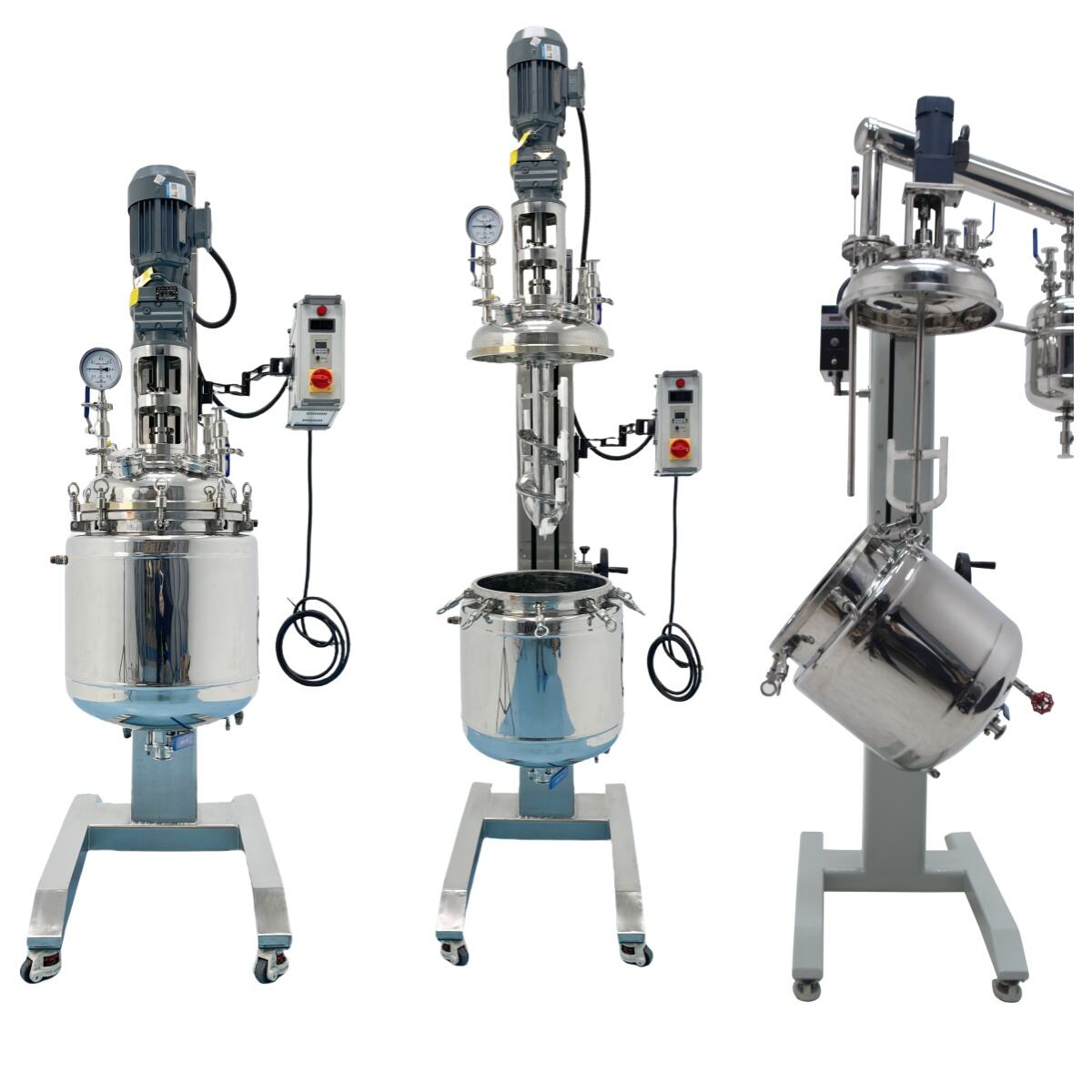
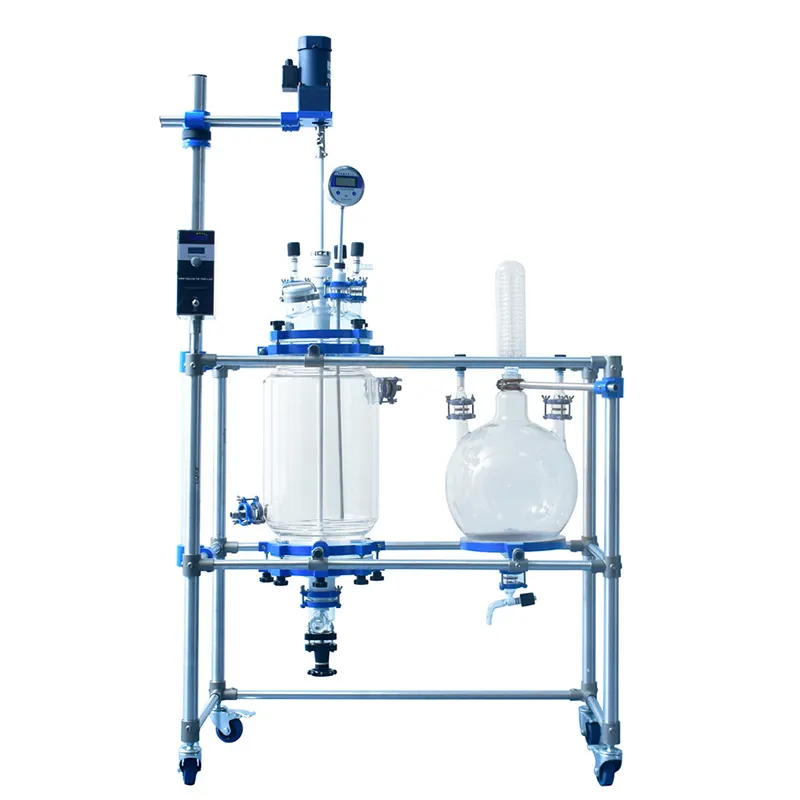
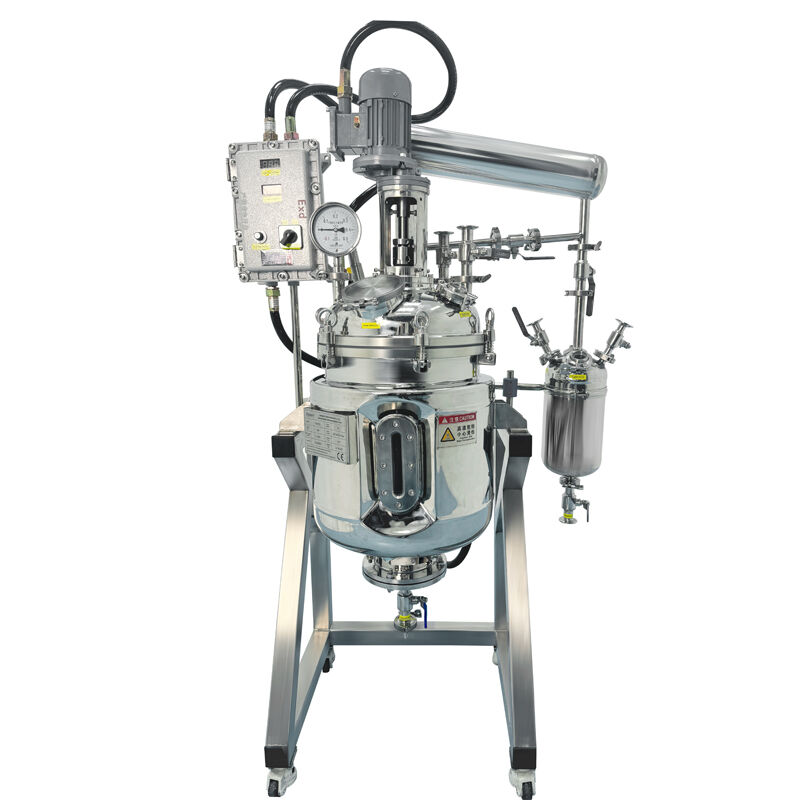
A laboratory distillation reactor represents a sophisticated piece of scientific equipment designed to facilitate precise separation and purification processes in controlled research environments. This advanced apparatus combines the fundamental principles of distillation with reactor technology, enabling researchers to conduct complex chemical reactions while simultaneously achieving separation of components based on their boiling points and volatility characteristics. The laboratory distillation reactor serves as an indispensable tool for chemical synthesis, pharmaceutical research, petrochemical analysis, and academic investigations. Its primary function involves heating liquid mixtures to create vapor phases, which are then condensed and collected as separate fractions with enhanced purity levels. The technological features of this equipment include precise temperature control systems, efficient heating elements, advanced condensation mechanisms, and sophisticated monitoring capabilities that ensure optimal performance throughout experimental procedures. Modern laboratory distillation reactor units incorporate digital interfaces, automated control systems, and safety protocols that protect both operators and samples during operation. The reactor component allows for simultaneous chemical transformations while distillation occurs, making it particularly valuable for multi-step synthetic processes. Applications span across pharmaceutical development, where drug compounds require purification and isolation, environmental testing laboratories analyzing contaminated samples, food and beverage industries ensuring product quality, and research institutions conducting fundamental studies on chemical behavior. The equipment's versatility extends to fractional distillation, steam distillation, vacuum distillation, and molecular distillation techniques, accommodating diverse experimental requirements. Integration with analytical instruments enhances data collection and process optimization, while modular designs permit customization based on specific research needs and laboratory constraints.

New Product Recommendations

The laboratory distillation reactor offers numerous practical benefits that directly impact research efficiency and experimental outcomes for scientists and technicians. Enhanced precision represents a fundamental advantage, as modern units provide temperature control accuracy within narrow tolerances, ensuring reproducible results across multiple experimental runs. This precision eliminates guesswork and reduces experimental variability that often plagues less sophisticated equipment. Time efficiency constitutes another significant benefit, with automated features reducing manual intervention requirements and allowing researchers to focus on analysis rather than equipment operation. The reactor's dual functionality eliminates the need for separate reaction and distillation steps, streamlining workflows and reducing overall processing time by up to 50 percent compared to traditional methods. Cost effectiveness emerges through reduced solvent consumption, lower energy requirements, and minimized waste generation, directly impacting laboratory operating budgets. The equipment's robust construction ensures long-term reliability, reducing maintenance costs and equipment downtime that can disrupt research schedules. Safety improvements are substantial, with built-in protection systems preventing overheating, pressure buildup, and exposure to hazardous vapors, creating safer working environments for laboratory personnel. Versatility allows researchers to adapt the same equipment for various applications, maximizing return on investment and reducing the need for multiple specialized instruments. Sample integrity benefits from gentle heating methods and controlled atmospheric conditions that prevent thermal decomposition of sensitive compounds. The reactor's scalability permits researchers to optimize processes at laboratory scale before transitioning to larger production volumes, reducing development risks and costs. Data integration capabilities enable real-time monitoring and documentation, supporting regulatory compliance requirements and quality assurance protocols. User-friendly interfaces reduce training time for new operators while minimizing operational errors that could compromise experimental results. Environmental benefits include reduced energy consumption through efficient heating systems and decreased waste production through optimized separation processes, supporting sustainability initiatives in modern laboratories.

Practical Tips

What Makes a Stainless Steel Reactor Ideal for Chemical Processing Industries?

10

Nov

What Makes a Stainless Steel Reactor Ideal for Chemical Processing Industries?

Chemical processing industries demand equipment that delivers exceptional performance, durability, and safety standards. Among the various types of reactors available, the stainless steel reactor has emerged as the preferred choice for countless appl...
View More
How to Choose the Right Stainless Steel Reactor for Pharmaceutical Production

12

Nov

How to Choose the Right Stainless Steel Reactor for Pharmaceutical Production

Selecting the appropriate stainless steel reactor for pharmaceutical production is a critical decision that directly impacts product quality, manufacturing efficiency, and regulatory compliance. The pharmaceutical industry demands exceptional standar...
View More
How to Optimize Reactor Performance with Stainless Steel Material Selection and Mixing Design

12

Nov

How to Optimize Reactor Performance with Stainless Steel Material Selection and Mixing Design

Industrial chemical processing demands precise control over reaction conditions, temperature management, and material compatibility. The selection of appropriate reactor systems significantly impacts product quality, operational efficiency, and long-...
View More
How to Select a Crystallization Reactor for Pharmaceutical Crystallization?

24

Dec

How to Select a Crystallization Reactor for Pharmaceutical Crystallization?

Selecting the right crystallization reactor for pharmaceutical manufacturing requires careful consideration of multiple technical and operational factors that directly impact product quality, yield, and process efficiency. The pharmaceutical industry...
View More

Get a Free Quote

Our representative will contact you soon.
Email
Name
Contact Number
Company Name
Message
0/1000

laboratory distillation reactor

Advanced Temperature Control and Automation Systems

Advanced Temperature Control and Automation Systems

The laboratory distillation reactor incorporates state-of-the-art temperature control technology that delivers unprecedented precision and reliability in experimental conditions. This sophisticated system utilizes multiple temperature sensors strategically positioned throughout the reactor vessel and distillation column to provide comprehensive thermal monitoring and control. The advanced microprocessor-based controllers maintain temperature stability within ±0.5°C accuracy, ensuring consistent results across extended operation periods. Automated heating and cooling cycles respond instantaneously to process variations, preventing temperature overshoots that could damage sensitive compounds or compromise separation efficiency. The system's programmable temperature ramps allow researchers to implement complex heating profiles that optimize separation outcomes for specific compound mixtures. Real-time temperature logging and data export capabilities facilitate comprehensive documentation for regulatory compliance and research publication requirements. The intelligent control system recognizes abnormal operating conditions and implements protective measures automatically, including emergency shutdown protocols that protect both equipment and samples. Remote monitoring capabilities through network connectivity enable researchers to oversee experiments from multiple locations, increasing laboratory productivity and experiment throughput. The user-friendly touchscreen interface simplifies operation for researchers with varying technical backgrounds, reducing training requirements and operational errors. Integration with laboratory information management systems streamlines data collection and experimental record-keeping, supporting quality assurance protocols and research traceability. The temperature control system's modular design permits easy maintenance and component replacement without disrupting laboratory operations, ensuring maximum uptime for critical research projects.
Multi-Mode Distillation Capabilities with Enhanced Separation Efficiency

Multi-Mode Distillation Capabilities with Enhanced Separation Efficiency

The laboratory distillation reactor demonstrates exceptional versatility through its ability to perform multiple distillation modes within a single integrated system, maximizing experimental flexibility and research capabilities. Atmospheric distillation mode handles standard separation requirements for most organic compounds, while vacuum distillation capabilities enable purification of heat-sensitive materials at reduced temperatures, preventing thermal decomposition and maintaining product integrity. Steam distillation functionality facilitates extraction of essential oils and volatile compounds from natural materials, supporting pharmaceutical and flavor industry applications. The fractional distillation mode incorporates high-efficiency packing materials that provide numerous theoretical plates, achieving superior separation of compounds with similar boiling points that challenge conventional equipment. Molecular distillation capabilities operate under extreme vacuum conditions, enabling separation of high-molecular-weight compounds that cannot be processed through traditional methods. The reactor's modular column design permits easy switching between distillation modes, accommodating diverse experimental requirements without equipment changes or lengthy reconfiguration procedures. Enhanced separation efficiency results from optimized vapor-liquid contact surfaces that maximize mass transfer rates while minimizing pressure drops across the system. The equipment's ability to handle both batch and continuous processing modes provides researchers with operational flexibility to match experimental scale and throughput requirements. Integrated reflux control systems optimize separation performance by precisely managing vapor return ratios, achieving maximum purity levels while minimizing processing time and energy consumption. The system's compatibility with various column packing materials and configurations enables customization for specific separation challenges, supporting specialized research applications across multiple industries and academic disciplines.
Compact Design with Maximum Safety Features

Compact Design with Maximum Safety Features

The laboratory distillation reactor's innovative compact design maximizes functionality while minimizing laboratory footprint requirements, addressing space constraints common in modern research facilities. This space-efficient configuration integrates all essential components including reactor vessel, heating systems, condensation units, and control interfaces within a cohesive footprint that fits standard laboratory bench configurations. The vertical design philosophy optimizes gravity-assisted flow patterns while reducing floor space requirements by up to 40 percent compared to traditional horizontal configurations. Comprehensive safety systems represent a paramount design priority, incorporating multiple redundant protection mechanisms that ensure operator safety and equipment longevity. Pressure relief valves prevent dangerous overpressure conditions, while temperature safety interlocks automatically shut down heating systems when preset limits are exceeded. The equipment features emergency stop mechanisms accessible from multiple locations, enabling immediate process termination in critical situations. Vapor containment systems with integrated fume extraction connections protect laboratory personnel from exposure to potentially hazardous chemicals and volatile compounds. The robust construction utilizes corrosion-resistant materials including borosilicate glass and stainless steel components that withstand aggressive chemical environments while maintaining structural integrity. Electrical safety features include ground fault protection, surge suppression, and isolation transformers that prevent electrical hazards in wet laboratory environments. The system's modular architecture facilitates easy maintenance access while maintaining safety barriers during operation, reducing service time and associated downtime costs. Comprehensive safety documentation includes detailed operating procedures, hazard assessments, and emergency response protocols that support laboratory safety compliance requirements. The equipment's certification to international safety standards provides confidence for institutional procurement decisions while supporting laboratory accreditation processes. Integrated safety training materials and operational guides reduce learning curves for new operators while promoting safe operating practices throughout the research team.

Get a Free Quote

Our representative will contact you soon.
Email
Name
Contact Number
Company Name
Message
0/1000