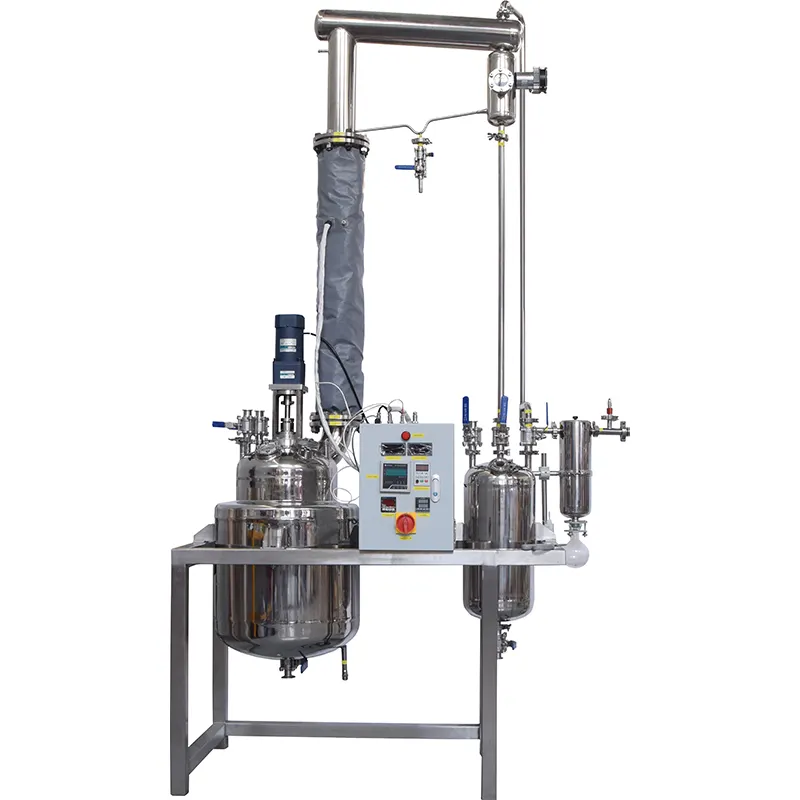
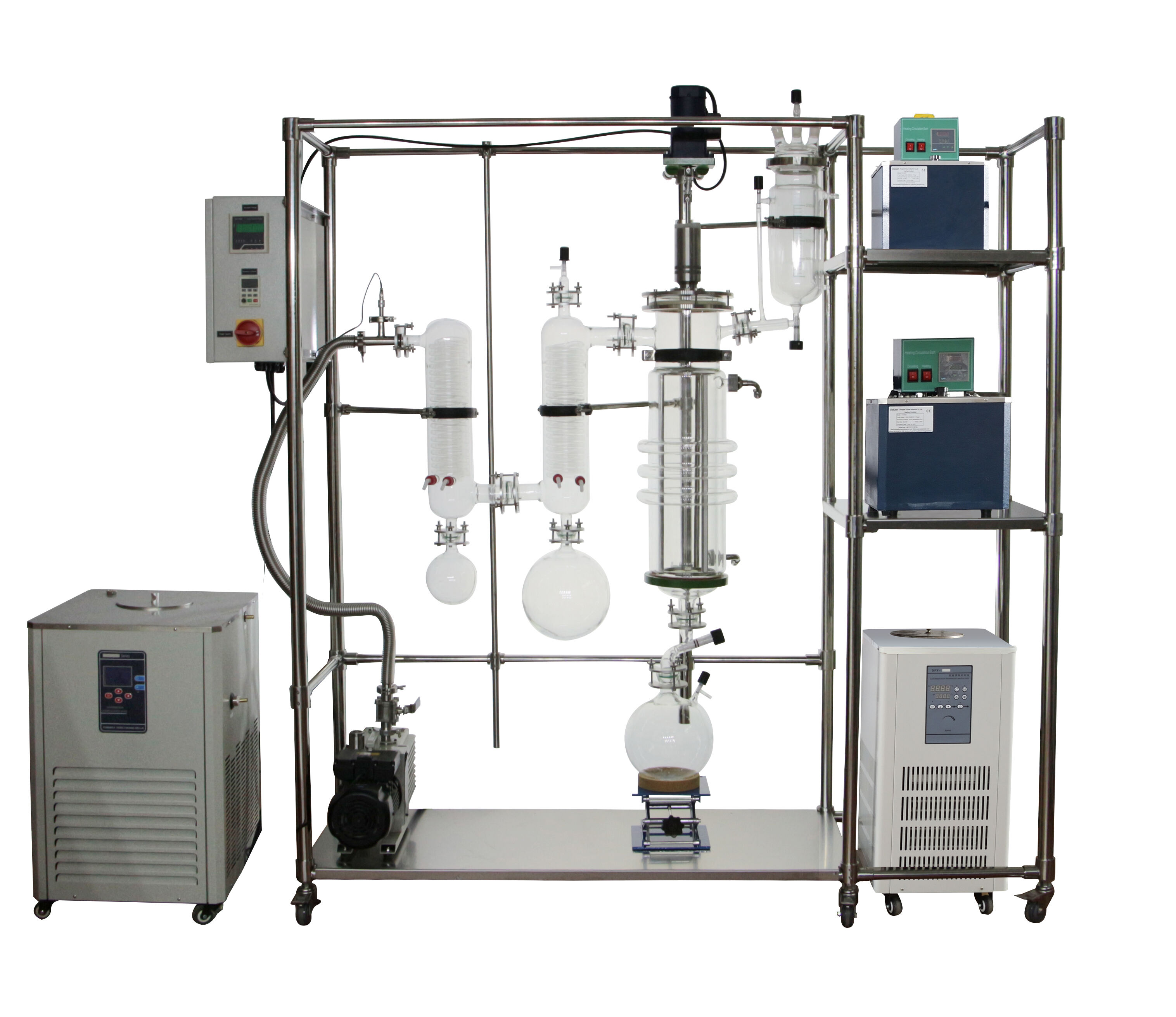
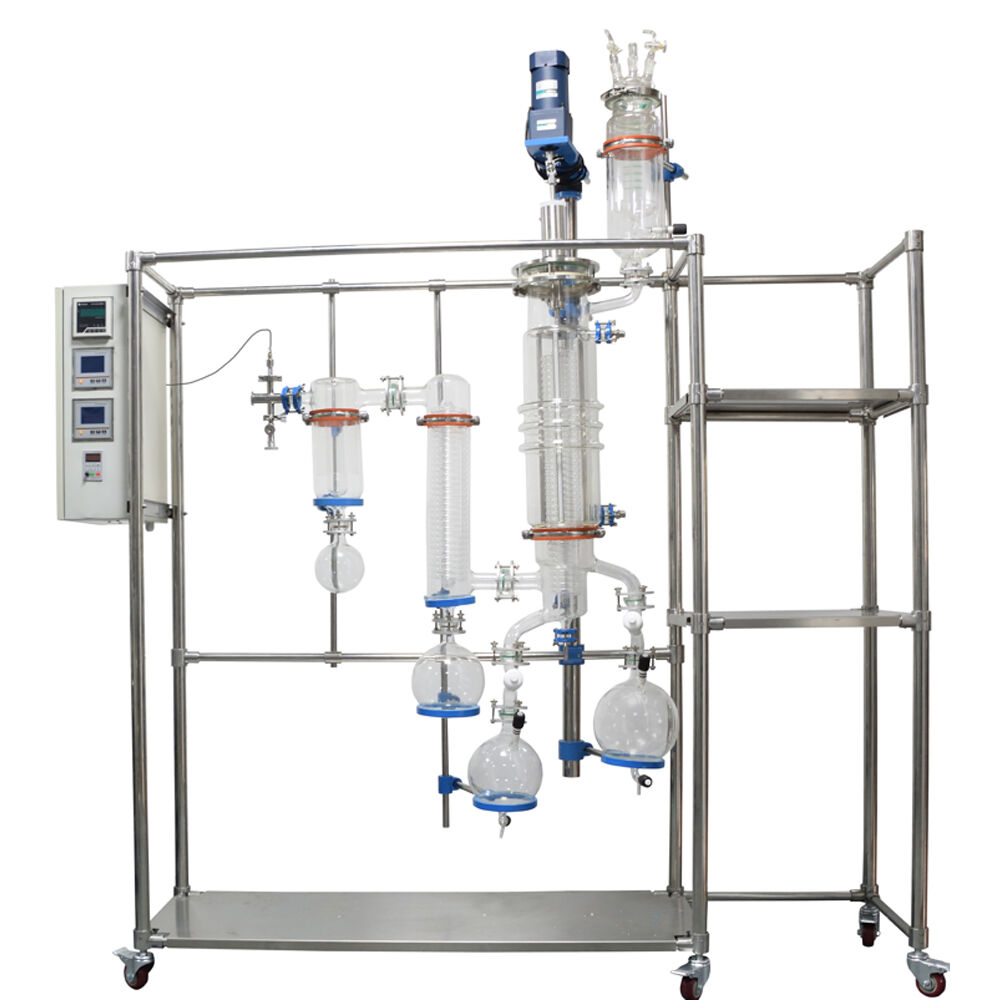
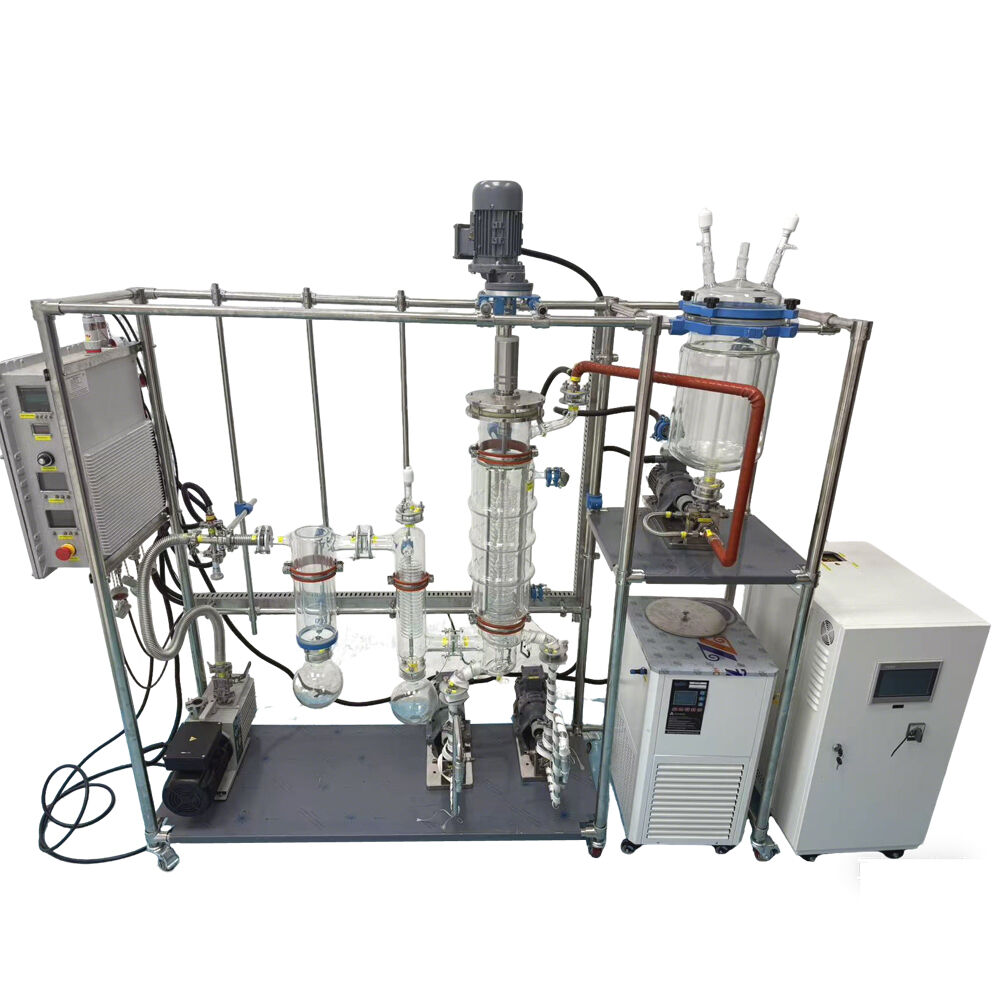
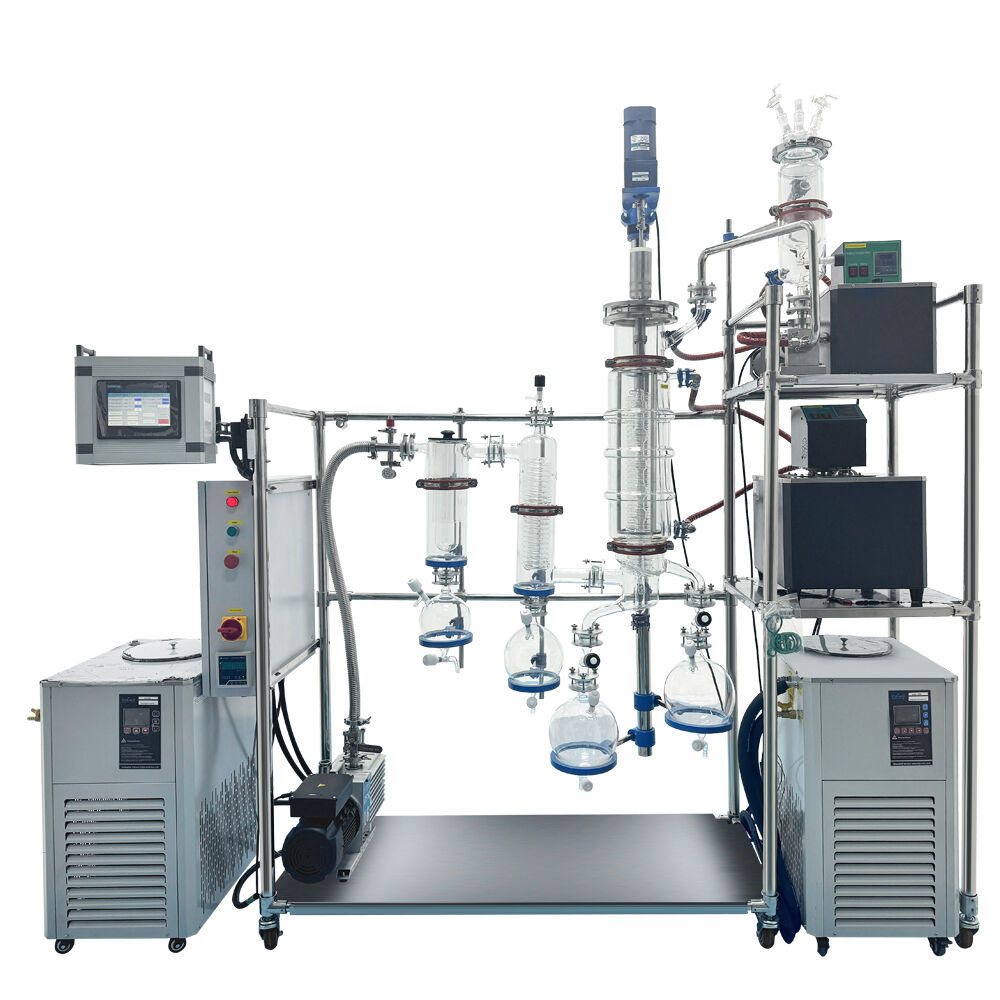
laboratory molecular distillation
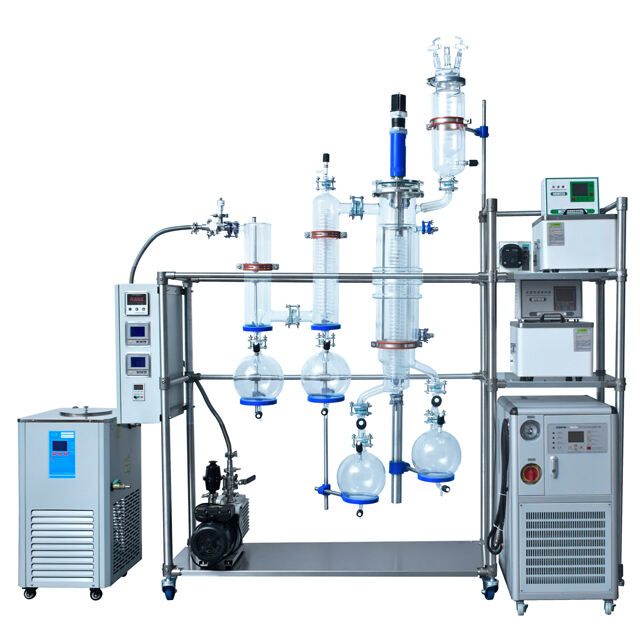
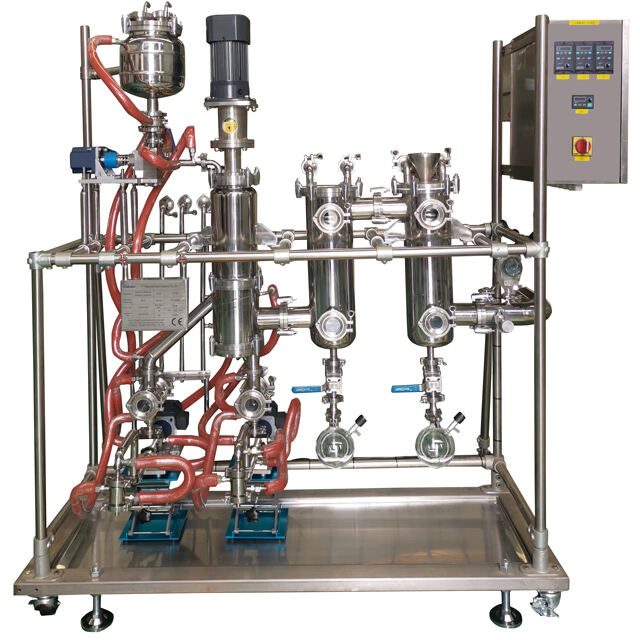
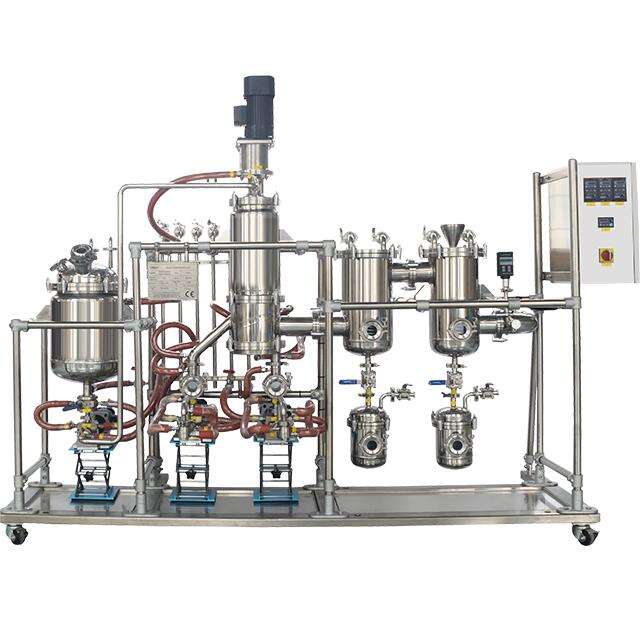
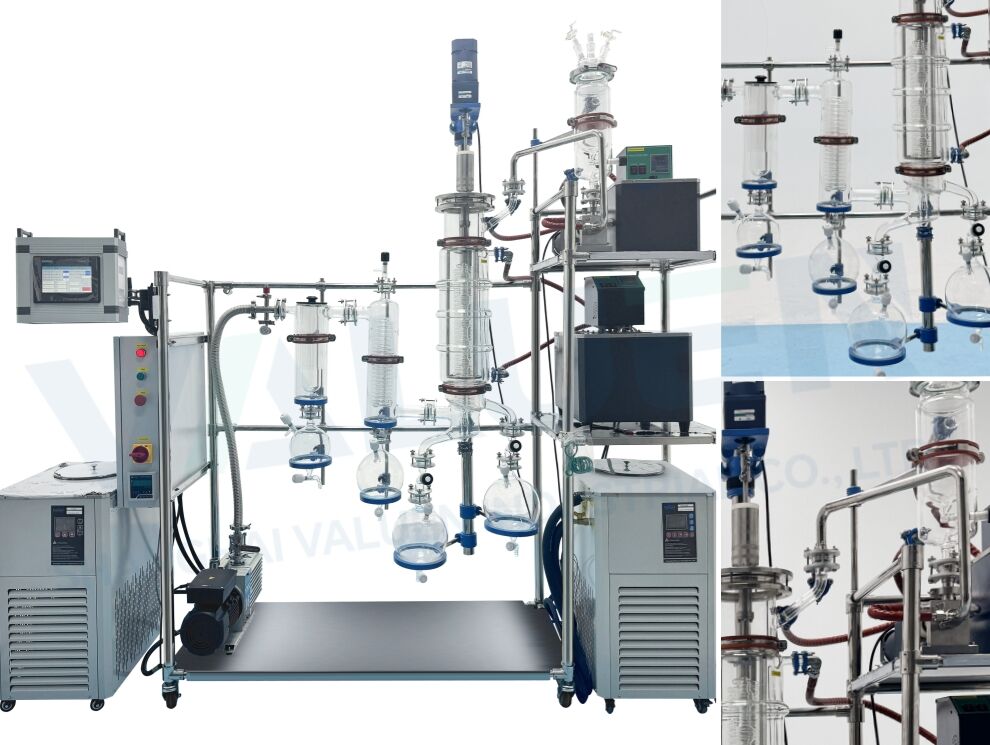
Laboratory molecular distillation represents a cutting-edge separation technique that operates under extremely high vacuum conditions to achieve precise purification of heat-sensitive materials. This sophisticated process utilizes the principle of molecular mean free path, enabling molecules to travel directly from the evaporating surface to the condensing surface without intermolecular collisions. The laboratory molecular distillation system functions by creating a vacuum environment where the pressure is significantly lower than atmospheric conditions, typically ranging from 0.001 to 0.1 Pa. Under these conditions, the mean free path of molecules becomes comparable to the distance between the evaporator and condenser surfaces, allowing for efficient molecular-level separation. The main functions of laboratory molecular distillation encompass the purification of pharmaceuticals, essential oils, vitamins, natural extracts, and various organic compounds that require gentle processing conditions. This technology excels in separating components with minimal thermal stress, making it ideal for preserving the integrity of thermally labile substances. Key technological features include precise temperature control systems, advanced vacuum pumps, efficient condensation mechanisms, and automated process monitoring. The evaporator surface is typically heated to optimal temperatures while maintaining the vacuum environment, ensuring that volatile components vaporize without thermal degradation. Applications span across pharmaceutical research, food processing, cosmetic ingredient preparation, and chemical synthesis. Research laboratories utilize this equipment for developing new formulations, purifying active pharmaceutical ingredients, and extracting valuable compounds from natural sources. The technology particularly benefits industries requiring high-purity materials with minimal chemical alteration during processing.
 EN
EN