 EN

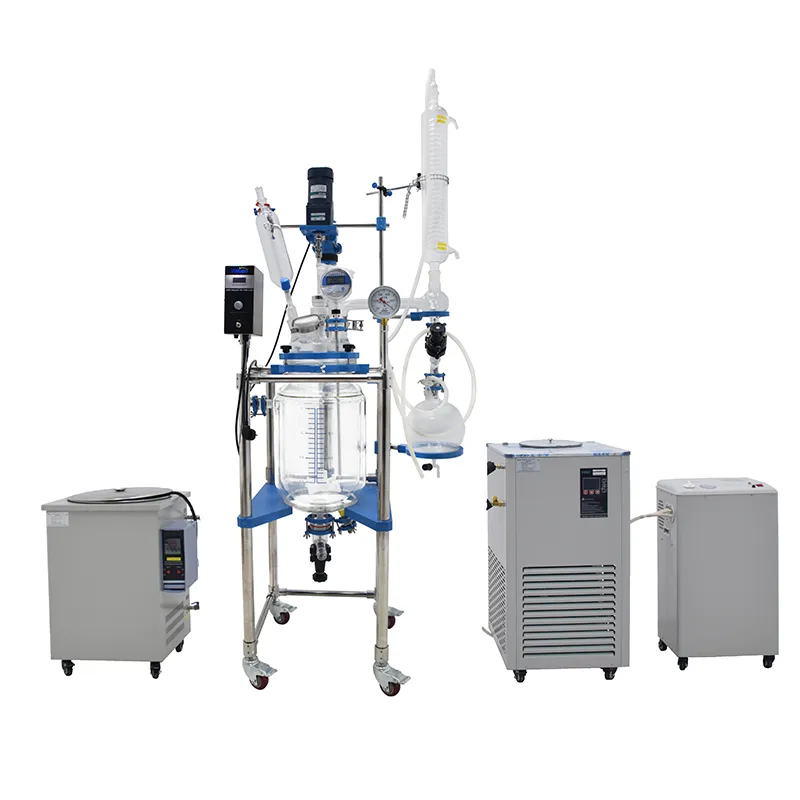
Fine chemical production demands precision, control, and scalability from concept to commercial viability. A pilot scale reactor bridges the critical gap between laboratory research and full-scale manufacturing by providing a controlled environment where chemical processes can be tested, optimized, and validated at intermediate volumes. This transition phase is essential for manufacturers seeking to reduce risk, accelerate time-to-market, and ensure product quality before investing in expensive production infrastructure.
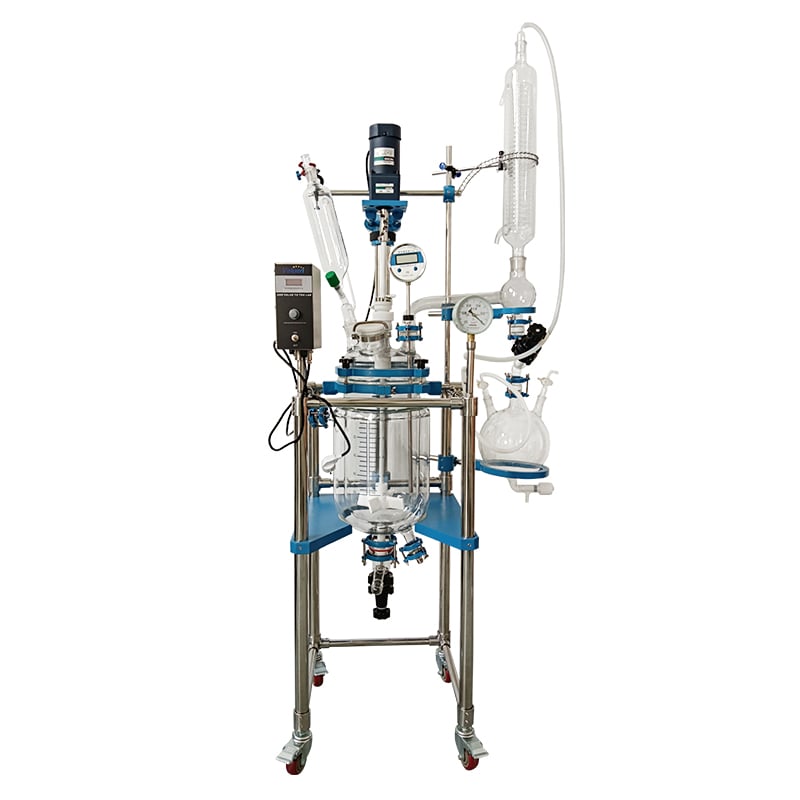
The right pilot scale reactor solution enables fine chemical manufacturers to validate reaction kinetics, optimize process parameters, and identify potential scaling challenges before committing to larger investments. Whether developing specialty pharmaceuticals, agrochemicals, or advanced intermediates, a pilot scale reactor serves as the foundation for reliable, repeatable, and cost-effective production workflows.
Understanding Pilot Scale Reactor Technology and Its Role
Why Pilot Scale Reactors Matter in Fine Chemical Development
Fine chemical production operates in a distinctly different environment from commodity chemicals. Batch sizes are smaller, reaction specifications are tighter, and product value is significantly higher. A pilot scale reactor addresses these needs by offering a flexible testing platform that maintains the control and precision necessary for fine chemical synthesis while operating at volumes large enough to generate meaningful data about process behavior and scalability.
The transition from bench-scale to commercial production introduces variables that cannot be predicted from small laboratory reactions alone. Heat transfer dynamics, mixing efficiency, residence time distribution, and side reaction formation all change at larger volumes. A pilot scale reactor allows chemists and engineers to characterize these phenomena in a realistic but still manageable environment, reducing the technical and financial risk of scale-up.
Key Performance Parameters of an Effective Pilot Scale Reactor
An effective pilot scale reactor for fine chemical production must deliver precise temperature control, efficient mixing, adequate surface area for heat transfer, and reliable pressure management. Temperature uniformity is critical because even small variations can drive unintended side reactions or reduce product purity. Mixing performance directly influences reaction yield and selectivity, particularly for fast reactions or those requiring careful dosing profiles.
Jacketed heating and cooling systems are standard in pilot scale reactor designs because they provide the thermal stability fine chemical reactions demand. Monitoring and control systems integrated into a pilot scale reactor enable operators to record detailed data on reaction progress, allowing process engineers to identify optimal conditions that will be reproduced at scale. The ability to conduct repetitive trials under controlled conditions is what makes a pilot scale reactor such a valuable investment.
Process Development Workflow and Optimization
Reaction Characterization Using Pilot Scale Reactor Equipment
The first priority in using a pilot scale reactor is characterizing the chemical reaction itself under realistic process conditions. Unlike laboratory glassware, a pilot scale reactor can accommodate meaningful batch sizes and longer residence times, revealing how reactions behave when conducted continuously or in semi-batch modes. This characterization phase documents conversion rates, side product formation, reaction rate dependencies, and heat generation profiles.
Scaling from a pilot scale reactor to production equipment is more reliable when developers have comprehensive kinetic and thermal data. Temperature profiles, dosing sequences, and mixing speeds validated on a pilot scale reactor can be translated to larger equipment with much higher confidence. This data-driven approach reduces the likelihood of surprises during commercial production and helps operators maintain consistent product quality.
Parameter Optimization and Risk Reduction
A pilot scale reactor enables systematic optimization of critical process variables including temperature, pressure, residence time, and reagent ratios. By conducting replicate experiments and methodically varying one parameter at a time, engineers can map out the operating window where reactions deliver desired conversion and selectivity. This optimization phase, conducted safely at pilot scale, eliminates guesswork and creates a robust process specification.
Risk reduction is a major benefit of investing in pilot scale reactor testing. Issues such as runaway reactions, byproduct formation, scaling-up instabilities, or unexpected fouling can be identified and addressed before committing to production-scale equipment. The cost of fixing a problem in a pilot scale reactor is dramatically lower than discovering the same issue during the first production batch, when losses are measured in hundreds of thousands of dollars.
Practical Implementation and Long-Term Value
Selecting the Right Pilot Scale Reactor for Your Process
Choosing a pilot scale reactor requires careful consideration of your specific chemistry, batch size targets, and production timeline. Glass construction offers superior visibility and chemical compatibility for most fine chemical reactions, though certain aggressive solvents or high-temperature applications may require alternative materials. Vessel capacity should be selected to represent realistic process scaling while remaining economical to operate—typically 5 to 50 liter working volumes for fine chemical work.
Agitation design, heating and cooling capacity, and control system sophistication all influence which pilot scale reactor best suits your application. Overhead stirring is common for laboratory and pilot scale reactor work because it simplifies media addition, sampling, and cleanout. Jacketed cooling is essential for exothermic reactions common in fine chemistry. An appropriately configured pilot scale reactor becomes a reliable workhorse that will be used repeatedly throughout product development and early commercial production.
Long-Term Benefits and Continuous Improvement
A pilot scale reactor investment pays dividends beyond the initial development phase. Once a process is developed using pilot scale reactor equipment, that same reactor can support process troubleshooting, batch consistency verification, and improvement campaigns throughout the product lifecycle. Changes to raw materials, supply chain disruptions, or regulatory requirements often require process re-validation—work that is efficiently handled using an existing pilot scale reactor.
Fine chemical manufacturers gain competitive advantage by maintaining the ability to adapt and improve their processes. A pilot scale reactor enables rapid response to market opportunities and customer specifications by providing a flexible testing platform. Rather than implementing changes directly at production scale with high risk and cost, a pilot scale reactor allows engineers to validate modifications safely and efficiently, maintaining product quality while reducing waste and environmental impact.
FAQ
What is the typical capacity range for a pilot scale reactor used in fine chemical production?
Pilot scale reactors for fine chemical production typically operate in the 5 to 50 liter working volume range, depending on the specific application and process requirements. This size allows meaningful process data collection while remaining economical to operate and manageable in terms of material consumption. Smaller volumes may not adequately represent scaling phenomena, while much larger pilot scale reactor systems can become unnecessarily expensive for development work.
How does a pilot scale reactor improve process safety during development?
A pilot scale reactor allows chemists and engineers to explore reaction conditions, identify potential hazards, and develop safe operating procedures before conducting reactions at production scale. Testing runaway scenarios, thermal stability limits, and decomposition pathways on a pilot scale reactor provides critical safety data. This risk characterization prevents dangerous incidents at larger scales where losses and consequences are far more severe.
Can a pilot scale reactor be used for both research and early production runs?
Yes, a well-designed pilot scale reactor serves dual purposes in fine chemical manufacturing. During development, it functions as a research tool for process optimization and characterization. Once the process is validated, the same pilot scale reactor equipment can produce small batches for initial customers, process validation, regulatory submissions, and ongoing quality assurance. This dual-use approach maximizes the value and utilization of the equipment investment.