 EN
EN

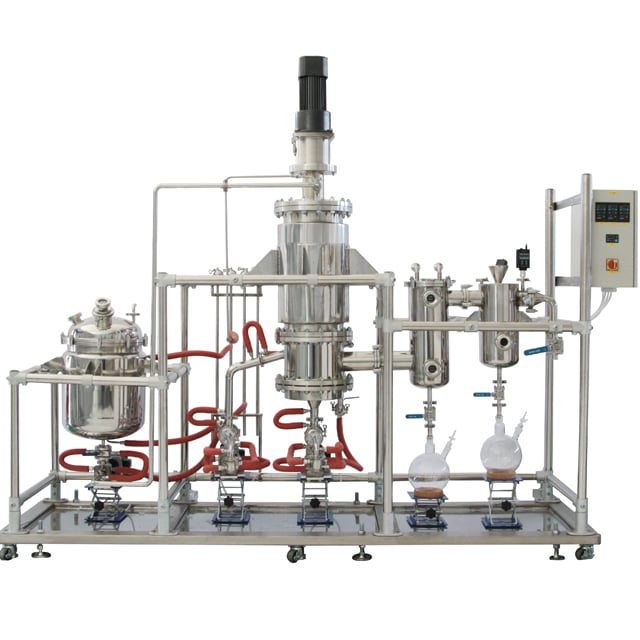
Selecting the right Wiped Film Evaporator is a critical engineering decision that directly impacts your separation process efficiency, product quality, and operational costs. Engineers working in chemical processing, pharmaceutical manufacturing, food production, and petrochemical refining regularly face this choice, yet the technical landscape remains complex. A stainless steel Wiped Film Evaporator offers superior corrosion resistance, extended service life, and compatibility with demanding applications, but selecting the optimal unit requires careful evaluation of multiple interdependent factors.
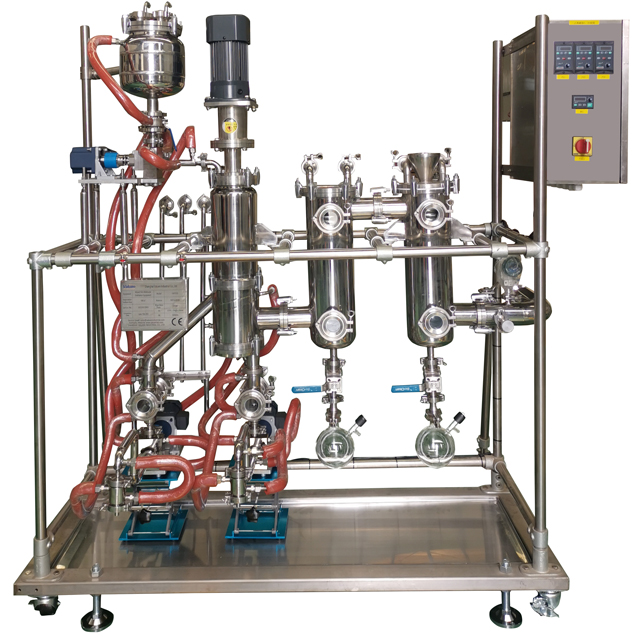
The decision to invest in a stainless steel Wiped Film Evaporator extends beyond initial equipment cost. Your choice affects thermal efficiency, maintenance schedules, product yield, regulatory compliance, and long-term capital expenditure. Engineers must evaluate how a Wiped Film Evaporator performs under specific operating conditions, including temperature ranges, pressure differentials, feed composition, and desired separation outcomes. This guide walks through the essential technical and operational considerations that should inform your stainless steel Wiped Film Evaporator selection process.
Thermal Design and Heat Transfer Capacity
Understanding Heat Transfer Requirements
A Wiped Film Evaporator relies on precise heat transfer management to separate volatile components from non-volatile residues. Engineers must first determine the thermal load required for your specific feed stream. A stainless steel Wiped Film Evaporator typically uses heated jacket walls or internal heat exchangers to supply thermal energy efficiently. The choice of heating medium—steam, thermal oil, or electric resistance—affects both the Wiped Film Evaporator performance envelope and your utility costs. Calculate the latent heat required for complete vaporization of your target component, then assess whether a standard Wiped Film Evaporator configuration can deliver sufficient thermal power without creating hot spots or degrading heat-sensitive materials.
Film Formation and Residency Time
The core advantage of a Wiped Film Evaporator lies in its ability to create thin, uniformly distributed liquid films on heated internal surfaces. The rotating wipers inside the Wiped Film Evaporator continuously sweep the evaporating surface, promoting even heat distribution and preventing product buildup. When evaluating a stainless steel Wiped Film Evaporator, examine the wiper design, rotational speed range, and contact pattern. Short residency time—typically seconds rather than minutes—minimizes thermal degradation of heat-sensitive molecules, a critical factor in pharmaceutical and fine chemical processing. Verify that your Wiped Film Evaporator model supports the residence time window your process chemistry demands.
Material Selection and Compatibility
Stainless Steel Grades and Corrosion Resistance
Stainless steel serves as the primary wetted material in a modern Wiped Film Evaporator, but not all grades offer equal protection. Engineers must select the appropriate stainless steel specification based on feed composition and operating pH. A Wiped Film Evaporator commonly uses 304L or 316L stainless steel; 316L provides superior chloride resistance and suits aggressive or marine-influenced environments. Inspect the Wiped Film Evaporator's internal surfaces for welded joints, as welds can create localized corrosion risk if improperly passivated. Confirm that the vendor performed electropolishing or other passivation on your stainless steel Wiped Film Evaporator to remove iron contamination and oxides that accelerate corrosion initiation.
Seal and Gasket Durability
A Wiped Film Evaporator's reliability depends equally on its mechanical seals and elastomer gaskets. These components contact both the product and the heating medium, exposing them to chemical and thermal stress. When specifying a stainless steel Wiped Film Evaporator, confirm that seals are compatible with your feed stream and heating fluid. Viton gaskets work well for most organic solvents, but specialty materials like Kalrez may be necessary for aggressive chemicals. A Wiped Film Evaporator with dual mechanical seals and backup barrier fluid provides superior protection against leakage and environmental contamination, justifying the added cost in regulated manufacturing environments.
Operational Flexibility and Scalability
Pressure and Temperature Operating Windows
A stainless steel Wiped Film Evaporator must handle the full range of pressures and temperatures your process encounters. Engineers should verify the maximum operating pressure rating—typically 0.5 to 3 bar absolute for standard units—and ensure this aligns with your vacuum or near-atmospheric requirements. A Wiped Film Evaporator designed for molecular distillation may operate under deep vacuum, requiring robust construction and specialized control systems. Temperature flexibility is equally important; a stainless steel Wiped Film Evaporator heating jacket should support both high-temperature runs (above 200°C for heavy oils) and low-temperature operations (below 50°C for thermolabile biologics). Request performance data showing how heat transfer coefficient, evaporation rate, and product quality change across your intended operating envelope.
Throughput and Feed Flexibility
The physical dimensions and internals of a stainless steel Wiped Film Evaporator determine maximum throughput. Evaporator capacity depends on film thickness, wiper speed, evaporating surface area, and feed properties. A small-diameter Wiped Film Evaporator may handle 5 to 50 liters per hour, while larger models exceed 200 liters per hour. Engineers choosing a Wiped Film Evaporator must balance current production needs against future growth and product diversification. A Wiped Film Evaporator with adjustable wiper speed and variable heat input provides flexibility to adapt to different feed viscosities and separation targets without equipment replacement. Consider whether the vendor offers modular or stackable designs that allow capacity expansion without complete system redesign.
Regulatory Compliance and Process Validation
FDA, cGMP, and Industry Standards
Pharmaceutical and food processing engineers must ensure that a stainless steel Wiped Film Evaporator meets applicable regulatory requirements. In the United States, a Wiped Film Evaporator for pharmaceutical use must comply with FDA guidelines on equipment materials, sanitation, and product traceability. A Wiped Film Evaporator should have been manufactured under quality systems conforming to ISO 9001 standards, with documentation including material certifications and dimensional compliance reports. Confirm that the Wiped Film Evaporator design supports cleaning-in-place (CIP) and steam-in-place (SIP) protocols, essential for minimizing cross-contamination between batches. Request validation support from the vendor, including installation qualification (IQ), operational qualification (OQ), and performance qualification (PQ) protocols tailored to your Wiped Film Evaporator model.
Cleaning, Maintenance, and Spare Parts Availability
Long-term success with a stainless steel Wiped Film Evaporator depends on reliable maintenance access and spare parts supply. Engineers should evaluate how easily a Wiped Film Evaporator can be disassembled for cleaning between runs—critical in pharmaceutical and food manufacturing where cross-contamination poses regulatory risk. Ask whether the Wiped Film Evaporator rotor, seals, and wiper blades are stocked regionally or require international ordering. Establish a preventive maintenance schedule with the vendor, including wiper replacement intervals, seal inspection protocols, and thermal efficiency testing benchmarks. A reputable Wiped Film Evaporator supplier provides comprehensive documentation, training, and remote troubleshooting support to minimize unplanned downtime.
FAQ
What Makes a Stainless Steel Wiped Film Evaporator Superior to Falling Film Designs?
A Wiped Film Evaporator actively renews the liquid film through rotating wipers, achieving uniform heat transfer and minimal product contact time compared to falling film designs, which rely on gravity alone. This active film management in a stainless steel Wiped Film Evaporator delivers better control over residence time, reducing thermal decomposition for heat-sensitive materials. Falling film systems work well for stable, low-viscosity feeds, but a Wiped Film Evaporator excels when feed viscosity is high or when thermal degradation risk is substantial.
How Does Operating Pressure Affect Wiped Film Evaporator Performance?
Operating pressure directly influences the boiling point of your feed, allowing a stainless steel Wiped Film Evaporator to achieve separation at lower temperatures under vacuum. A Wiped Film Evaporator operating at 0.1 bar absolute may reduce boiling point by 30–50°C compared to atmospheric operation, protecting heat-sensitive compounds. However, lower pressure increases the cost of vacuum equipment and may reduce heat transfer coefficient, so a Wiped Film Evaporator design must balance temperature benefits against equipment complexity and energy consumption.
What Annual Operating Costs Should Engineers Budget for a Stainless Steel Wiped Film Evaporator?
Annual costs for a stainless steel Wiped Film Evaporator include utilities (heating medium and vacuum pump power), seal and gasket replacement (typically every 1–2 years), wiper blade replacement, and routine maintenance labor. A mid-sized Wiped Film Evaporator operating 2000 hours annually may consume 15–25 tons of steam or equivalent thermal input, translating to 5,000–10,000 USD in energy cost depending on utility rates. Budget an additional 2,000–5,000 USD annually for preventive maintenance and spare parts inventory to keep your Wiped Film Evaporator operating reliably.