 EN
EN

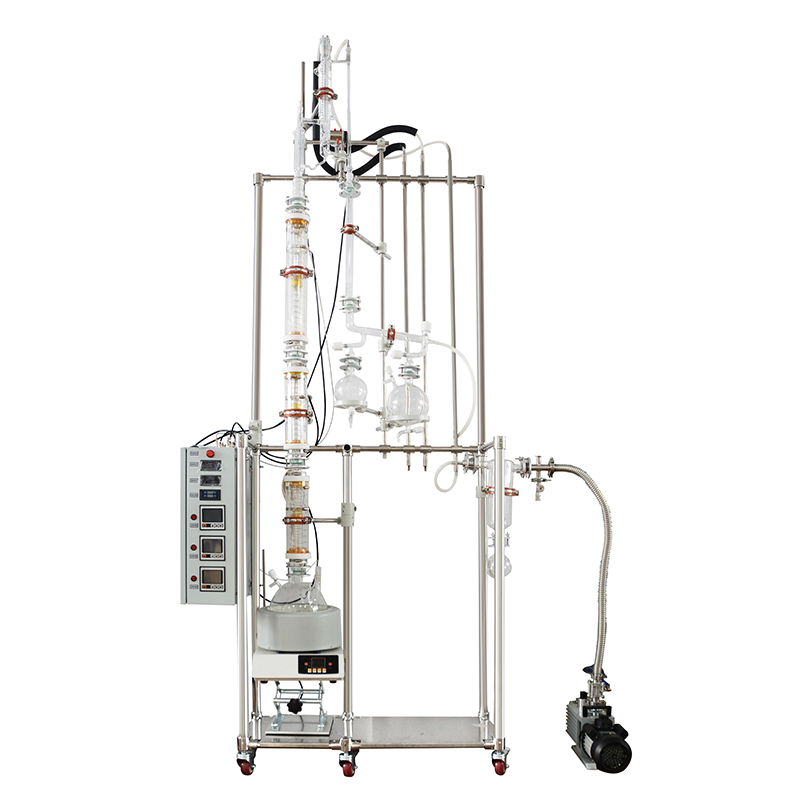
In chemical processing, pharmaceutical production, and industrial refining, Fractional Distillation stands as one of the most precise and reliable separation techniques available. Whether you are separating complex solvent mixtures or refining essential oils, the quality of your output is never determined by equipment alone. The operating conditions under which fractional distillation is carried out play an equally decisive role in achieving clean, efficient, and repeatable separation results.
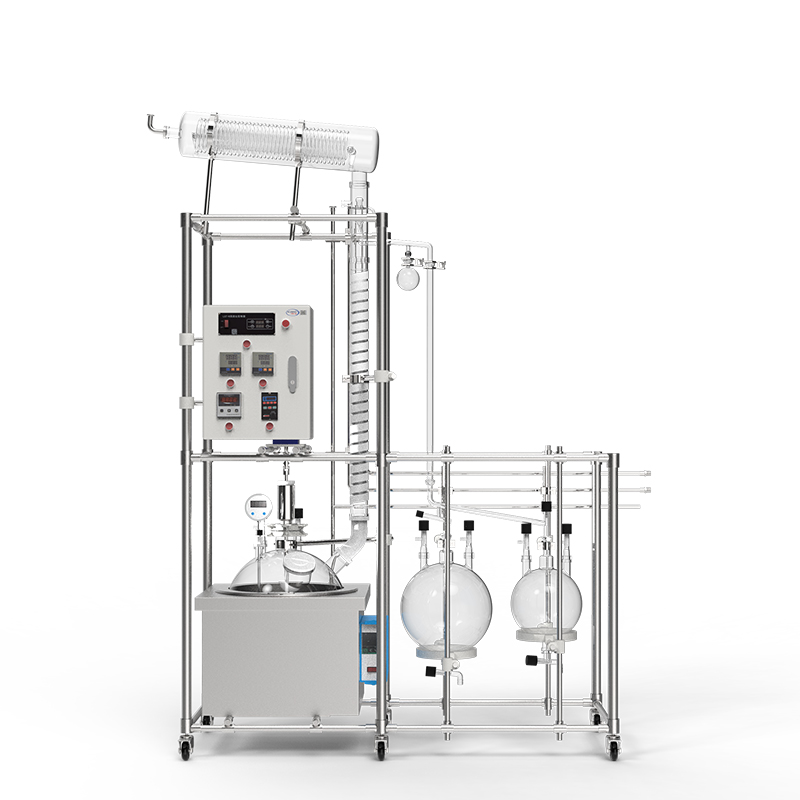
Understanding which operating conditions influence fractional distillation performance allows engineers, lab technicians, and process designers to make informed adjustments that improve separation efficiency, reduce energy consumption, and protect product integrity. This article examines the key environmental, mechanical, and process-level conditions that directly shape how well fractional distillation performs across different applications and scales.
Temperature Control and Its Role in Separation Efficiency
Feed Temperature and Its Effect on Column Stability
One of the most fundamental operating conditions in fractional distillation is the temperature at which the feed mixture enters the column. Feed temperature affects the thermal balance within the column and determines how vapor and liquid phases distribute across the theoretical plates. A feed that enters too cold forces more vapor to condense in the lower column sections, reducing throughput and increasing the energy load on the reboiler.
Conversely, a feed that enters too hot introduces excess vapor into the column, which can overwhelm the rectifying section and compromise the purity of the overhead product. Matching the feed temperature to the column's operating thermal profile — typically achieved through feed preheating or a feed stage calculation — is a critical step in optimizing fractional distillation performance.
Process designers typically use a feed condition parameter, commonly called the 'q value,' to quantify how much the feed affects internal vapor and liquid flow rates. Controlling feed temperature with precision directly supports a stable q value, which in turn sustains the separation efficiency of the entire fractional distillation system.
Reboiler and Condenser Temperature Management
At the base of any fractional distillation column, the reboiler provides the heat energy needed to generate rising vapor. The temperature maintained in the reboiler directly determines which components vaporize and at what rate. If reboiler temperature is set too low, heavier components may not vaporize sufficiently, reducing the driving force for separation. If set too high, thermal degradation of heat-sensitive compounds becomes a serious risk.
At the opposite end, the condenser converts rising vapors back into liquid reflux. The condenser temperature must be controlled carefully to ensure that the desired overhead fraction is collected while heavier components are returned to the column as reflux. In fractional distillation, the balance between reboiler heat input and condenser cooling capacity is one of the most sensitive operating relationships to manage.
Even small deviations in reboiler or condenser temperature can cascade into significant changes in product composition. For this reason, many industrial and laboratory fractional distillation setups use automated temperature controllers and feedback loops to maintain stable thermal conditions throughout operation.
Pressure Conditions and Their Impact on Boiling Points
Operating Pressure and Component Volatility
Pressure is one of the most powerful operating levers available in fractional distillation. Because boiling points are pressure-dependent, changing the operating pressure of a distillation column effectively changes the temperature at which each component vaporizes. Reducing operating pressure lowers boiling points, which is particularly valuable when processing thermally sensitive materials that would degrade under atmospheric boiling conditions.
Vacuum fractional distillation takes advantage of this principle by running the column under sub-atmospheric pressure, allowing separation to occur at much lower temperatures. This approach is widely used in pharmaceutical synthesis, essential oil processing, and fine chemical production where compound stability is a priority. The relative volatility between components can also shift at different pressures, meaning that pressure selection affects not just temperature but the fundamental ease of separation.
When designing a fractional distillation process, engineers evaluate the pressure-temperature relationship for each component in the mixture to determine the optimal operating pressure range. This analysis ensures that the chosen pressure supports adequate volatility differences between fractions while keeping temperatures within safe and efficient bounds.
Pressure Drop Across the Column
Beyond the absolute operating pressure, the pressure drop that occurs across the length of a fractional distillation column also affects performance. Each theoretical plate or packing section introduces a small resistance to vapor flow, and the cumulative pressure drop from the base to the top of the column can be significant in tall or densely packed systems.
High pressure drop conditions reduce the effective operating pressure at the bottom of the column, which can shift boiling points and disrupt the intended separation profile. In vacuum fractional distillation, even modest pressure drops become proportionally more significant because the absolute pressure is already very low. Selecting column internals with appropriate pressure drop characteristics — whether structured packing, random packing, or trays — is therefore a direct operating condition decision that influences overall fractional distillation efficiency.
Monitoring pressure drop during operation also serves as a diagnostic tool. An unexpected increase in pressure drop often signals flooding, fouling, or mechanical damage within the column — all of which will immediately degrade fractional distillation performance if not addressed.
Reflux Ratio and Its Influence on Purity and Throughput
Understanding the Reflux Ratio in Fractional Distillation
The reflux ratio is the proportion of condensed overhead liquid returned to the column compared to the amount withdrawn as product. It is one of the most direct operating parameters a process operator can adjust to control the purity and recovery rate in fractional distillation. A higher reflux ratio means more liquid is returned to the column, creating more theoretical separation stages per unit of column height and producing a purer overhead fraction.
However, increasing the reflux ratio also increases energy consumption, reduces throughput, and can increase the risk of flooding in the column. In practical fractional distillation operation, finding the optimal reflux ratio means balancing purity targets against energy cost and production rate. The minimum reflux ratio — the theoretical lower limit at which complete separation becomes impossible regardless of column height — defines the practical floor for this operating parameter.
For laboratory-scale fractional distillation, adjusting the reflux ratio is often straightforward using adjustable condensers or timed collection protocols. At industrial scale, automated reflux ratio controllers are commonly integrated into the distillation system to maintain consistent separation performance across extended production runs.
Total Reflux and Minimum Reflux as Operating Boundaries
Two extreme conditions — total reflux and minimum reflux — define the operational envelope for any fractional distillation process. At total reflux, no product is withdrawn and all condensed liquid is returned to the column. This condition yields the maximum possible separation efficiency and is used during startup and troubleshooting to establish a performance baseline for the column.
At minimum reflux, the column operates at the lowest possible reflux ratio that can still achieve the desired separation, but would require an infinitely tall column to do so in theory. Real operating reflux ratios are typically set at 1.2 to 1.5 times the minimum reflux value, offering a practical balance between separation quality and operational cost. Understanding these boundaries helps process engineers design fractional distillation operations that are both effective and economically viable.
Feed Composition and Flow Rate Variability
How Feed Composition Shifts Affect Column Performance
Fractional distillation performance is inherently sensitive to changes in the composition of the incoming feed. When the feed mixture contains components in different proportions than the system was designed for, the internal vapor-liquid equilibrium throughout the column shifts, potentially moving the pinch points where separation becomes difficult. A feed richer in lighter components will increase vapor loading in the upper column sections, while a heavier feed will stress the stripping section near the reboiler.
In continuous industrial fractional distillation operations, feed composition can vary due to upstream process fluctuations or batch-to-batch differences in raw materials. Operators must monitor these variations and adjust operating parameters — including reflux ratio, feed temperature, and reboiler duty — to compensate and maintain product specifications. Analytical instruments such as online gas chromatographs are often integrated into fractional distillation systems for real-time feed and product monitoring.
For batch fractional distillation, which is common in laboratory and small-scale production settings, feed composition is fixed at the start of each run. However, as the distillation progresses and lighter fractions are removed, the remaining mixture becomes progressively heavier, requiring continuous adjustments to maintain separation quality throughout the batch.
Feed Flow Rate and Column Loading
The rate at which feed is introduced into a fractional distillation column determines the vapor and liquid loading throughout the system. Operating at very low feed rates can lead to weeping in tray columns, where liquid falls through tray perforations rather than flowing across the tray surface as intended. This reduces contact between vapor and liquid phases and significantly degrades separation efficiency.
At the opposite extreme, excessively high feed rates can cause flooding — a condition where vapor velocity is so high that liquid cannot flow downward through the column. Flooding is one of the most disruptive events in fractional distillation operation, often requiring a complete shutdown and restart to resolve. Every fractional distillation column has a defined operating range, and keeping feed flow rate within that window is essential for stable, high-performance operation.
Column internals — whether trays, structured packing, or random packing — each have characteristic capacity limits. Matching feed flow rate to the column's design capacity is an operating condition decision that directly determines whether fractional distillation will run smoothly or encounter hydraulic performance problems.
Equipment Configuration and Physical Setup Conditions
Column Height, Packing Type, and Number of Theoretical Plates
The physical configuration of the fractional distillation column itself constitutes a set of fixed operating conditions that constrain performance. The number of theoretical plates — or the equivalent height of theoretical plates in packed columns — defines the maximum separation potential of the system. A column with insufficient theoretical plates cannot achieve the desired separation no matter how carefully other operating conditions are optimized.
Packing type and quality significantly affect mass transfer efficiency in fractional distillation. High-efficiency structured packings provide more surface area for vapor-liquid contact per unit of column volume than random packing, making them suitable for applications requiring high purity in a compact column. The choice of packing also affects pressure drop characteristics, as discussed earlier, creating a direct link between equipment configuration and operating pressure conditions.
For glass laboratory fractional distillation systems, the column design typically includes precision-ground joints, thermometer ports, and carefully dimensioned reflux heads to give the operator precise control over all critical operating parameters. Matching the column configuration to the separation task is as important as controlling temperature, pressure, and reflux during operation.
Heat Loss, Insulation, and Environmental Conditions
Uncontrolled heat loss from the column walls is an often-overlooked operating condition that can significantly affect fractional distillation performance. In uninsulated columns, temperature gradients develop along the column walls that are not part of the intended design. These gradients cause partial condensation of vapors at unintended points, disrupting the vapor-liquid equilibrium profile and reducing the effective number of theoretical plates.
Laboratory fractional distillation setups in particular can be affected by ambient temperature fluctuations, drafts, or proximity to cooling or heating equipment in the workspace. Insulating the column, controlling the ambient environment, and shielding the setup from drafts are all practical operating condition adjustments that can meaningfully improve separation consistency.
At industrial scale, column insulation and heat tracing are standard design elements. However, the condition and integrity of insulation materials degrade over time, making periodic inspection and maintenance of insulation an important operating consideration for sustained fractional distillation performance.
FAQ
What is the most critical operating condition in fractional distillation?
While all operating conditions interact, temperature control — particularly at the reboiler and condenser — is often the most immediately impactful. These two points define the thermal driving force for fractional distillation and directly determine product purity and recovery. Reflux ratio is a close second, as it governs the number of effective separation stages the column delivers in practice.
How does operating pressure affect fractional distillation of heat-sensitive compounds?
Reducing operating pressure lowers the boiling points of all components, allowing fractional distillation to occur at temperatures that will not degrade heat-sensitive materials. Vacuum fractional distillation is specifically designed for this purpose and is widely used in pharmaceutical, botanical extract, and specialty chemical applications where compound stability is essential.
Can reflux ratio be changed during a fractional distillation run?
Yes, and in many batch fractional distillation operations, adjusting the reflux ratio during the run is standard practice. As the composition of the remaining mixture changes and lighter fractions are progressively removed, increasing the reflux ratio helps maintain separation sharpness. Automated reflux controllers make this adjustment continuous and precise in both laboratory and industrial fractional distillation systems.
How does feed flow rate relate to column flooding in fractional distillation?
Feed flow rate directly determines the vapor and liquid loads inside the column. When feed rate exceeds the column's design capacity, vapor velocity rises to a point where it prevents liquid from flowing downward — a condition known as flooding. Flooding immediately destroys the vapor-liquid contact needed for separation, causing fractional distillation efficiency to collapse. Operating within the column's rated capacity range prevents this and ensures stable, predictable performance.
Table of Contents
- Temperature Control and Its Role in Separation Efficiency
- Pressure Conditions and Their Impact on Boiling Points
- Reflux Ratio and Its Influence on Purity and Throughput
- Feed Composition and Flow Rate Variability
- Equipment Configuration and Physical Setup Conditions
-
FAQ
- What is the most critical operating condition in fractional distillation?
- How does operating pressure affect fractional distillation of heat-sensitive compounds?
- Can reflux ratio be changed during a fractional distillation run?
- How does feed flow rate relate to column flooding in fractional distillation?