 EN
EN

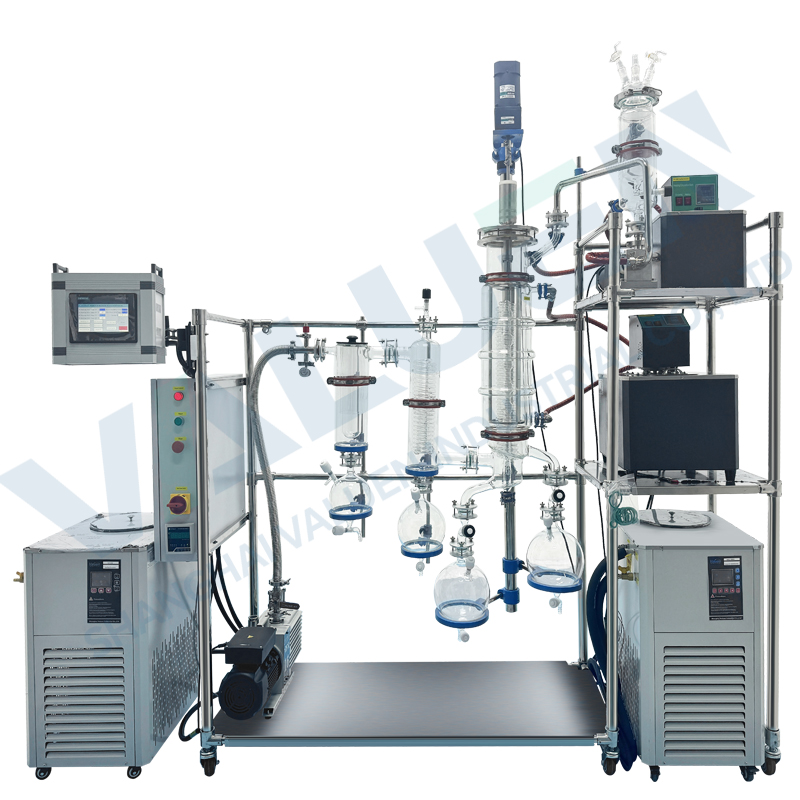
When industries need to separate, concentrate, or purify heat-sensitive compounds without degrading their chemical integrity, molecular distillation becomes the process of choice. Unlike conventional distillation methods that rely on high temperatures and extended heating cycles, molecular distillation operates under extremely low pressure conditions, allowing volatile components to evaporate and condense over very short distances. This gentle, highly controlled separation makes it uniquely suited for applications where product quality and compound stability are non-negotiable.
Understanding where molecular distillation is required means looking at industries that handle high-value materials — substances that are either chemically fragile, biologically active, economically significant, or strictly regulated. These sectors demand a separation process that preserves potency, ensures purity, and meets compliance standards. Across pharmaceuticals, nutraceuticals, food processing, and specialty chemicals, molecular distillation consistently proves its value by delivering results that other thermal separation methods simply cannot achieve.
Pharmaceutical and Nutraceutical Manufacturing
Purification of Active Pharmaceutical Ingredients
The pharmaceutical industry relies on molecular distillation to purify active pharmaceutical ingredients (APIs) that are sensitive to elevated temperatures. Many APIs decompose or lose biological activity when exposed to even moderate heat for extended durations. Molecular distillation solves this problem by processing materials at temperatures significantly lower than conventional distillation, while achieving the same or superior purity targets.
Vitamin E, for example, is a widely cited application where molecular distillation efficiently separates tocopherols from raw vegetable oil concentrates without triggering oxidation or structural breakdown.
Squalene purification from vegetable or marine sources also depends heavily on molecular distillation. The compound's high boiling point and sensitivity to oxidative damage make low-pressure short-path processing essential. Pharmaceutical-grade squalene used in vaccine adjuvants must meet tight purity thresholds, and molecular distillation provides the controlled environment necessary to reach those specifications reliably.
Omega-3 and Nutraceutical Concentration
Omega-3 fatty acid concentrates derived from marine lipids are another major application for molecular distillation. The process removes heavy metals, polychlorinated biphenyls (PCBs), and other environmental contaminants while concentrating EPA and DHA to the levels required for pharmaceutical and premium supplement grades.
Because omega-3s are highly susceptible to thermal damage and oxidation, molecular distillation under vacuum at low temperatures is the accepted standard for producing refined, high-potency oil products. Nutraceutical manufacturers producing fat-soluble vitamins, coenzyme Q10, and beta-carotene concentrates rely on the same principle — gentle thermal treatment under vacuum to achieve high purity without sacrificing bioactive properties.
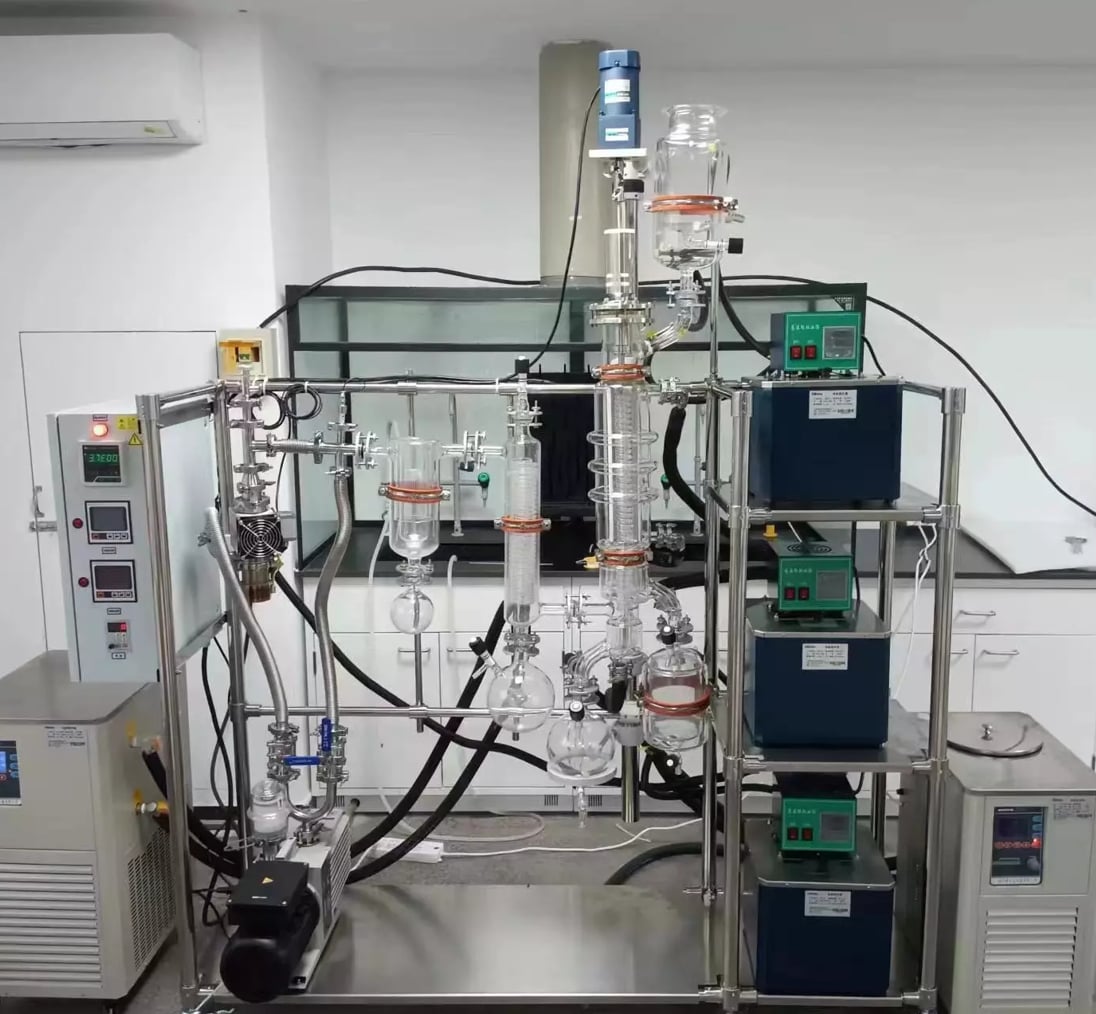
High-Viscosity & Heat-Sensitive Complex Fluid Refining
Thin-Film Molecular Distillation for Complex Feedstocks
A major challenge in thermal separation is processing highly viscous or complex organic oils without clogging the system. Molecular distillation—specifically through wiped film technology—addresses this by mechanically spreading the feedstock into an extremely thin, uniform film across the heated evaporator surface.
This continuous movement prevents localized overheating, minimizes residence time to mere seconds, and ensures high heat-transfer efficiency. By maintaining precise control over film thickness under deep vacuum, operators can cleanly separate volatile active compounds from heavy residues, producing high-purity, market-ready distillates with consistent yields and quality.
Terpene and Flavor Fractionation
Beyond lipid refinement, molecular distillation supports terpene and flavor fractionation in both food processing and the broader flavor and fragrance markets. Highly volatile aromatic fractions can be recovered as distinct, pure streams during the molecular distillation process.
For premium consumer brands, retaining authentic botanical profiles carries significant commercial value. Molecular distillation allows processors to manage which volatile aromatic fractions are preserved and which are removed, enabling precise flavor customization that appeals to high-end consumer markets.
Specialty Chemicals and Food-Grade Applications
Monoglyceride and Fatty Acid Purification
In the food and chemical industries, molecular distillation is widely used to produce distilled monoglycerides — food-grade emulsifiers used in baked goods, margarines, and confectionery products. The manufacturing process for high-purity monoglycerides requires separating them from diglycerides and triglycerides at elevated temperatures that would ordinarily cause degradation.
Molecular distillation handles this separation efficiently under vacuum, producing food-grade products that meet strict regulatory purity standards. The process is equally applied in the production of fatty acid esters used as lubricants, plasticizers, and cosmetic ingredients.
Flavor and fragrance compounds also benefit from molecular distillation during purification. Essential oil fractions, aromatic esters, and high-value aroma chemicals often require separation from heavier residues or color-bearing impurities. Molecular distillation accomplishes this without introducing foreign solvents or thermal degradation, preserving the sensory characteristics that define premium flavor and fragrance products.
High-Purity Lubricants and Polymer Additives
Industrial applications in the specialty lubricants and polymer additive sectors also require molecular distillation when working with high-molecular-weight compounds that cannot withstand conventional distillation temperatures.
Synthetic lubricant base oils, antioxidant additives, and plasticizers processed through molecular distillation achieve higher color stability, lower acid values, and improved performance consistency. For manufacturers supplying high-specification industrial or medical-grade materials, molecular distillation is not a convenience but a technical necessity driven by product performance requirements.
FAQ
What makes molecular distillation different from conventional distillation?
Molecular distillation operates under deep vacuum conditions, reducing the boiling point of compounds significantly. This allows heat-sensitive materials to evaporate and condense over a very short path at low temperatures, minimizing thermal degradation. Conventional distillation uses atmospheric or mild vacuum pressure and longer heating cycles, which are unsuitable for fragile, high-value compounds.
Which industries benefit most from molecular distillation systems?
The industries that benefit most include pharmaceuticals, nutraceuticals, food-grade emulsifier manufacturing, flavors and fragrances, cosmetic ingredient processing, and specialty industrial chemicals. Any industry handling heat-sensitive, high-value compounds that require high-purity separation is a strong candidate for molecular distillation technology.
Can molecular distillation handle viscous or high-molecular-weight feedstocks?
Yes. Wiped film molecular distillation systems are specifically designed to handle viscous feedstocks. The mechanical wiper spreads material into a thin, uniform film on the evaporator wall, enabling efficient evaporation even from dense or high-viscosity materials. This makes molecular distillation practical for vegetable oils, fatty acid concentrates, and polymer-grade additives that would be difficult to process in other separation systems.