 EN
EN


The performance of a rectification reactor directly impacts the quality and efficiency of separation processes in industrial applications. Understanding the factors that influence a rectification reactor's effectiveness is essential for operators, engineers, and facility managers who depend on consistent, high-quality separation outcomes. A rectification reactor operates by combining distillation principles with continuous reflux, allowing for precise separation of components based on boiling point differences. The rectification reactor's ability to achieve desired purity levels, throughput, and energy efficiency depends on multiple interconnected variables that must be carefully managed and optimized.
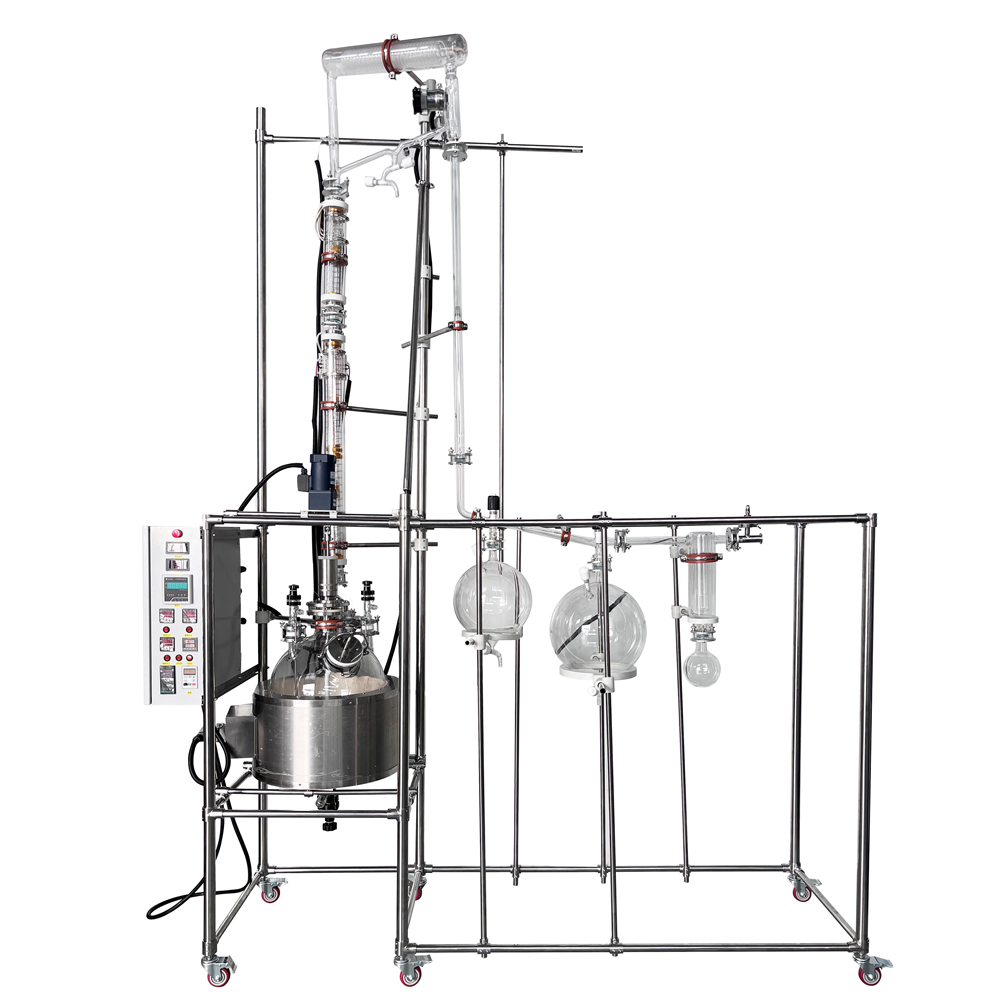
Every rectification reactor system has a unique set of operational parameters and design characteristics that determine its separation capability. The performance of a rectification reactor is never static; it evolves based on feed composition, system configuration, and external operating conditions. By examining the principal factors that affect a rectification reactor, organizations can maximize product quality, reduce operational costs, and extend equipment lifespan while maintaining consistent separation results.
Temperature and Thermal Management
Impact of Temperature Control on Rectification Reactor Operation
Temperature is one of the most critical factors affecting rectification reactor performance. The rectification reactor must maintain precise temperature gradients along its height to achieve efficient component separation. When temperature control in a rectification reactor is inadequate, lighter components may not vaporize sufficiently in the reboiler section, while heavier components may not condense properly in the condenser zone. Thermal stability within a rectification reactor directly influences the equilibrium between vapor and liquid phases, which determines separation efficiency. Too high a temperature can degrade heat-sensitive components, while too low a temperature reduces the thermodynamic driving force needed for effective separation.
Heat Exchange Efficiency in Rectification Reactor Systems
The design and maintenance of heat exchange surfaces within a rectification reactor significantly affect overall thermal performance. A rectification reactor with fouled or scaled heat transfer surfaces experiences reduced heat transfer rates, leading to longer residence times and lower throughput. Operators should regularly inspect and clean the reboiler and condenser sections of their rectification reactor to maintain optimal heat transfer coefficients. The efficiency of the rectification reactor's reboiler determines how much energy is required to generate the necessary vapor flow for separation. Similarly, the condenser efficiency in a rectification reactor controls how effectively vapors are converted back to liquid for reflux, directly impacting product purity and recovery rates.
Pressure and System Configuration
Pressure Effects on Rectification Reactor Separation Dynamics
Operating pressure significantly influences how a rectification reactor separates component mixtures. Higher pressure in a rectification reactor increases the relative volatility of some component pairs, potentially improving separation efficiency for certain applications. Conversely, elevated pressure in a rectification reactor requires more robust vessel construction and increases operational costs through compression or containment expenses. The relationship between pressure and component volatility in a rectification reactor is complex and depends on the specific mixture being processed. Lower pressure operations in a rectification reactor may be necessary for heat-sensitive materials, though this typically reduces separation efficiency and increases residence time requirements.
Reflux Ratio and Column Design Configuration
The reflux ratio determines how much of the overhead product from a rectification reactor is returned to the column versus withdrawn as final product. A higher reflux ratio in a rectification reactor improves separation quality and product purity but increases energy consumption and operational costs. The optimal reflux ratio for any rectification reactor represents a balance between achieving required purity specifications and minimizing operational expenses. Internal design features of a rectification reactor, including tray spacing, packing material type, and number of theoretical stages, all affect how efficiently the reactor separates components at any given reflux ratio. The rectification reactor's internal design essentially determines its maximum separation capacity and theoretical performance potential.
Feed Characteristics and Material Properties
Influence of Feed Composition on Rectification Reactor Performance
The composition and properties of the feed material entering a rectification reactor profoundly affect separation outcomes. Feed composition variability requires a rectification reactor to have flexible operational parameters to maintain consistent product quality. When feed to a rectification reactor contains unexpected impurities or compositional changes, the rectification reactor must compensate through adjustments in temperature, pressure, or reflux ratio to maintain product specifications. The boiling point range and volatility differences between components being separated in a rectification reactor determine the theoretical separation difficulty and required column height. A rectification reactor designed for one feed composition may require significant parameter adjustments or modifications to process alternative feed streams efficiently.
Feed Temperature and Phase State Effects
The temperature and physical state of feed entering a rectification reactor impacts the thermodynamic balance within the system. Subcooled liquid feed entering a rectification reactor requires sensible heat, reducing the effective separation capacity compared to saturated liquid feed. Similarly, superheated vapor feed to a rectification reactor affects the energy balance differently than condensed feed. The rectification reactor's feed location on the column is critical; introducing feed at the point of maximum temperature equilibrium optimizes separation performance. A rectification reactor operating with properly staged and temperature-optimized feed achieves better component separation with lower overall energy consumption than systems with poorly matched feed conditions.
FAQ
How does residence time affect rectification reactor separation quality?
Residence time in a rectification reactor determines how long vapor and liquid phases remain in contact for mass transfer. Longer residence times in a rectification reactor allow more complete equilibration between phases, improving separation purity but reducing throughput capacity. The optimal residence time for any rectification reactor represents a balance between product quality requirements and production rate objectives. A rectification reactor with insufficient residence time produces off-specification products, while excessive residence time reduces production efficiency unnecessarily.
What role does packing material selection play in rectification reactor efficiency?
Packing material choice directly determines the mass transfer effectiveness and pressure drop characteristics of a rectification reactor. Different packing types in a rectification reactor offer varying surface areas, void fractions, and flow characteristics that affect separation capability. A rectification reactor packed with high-efficiency structured packing achieves better separation with lower pressure drop than random packing alternatives. The rectification reactor's packing must be compatible with the feed composition and operating conditions to prevent degradation or blockage during operation.
Can rectification reactor performance be improved through automation and monitoring?
Advanced process control systems significantly enhance rectification reactor performance by enabling rapid response to feed and condition changes. A rectification reactor equipped with real-time temperature, pressure, and composition monitoring can automatically adjust operating parameters to maintain optimal separation. The rectification reactor's control system allows operators to respond quickly to disturbances, preventing product quality deviations and reducing off-specification material production. Modern data analytics applied to rectification reactor operation reveal optimization opportunities and predictive maintenance needs that manual monitoring cannot detect.