 EN
EN

A distillation reactor represents a significant advancement in chemical processing technology by merging two critical operations into a single integrated system. Traditional industrial workflows require separate equipment for reaction and distillation, consuming valuable plant floor space and creating material transfer inefficiencies. A distillation reactor eliminates these limitations by performing both reaction catalysis and product separation simultaneously within one vessel, delivering substantial improvements in efficiency, cost-effectiveness, and operational safety.
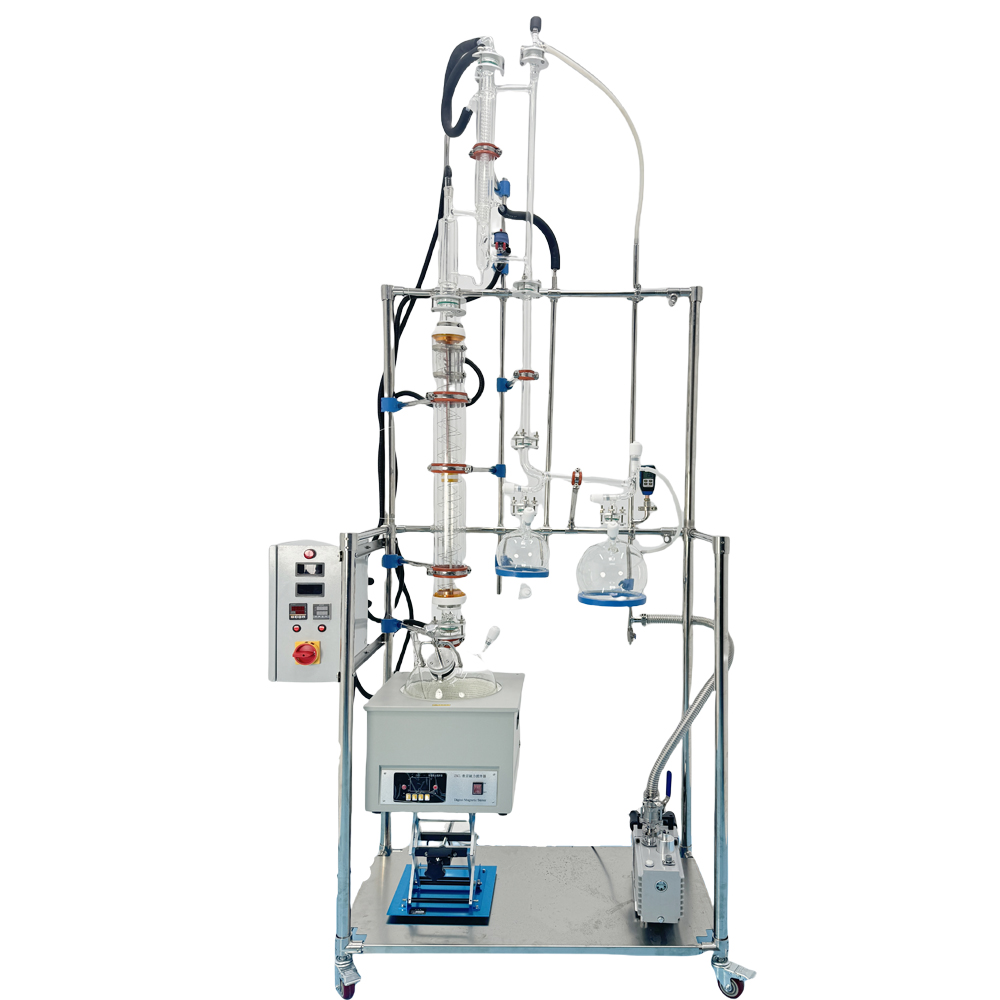
The distillation reactor achieves this dual functionality through intelligent design and precise thermal management. As chemical reactants transform into products through controlled chemical reactions, the distillation reactor simultaneously separates volatile components through heat-driven phase transitions. This coupled operation drastically reduces processing time, minimizes product losses, and improves yield rates compared to conventional batch or sequential processing methods. Understanding how a distillation reactor works enables engineers and process specialists to optimize production workflows and make informed equipment selection decisions.
Core Operating Principle of the Distillation Reactor
Integrated Reaction and Separation Mechanism
The distillation reactor operates on the principle of conducting a chemical reaction while simultaneously removing reaction products through distillation. Inside the distillation reactor, reactants enter the vessel where they encounter catalysts or specific reaction conditions that drive chemical transformation. As reactions proceed and products form, heat applied to the distillation reactor causes volatile products and unreacted materials to vaporize. These vapors rise through internals or packing within the distillation reactor, where they undergo separation based on boiling point differences. Lighter components exit as overhead vapor, while heavier components condense and return as reflux, ensuring separation occurs in real time.
This continuous product removal mechanism provides a critical advantage: as products separate from the distillation reactor's reaction zone, they escape the reverse reaction environment. In many synthesis routes, removing products as they form drives reaction equilibrium forward, dramatically increasing conversion rates. The distillation reactor essentially combines Le Chatelier's principle with immediate product separation, maximizing efficiency in equilibrium-limited reactions. Temperature and pressure profiles within the distillation reactor are carefully controlled to maintain optimal reaction conditions while enabling effective separation.
Thermal and Pressure Management
Effective distillation reactor operation depends on precise thermal control. The reactor bottom requires sufficient temperature to drive the reaction forward and maintain adequate vapor generation for the distillation reactor's separation function. The overhead section of the distillation reactor must remain cooler to enable product condensation and collection. Modern distillation reactor designs incorporate jacketed walls, coil condensers, and sophisticated temperature sensors to maintain these distinct thermal zones. Reflux ratios—the ratio of recycled condensate to product withdrawal—can be adjusted in the distillation reactor to fine-tune separation efficiency and product purity.
Pressure management in a distillation reactor is equally critical. Operating the distillation reactor under reduced pressure lowers boiling points, enabling separation of heat-sensitive compounds without thermal degradation. Conversely, elevated pressure in the distillation reactor may be applied when higher temperatures are necessary to drive reactions efficiently. The distillation reactor's design pressure rating and vapor handling capacity must accommodate the specific process requirements, making equipment selection a crucial decision for process engineers.
Industrial Applications and Process Benefits
Chemical Synthesis and Esterification Processes
A distillation reactor excels in esterification reactions where water is a byproduct that inhibits conversion. In traditional batch reactors, water accumulates and shifts equilibrium backward, limiting yields. In a distillation reactor, water vaporizes and separates continuously, pulling the reaction toward completion. Specialty chemical manufacturers use a distillation reactor for producing esters, organic acids, and polymeric intermediates where water removal directly improves product yield and reduces processing time. The distillation reactor allows chemists to achieve higher conversions without requiring expensive separation steps or excess reactant charges.
Beyond esterification, a distillation reactor supports dehydration reactions, condensation syntheses, and transesterification processes. Pharmaceutical manufacturers rely on distillation reactor technology for controlled synthesis of active pharmaceutical ingredients where reaction selectivity and rapid product removal are paramount. Fine chemical producers favor the distillation reactor because it reduces unwanted side reactions and byproduct formation. The integrated distillation reactor approach often enables lower reagent costs and smaller waste streams, directly improving process economics.
Efficiency Gains and Operational Cost Reduction
Operating a distillation reactor delivers measurable economic benefits. By eliminating separate distillation equipment and material transfer steps, companies reduce capital investment and footprint requirements. A distillation reactor cuts processing time by 30 to 50 percent compared to sequential reactor-then-distillation workflows, enabling higher throughput from existing floor space. Energy consumption decreases because the distillation reactor performs two functions in a single heating cycle rather than requiring separate heating for reaction and subsequent distillation.
From a product quality standpoint, using a distillation reactor minimizes exposure of products to extended storage in intermediate streams, reducing degradation risk. Heat-sensitive intermediates remain in the distillation reactor only as long as necessary, lowering thermal stress. These quality improvements often command premium pricing and reduce rejection rates during downstream processing. Companies investing in a distillation reactor typically report faster return on investment and improved overall profitability compared to conventional equipment configurations.
Safety and Environmental Advantages
The distillation reactor offers inherent safety benefits through continuous product removal. By extracting volatile products as they form, a distillation reactor prevents dangerous intermediate accumulation within the vessel. Vapor-liquid equilibrium dynamics within a distillation reactor naturally limit local concentrations of hazardous intermediates, reducing explosion risk and chemical compatibility concerns. This safety margin allows operators to run the distillation reactor with higher conversion rates and tighter control, reducing fugitive emissions and workplace exposure risks.
Environmental compliance improves when using a distillation reactor because fewer waste streams and lower solvent requirements are needed. The distillation reactor minimizes byproduct generation through equilibrium shifting and improved selectivity, reducing disposal costs and environmental footprint. Regulatory agencies often view distillation reactor implementations favorably because integrated processes typically demonstrate superior waste reduction and energy efficiency compared to traditional batch sequences.
Design Considerations and Practical Implementation
Vessel Configuration and Internal Internals
Selecting the right distillation reactor design requires matching internal configurations to process chemistry. Simple distillation reactor designs feature basic trays or structured packing to enhance vapor-liquid contact. For demanding separations, a distillation reactor may incorporate sophisticated fractionation trays or three-phase internals that enable simultaneous reaction catalysis and distillation. The distillation reactor's diameter, height, and residence time profile must accommodate both reaction kinetics and separation requirements. Too small a distillation reactor causes incomplete reaction or inadequate separation, while oversizing creates excessive holdup and heat loss.
Material selection for the distillation reactor depends on chemical compatibility, temperature exposure, and pressure requirements. Glass-lined distillation reactor vessels provide excellent visibility and chemical resistance for laboratory and pilot-scale operations. Stainless steel distillation reactor equipment handles more aggressive chemistries and higher production volumes. The condenser configuration within the distillation reactor significantly impacts separation efficiency; air-cooled, water-cooled, or cryogenic options each offer distinct advantages depending on boiling point ranges and product volatility.
Scaling and Process Parameter Optimization
Transitioning from laboratory-scale pilot studies to production-scale distillation reactor operation requires careful parameter translation. Heat transfer efficiency, vapor residence time, and mixing patterns in a distillation reactor scale non-linearly, necessitating detailed hydrodynamic modeling and pilot testing. Process engineers must establish operating windows for temperature, pressure, and reflux ratio in the distillation reactor that maintain product purity and conversion targets across production volumes. Oversimplifying scale-up often results in disappointing distillation reactor performance at large scale, so investing in proper characterization studies prevents costly operational problems.
Advanced instrumentation within the distillation reactor—including online composition analyzers, temperature arrays, and pressure profiling—enables real-time process optimization. Automated distillation reactor control systems can adjust reflux ratios and heating rates dynamically, maintaining steady-state conditions and product specifications. Integrating the distillation reactor into modern manufacturing execution systems (MES) platforms enables data-driven process improvements and rapid troubleshooting when deviations occur.
FAQ
What separates a distillation reactor from a standard reactor with separate distillation equipment?
A distillation reactor combines reaction and distillation into a single vessel, eliminating material transfer steps and reducing equipment count. Standard workflows require separate reaction vessels and distillation columns, consuming more floor space and energy. The distillation reactor enables immediate product separation as it forms, shifting reaction equilibrium and improving yields compared to batch reactors where products accumulate. The distillation reactor also reduces processing time, simplifies inventory management, and minimizes product degradation through shorter residence times in the system.
How does a distillation reactor improve product yield compared to traditional batch methods?
In equilibrium-limited reactions, a distillation reactor continuously removes products through vapor-liquid separation, preventing reverse reactions and pushing equilibrium toward completion. As volatile products leave the distillation reactor's reaction zone, reaction rates remain high because driving forces for forward reaction persist. Traditional batch reactors accumulate products, creating unfavorable equilibrium conditions that cap conversion rates. The distillation reactor often achieves 20 to 40 percent higher yields without requiring excess reactants, directly improving process economics and product quality.
What industries benefit most from distillation reactor technology?
Pharmaceutical, specialty chemical, and fine chemical manufacturers benefit most from distillation reactor systems because reaction selectivity and rapid product removal are critical. Biotechnology companies use distillation reactor equipment for esterification and solvent recovery processes. Petrochemical facilities employ distillation reactor designs for refining operations where coupled reaction-separation improves efficiency. Food and beverage production, perfumery, and agricultural chemical manufacturing also leverage distillation reactor capabilities for controlled synthesis and product purification of temperature-sensitive compounds.