 EN
EN

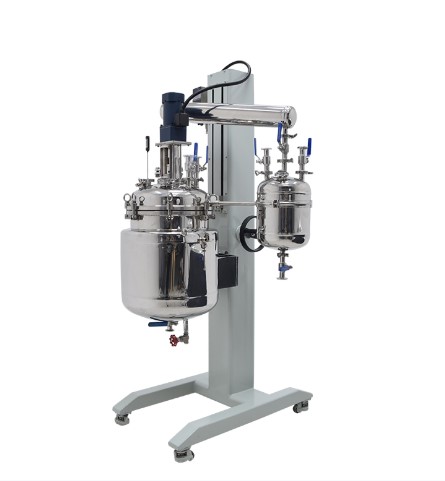
Modern industrial processing demands equipment that combines efficiency, versatility, and durability. A rotary and liftable stainless steel reactor represents a significant advancement in chemical processing technology, offering manufacturers the flexibility to handle diverse reactions while maintaining optimal safety standards. These innovative vessels incorporate sophisticated design elements that enable both rotational movement and vertical lifting capabilities, making them indispensable for applications requiring precise control over reaction parameters. Industrial facilities across pharmaceutical, chemical, and specialty materials sectors increasingly rely on these advanced reactor systems to achieve superior processing outcomes.
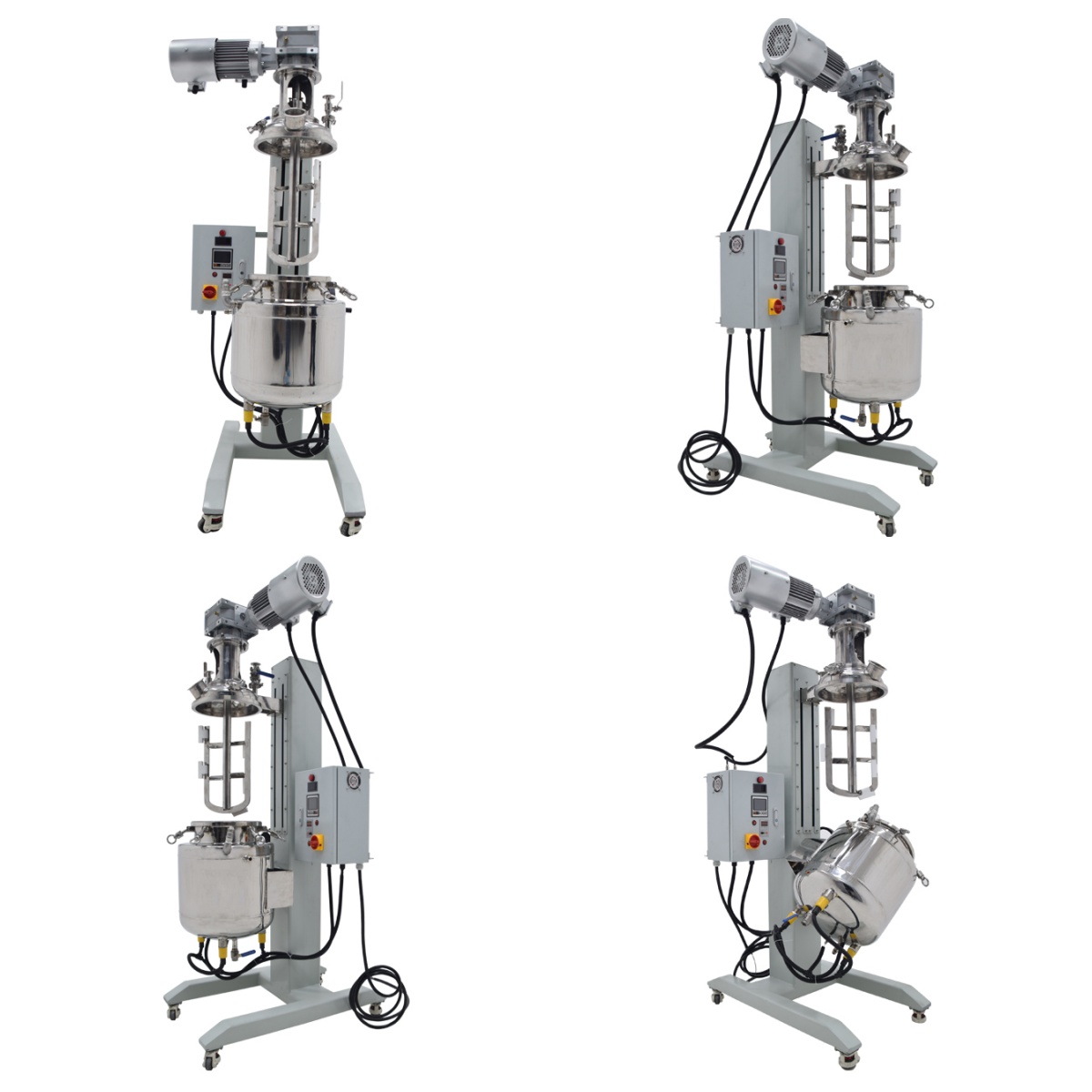
The integration of rotary mechanisms with lifting functionality creates a unique processing environment that traditional fixed reactors cannot match. This combination allows operators to manipulate reaction conditions through multiple dimensions, providing unprecedented control over mixing patterns, heat transfer rates, and material distribution. Manufacturing professionals recognize that implementing a rotary and liftable stainless steel reactor system can dramatically improve product quality while reducing processing times and operational costs.
Enhanced Mixing Capabilities and Process Control
Superior Agitation Through Rotational Movement
The rotational capability of a rotary and liftable stainless steel reactor delivers exceptional mixing performance that surpasses conventional stirring mechanisms. This rotating action creates complex flow patterns within the vessel, ensuring thorough distribution of reactants and catalysts throughout the entire reaction volume. The continuous rotation eliminates dead zones where unmixed materials might accumulate, resulting in more uniform reaction conditions and improved product consistency.
Advanced bearing systems and precision drive mechanisms enable smooth, controlled rotation at variable speeds, allowing operators to optimize mixing intensity for specific reaction requirements. The rotary motion can be adjusted to accommodate different viscosity ranges, from low-viscosity solvents to high-viscosity polymer solutions. This adaptability makes the rotary and liftable stainless steel reactor suitable for an extensive range of chemical processes, from simple mixing operations to complex multi-phase reactions requiring precise agitation control.
Improved Heat Transfer Efficiency
Heat transfer characteristics in a rotary and liftable stainless steel reactor are significantly enhanced compared to stationary vessels. The rotational movement continuously redistributes the reaction mixture, preventing thermal stratification and ensuring uniform temperature distribution throughout the reactor volume. This improved heat transfer efficiency enables better control over exothermic and endothermic reactions, reducing the risk of hot spots that could compromise product quality or safety.
The enhanced heat transfer also allows for more efficient heating and cooling cycles, reducing energy consumption and processing time. Temperature gradients that commonly occur in fixed reactors are minimized through the continuous mixing action, enabling more precise temperature control and better reaction kinetics. This thermal uniformity is particularly crucial for temperature-sensitive reactions where maintaining specific thermal conditions is essential for achieving desired product specifications.
Operational Flexibility and Maintenance Advantages
Accessibility Through Lifting Mechanisms
The lifting capability of a rotary and liftable stainless steel reactor provides unparalleled accessibility for maintenance, inspection, and cleaning operations. Traditional fixed reactors often require extensive downtime and complex procedures for internal access, while lifting mechanisms enable quick and safe vessel positioning for routine maintenance tasks. This accessibility significantly reduces maintenance costs and minimizes production downtime, improving overall operational efficiency.
Hydraulic or pneumatic lifting systems can raise the reactor vessel to optimal working heights, allowing maintenance personnel to perform inspections, repairs, and cleaning procedures more safely and efficiently. The ability to position the reactor at various heights accommodates different maintenance requirements and provides better ergonomic conditions for workers. This enhanced accessibility contributes to improved safety standards and reduces the physical strain associated with reactor maintenance operations.
Versatile Installation and Positioning Options
Installation flexibility represents another significant advantage of the rotary and liftable stainless steel reactor design. The lifting mechanism allows for adjustable positioning within existing process lines, enabling integration into facilities with varying ceiling heights or space constraints. This adaptability is particularly valuable during plant retrofits or when accommodating new process requirements without extensive facility modifications.
The adjustable positioning capability also facilitates better integration with auxiliary equipment such as distillation columns, heat exchangers, or filtration systems. Operators can optimize the reactor height to achieve ideal flow patterns for downstream processing equipment, improving overall system efficiency. This positioning flexibility reduces the need for complex piping arrangements and allows for more efficient plant layouts that maximize production capacity within available space.
Material Quality and Durability Benefits
Stainless Steel Construction Advantages
The stainless steel construction of these advanced reactors provides exceptional corrosion resistance and chemical compatibility across a wide range of processing applications. High-grade stainless steel alloys maintain their integrity when exposed to aggressive chemicals, extreme temperatures, and varying pH conditions commonly encountered in industrial processes. This durability ensures long-term reliability and reduces the frequency of equipment replacement, providing excellent return on investment for manufacturing operations.
Stainless steel surfaces are inherently easier to clean and sterilize compared to other materials, making the rotary and liftable stainless steel reactor ideal for applications requiring high purity standards. The smooth surface finish minimizes contamination risks and facilitates thorough cleaning between batches, essential for pharmaceutical and food-grade applications. Additionally, stainless steel construction eliminates concerns about material leaching or contamination that might affect product quality or regulatory compliance.
Enhanced Structural Integrity
The combination of rotary mechanisms and lifting systems requires robust structural design to handle dynamic loads and operational stresses. Advanced engineering ensures that the rotary and liftable stainless steel reactor maintains structural integrity under varying operational conditions while accommodating the complex forces generated by rotation and lifting movements. Reinforced vessel walls and precision-engineered support systems provide the strength needed for safe, reliable operation.
Quality fabrication techniques and rigorous testing protocols ensure that these reactors meet or exceed industry safety standards and pressure vessel codes. The structural design incorporates safety factors that account for operational variations, thermal expansion, and dynamic loading conditions. This robust construction provides operators with confidence in system reliability while minimizing the risk of unexpected failures that could disrupt production or compromise safety.
Process Optimization and Economic Impact
Increased Production Efficiency
Implementation of a rotary and liftable stainless steel reactor typically results in measurable improvements in production efficiency through reduced processing times and enhanced reaction kinetics. The superior mixing and heat transfer characteristics enable faster reaction rates and more complete conversions, increasing throughput without requiring additional equipment. These efficiency gains translate directly into improved production capacity and reduced unit costs.
The enhanced process control capabilities allow operators to optimize reaction conditions more precisely, reducing waste generation and improving yield rates. Better temperature and mixing control minimizes side reactions and product degradation, resulting in higher quality outputs that meet stringent specifications. These quality improvements reduce rework requirements and enhance customer satisfaction while supporting premium pricing strategies.
Reduced Operating Costs
Long-term operating costs are significantly reduced through the improved efficiency and reliability of rotary and liftable stainless steel reactor systems. Enhanced heat transfer efficiency reduces energy consumption for heating and cooling operations, while improved mixing reduces processing time and associated utility costs. The robust construction and accessibility features minimize maintenance requirements and extend equipment service life.
The versatility of these reactor systems also reduces the need for multiple specialized vessels, allowing facilities to handle diverse product lines with a single, flexible reactor configuration. This consolidation reduces capital equipment requirements, simplifies maintenance procedures, and minimizes spare parts inventory. The economic benefits accumulate over the equipment lifecycle, providing substantial return on investment for manufacturing operations seeking to optimize their processing capabilities.
Safety and Regulatory Compliance
Enhanced Safety Features
Safety considerations are paramount in the design of rotary and liftable stainless steel reactor systems. Advanced safety interlocks prevent operation when lifting mechanisms are engaged, while emergency stop systems immediately halt rotation and secure the vessel in safe positions. Comprehensive safety protocols ensure that operators cannot inadvertently create hazardous conditions during normal operations or maintenance procedures.
The improved accessibility provided by lifting mechanisms enhances safety during maintenance and inspection activities by eliminating the need for workers to enter confined spaces or work in awkward positions. Better ergonomics reduce the risk of workplace injuries while improving the quality of maintenance work performed. Emergency response procedures are simplified when reactor vessels can be quickly positioned for optimal access by emergency personnel.
Regulatory Compliance Benefits
Regulatory compliance is simplified through the enhanced cleaning capabilities and documentation features of rotary and liftable stainless steel reactor systems. The superior accessibility enables thorough cleaning and inspection procedures that support validation requirements for pharmaceutical and food processing applications. Detailed cleaning procedures can be developed and validated more easily when all vessel surfaces are readily accessible.
The stainless steel construction and advanced design features help facilities meet stringent regulatory requirements for material compatibility, cleaning validation, and process control. Documentation of cleaning procedures, maintenance activities, and operational parameters is facilitated by the improved accessibility and standardized procedures enabled by these advanced reactor systems. Regulatory inspections are more straightforward when inspectors can easily access all areas of the reactor for visual inspection and sampling procedures.
FAQ
What industries benefit most from rotary and liftable stainless steel reactors
Pharmaceutical manufacturing, specialty chemicals production, and biotechnology processing facilities gain the most significant advantages from rotary and liftable stainless steel reactor technology. These industries require precise process control, high purity standards, and flexible production capabilities that these advanced reactor systems provide. Food processing and cosmetics manufacturing also benefit from the enhanced cleaning capabilities and material compatibility of stainless steel construction.
How does the rotary mechanism improve reaction outcomes
The rotary mechanism creates complex flow patterns that eliminate dead zones and ensure uniform mixing throughout the reactor volume. This improved mixing enhances mass transfer rates, promotes better heat distribution, and increases reaction efficiency. The continuous movement prevents settling of solids and maintains homogeneous conditions that are essential for consistent product quality and optimal reaction kinetics.
What maintenance advantages does the lifting capability provide
Lifting capability dramatically improves access for routine maintenance, inspection, and cleaning operations by allowing the reactor to be positioned at optimal working heights. This accessibility reduces maintenance time, improves safety for maintenance personnel, and enables more thorough inspection procedures. The enhanced access also facilitates better cleaning validation and regulatory compliance documentation.
Are rotary and liftable stainless steel reactors suitable for high-pressure applications
Modern rotary and liftable stainless steel reactor designs can accommodate high-pressure applications through robust construction and specialized sealing systems. Pressure ratings depend on specific design parameters and materials selection, but these reactors can be engineered to handle pressures comparable to traditional fixed vessels. Proper engineering ensures that the dynamic components maintain integrity under operational pressure conditions while providing the flexibility benefits of rotary and lifting mechanisms.