 EN
EN

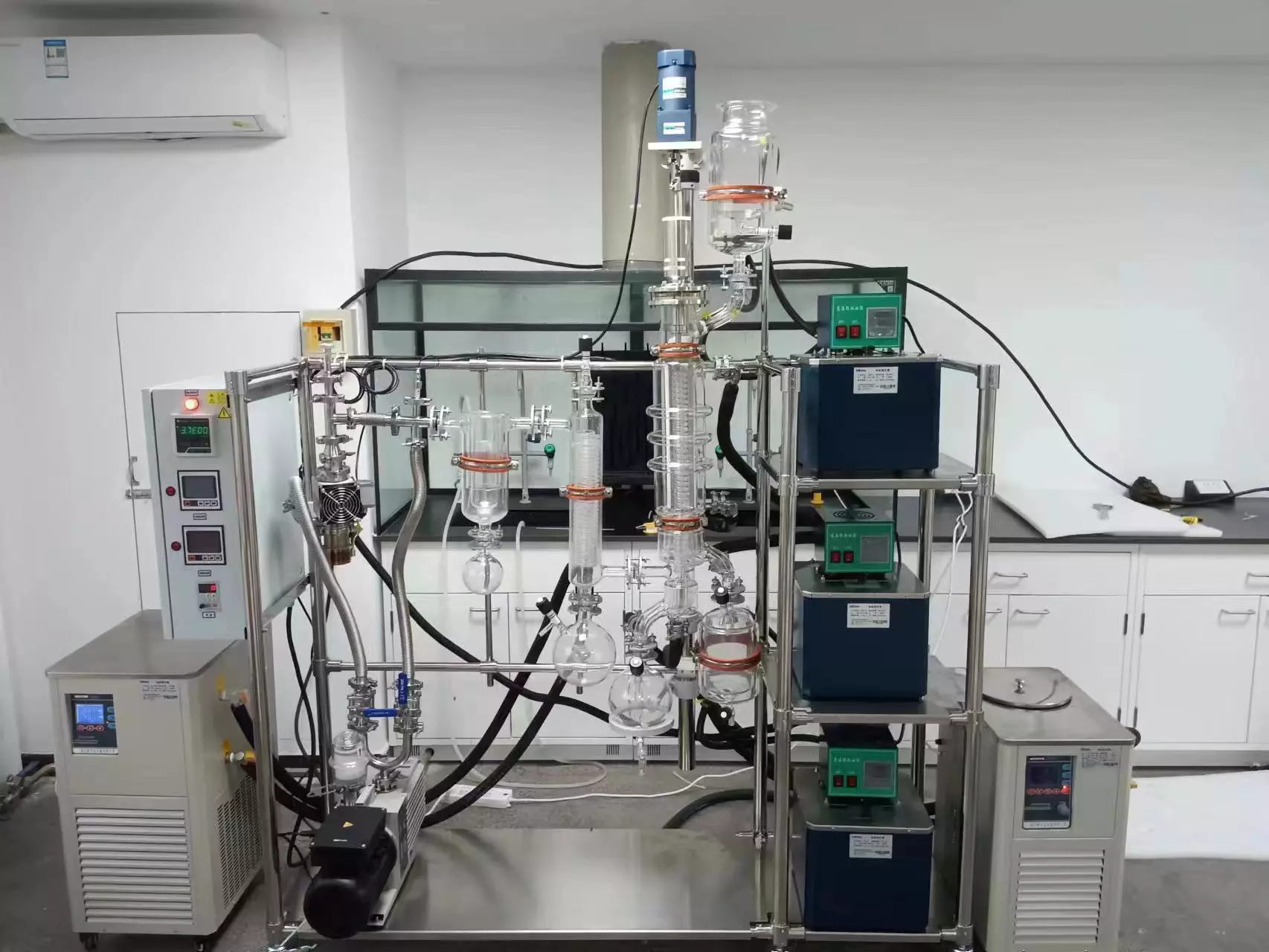
In the competitive world of essential oil production, refining quality and process efficiency are not optional — they are critical business requirements. Molecular distillation has emerged as one of the most effective separation technologies available to processors who need to purify thermally sensitive compounds without compromising their biological activity or aromatic integrity. As demand for high-purity botanical extracts continues to grow across cosmetics, pharmaceuticals, and nutraceuticals, understanding how molecular distillation improves essential oil refining becomes strategically important for any serious producer.
Unlike conventional distillation methods that rely on high temperatures and prolonged exposure times, molecular distillation operates under deep vacuum conditions that drastically lower the boiling points of target compounds. This fundamental difference makes molecular distillation the preferred refining technique when the goal is to preserve volatile aromatic molecules, eliminate heavy residues, and achieve consistent product purity at scale. Processors who integrate molecular distillation into their workflow gain measurable advantages in throughput, yield, and final product quality.
The Core Mechanism Behind Molecular Distillation
How Deep Vacuum Separation Works
Molecular distillation functions by reducing the operating pressure to levels approaching 0.001 mbar, creating conditions where the mean free path of vapor molecules becomes comparable to the distance between the evaporation surface and the condenser. At this scale, molecular distillation enables individual molecules to travel directly from the heated film to the cold condenser without colliding with other molecules. This short-path mechanism is what distinguishes molecular distillation from standard vacuum distillation and makes it uniquely suited to processing delicate essential oil components. The controlled evaporation-condensation pathway in molecular distillation ensures that only the desired fraction is collected, minimizing thermal degradation at every step.
Wiped Film Technology as a Key Component
Most industrial molecular distillation systems use a wiped film design, where rotating wiper blades continuously spread the feed material into a thin, uniform film across a heated cylindrical surface. This thin film geometry is central to why molecular distillation works so efficiently in essential oil refining. By maximizing the surface area exposed to vacuum conditions and minimizing residence time on the hot surface, molecular distillation using wiped film technology reduces the risk of overheating sensitive terpenes, esters, and phenolic compounds. The result is a cleaner separation with higher recoverable yield and fewer degraded byproducts compared to conventional refining approaches.
Efficiency Gains in Essential Oil Refining
Improved Purity and Targeted Fraction Separation
One of the most direct efficiency benefits of molecular distillation in essential oil refining is the ability to isolate specific chemical fractions with high selectivity. Essential oils are complex mixtures containing dozens of active constituents, and molecular distillation allows processors to separate lighter volatile fractions from heavier waxes, pigments, and oxidized residues. This targeted separation means that molecular distillation can upgrade a raw botanical extract into a standardized, high-purity oil ready for cosmetic or pharmaceutical formulation. The precision offered by molecular distillation removes the need for multiple secondary purification steps, directly reducing processing time and operational costs.
Thermal Sensitivity Management and Yield Preservation
Essential oil compounds such as linalool, citronellol, and eugenol are highly susceptible to heat-induced transformation when processed under conventional conditions. Molecular distillation addresses this challenge by keeping processing temperatures 40 to 80 degrees Celsius lower than traditional vacuum distillation, even for high-boiling-point fractions. This temperature advantage translates directly into preserved aromatic profiles and biologically active constituents. Producers using molecular distillation report significantly lower rates of terpene oxidation and ester hydrolysis compared to steam distillation or thin-film evaporation methods. Preserving these compounds means higher-value output per batch, which improves economic efficiency across the entire production chain.
Continuous Processing and Scalable Throughput
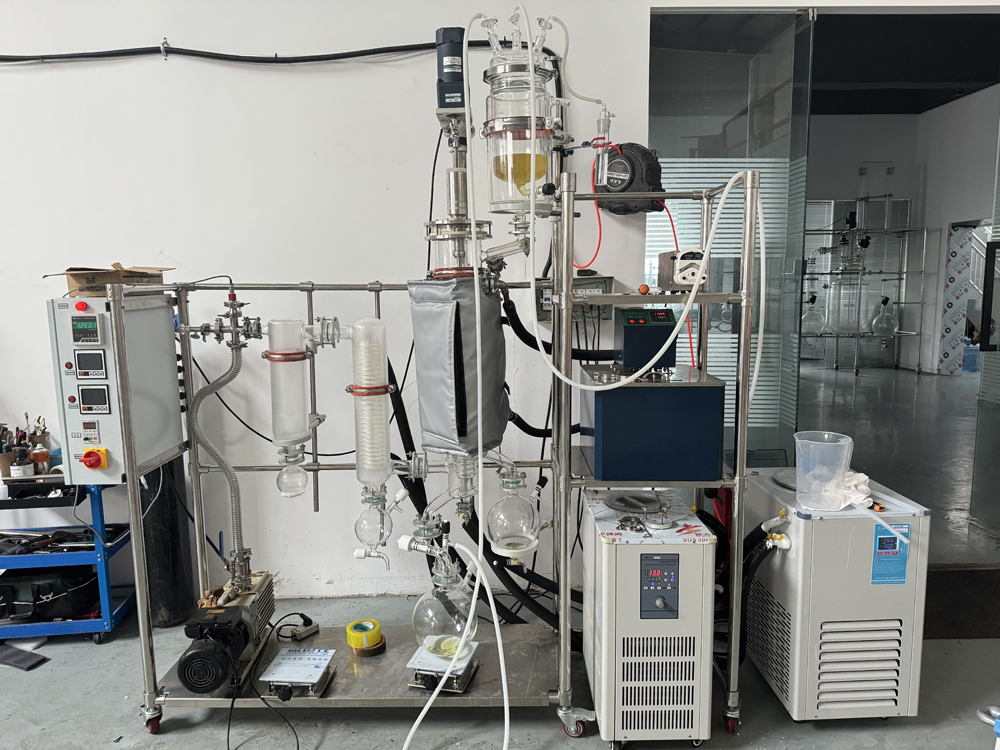
Molecular distillation systems designed for essential oil refining support continuous feed operation, meaning that material can be introduced and collected without stopping the process. This continuous mode eliminates the downtime associated with batch loading and unloading, making molecular distillation highly compatible with industrial-scale production schedules. When processors scale from laboratory-scale molecular distillation units to pilot or production systems, they retain the same separation parameters, reducing the uncertainty that often comes with scale-up transitions. The repeatability and throughput consistency of molecular distillation make it a reliable foundation for standardized manufacturing processes in regulated industries.
Application Scenarios Where Molecular Distillation Excels
Decolorization and Deodorization of Raw Extracts
Raw essential oil extracts often carry undesirable color bodies, chlorophyll residues, and off-notes from the extraction process that reduce their market value. Molecular distillation can remove these heavy non-volatile impurities by separating them into a residue stream while the desirable aromatic fraction passes through as a distillate. This decolorization and deodorization capability of molecular distillation is particularly valuable for producers supplying cosmetic-grade or fragrance-grade oils, where visual clarity and olfactory purity are non-negotiable quality criteria. Achieving this result through molecular distillation requires fewer chemical treatments than activated carbon adsorption, which means fewer secondary waste streams and cleaner final products.
Concentration of High-Value Active Compounds
Certain essential oil applications require concentrated fractions of specific active molecules, such as high-potency lavender extracts with elevated linalool content or frankincense resins enriched in boswellic acid precursors. Molecular distillation enables this concentration by selectively evaporating and collecting the target fraction while leaving behind matrix impurities. In pharmaceutical-grade processing, molecular distillation is frequently used to concentrate minor but pharmacologically significant constituents that conventional distillation would either destroy or fail to separate adequately. This capacity to enrich specific fractions adds considerable commercial value and positions molecular distillation as a premium refining tool rather than simply a purification step.
FAQ
What types of essential oils benefit most from molecular distillation?
Essential oils derived from thermally sensitive botanicals benefit most from molecular distillation, including rose, jasmine, neroli, and frankincense. These materials contain delicate aromatic esters and terpene alcohols that degrade rapidly under heat. Molecular distillation preserves these compounds by minimizing thermal exposure, making it ideal for producing high-quality cosmetic and pharmaceutical-grade oils.
How does molecular distillation compare to steam distillation for oil refining?
Steam distillation uses high-temperature water vapor to separate volatile compounds, which can hydrolyze esters and oxidize terpenes. Molecular distillation operates under deep vacuum at much lower temperatures, significantly reducing thermal damage. For refining and upgrading already-extracted oils, molecular distillation offers superior selectivity and a cleaner separation than steam distillation can achieve.
Is molecular distillation suitable for small-scale essential oil producers?
Yes. Molecular distillation systems are available in laboratory and pilot-scale configurations that are accessible to smaller producers. These compact molecular distillation units allow independent processors to refine specialty oils and supply high-purity fractions to premium markets without requiring large capital investment. As production volume grows, the same molecular distillation process parameters can be scaled to larger industrial systems with consistent results.