 EN
EN

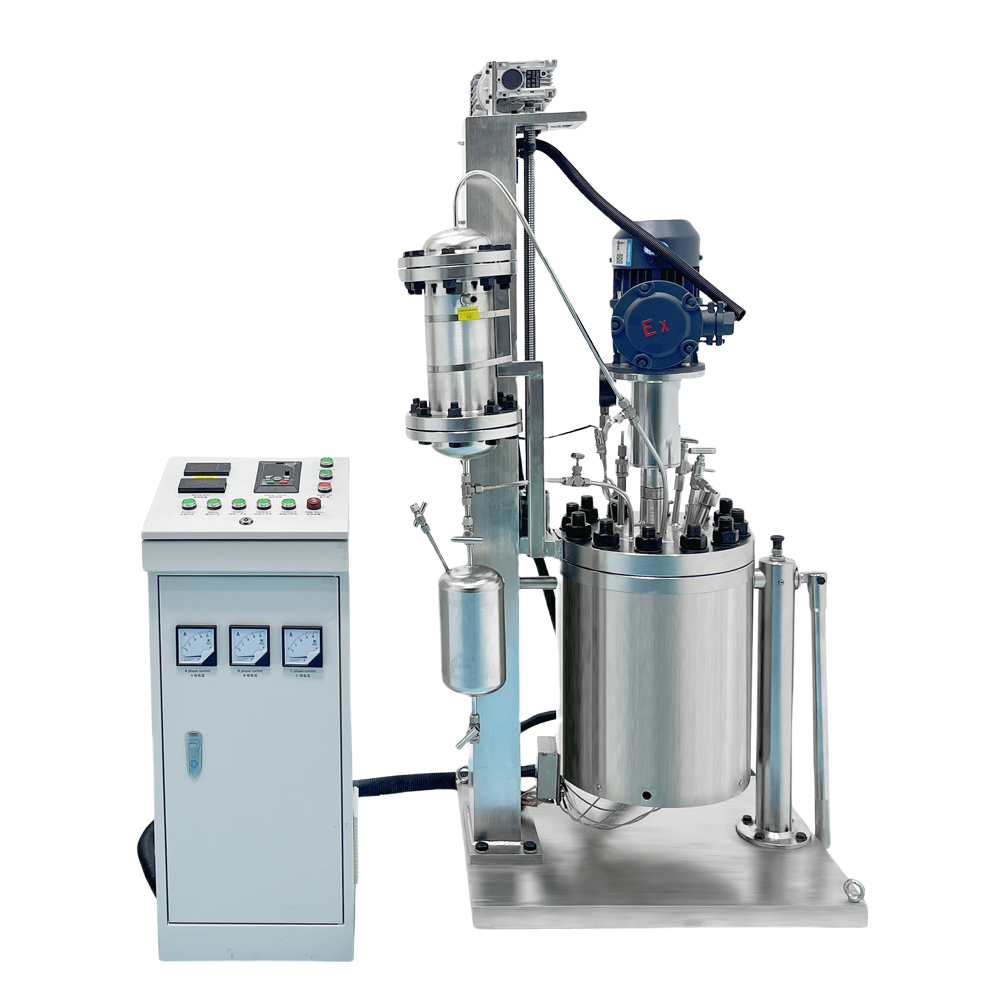
Selecting the correct capacity for a high pressure reactor is one of the most critical decisions in chemical processing, pharmaceutical manufacturing, and materials research. An undersized high pressure reactor will create bottlenecks and limit production throughput, while an oversized high pressure reactor wastes capital investment and operational efficiency. The choice involves balancing production volume requirements, batch processing cycles, heating and cooling rates, and future scalability. Understanding how to size a high pressure reactor correctly ensures optimal performance, cost-effectiveness, and safety compliance across your operations.
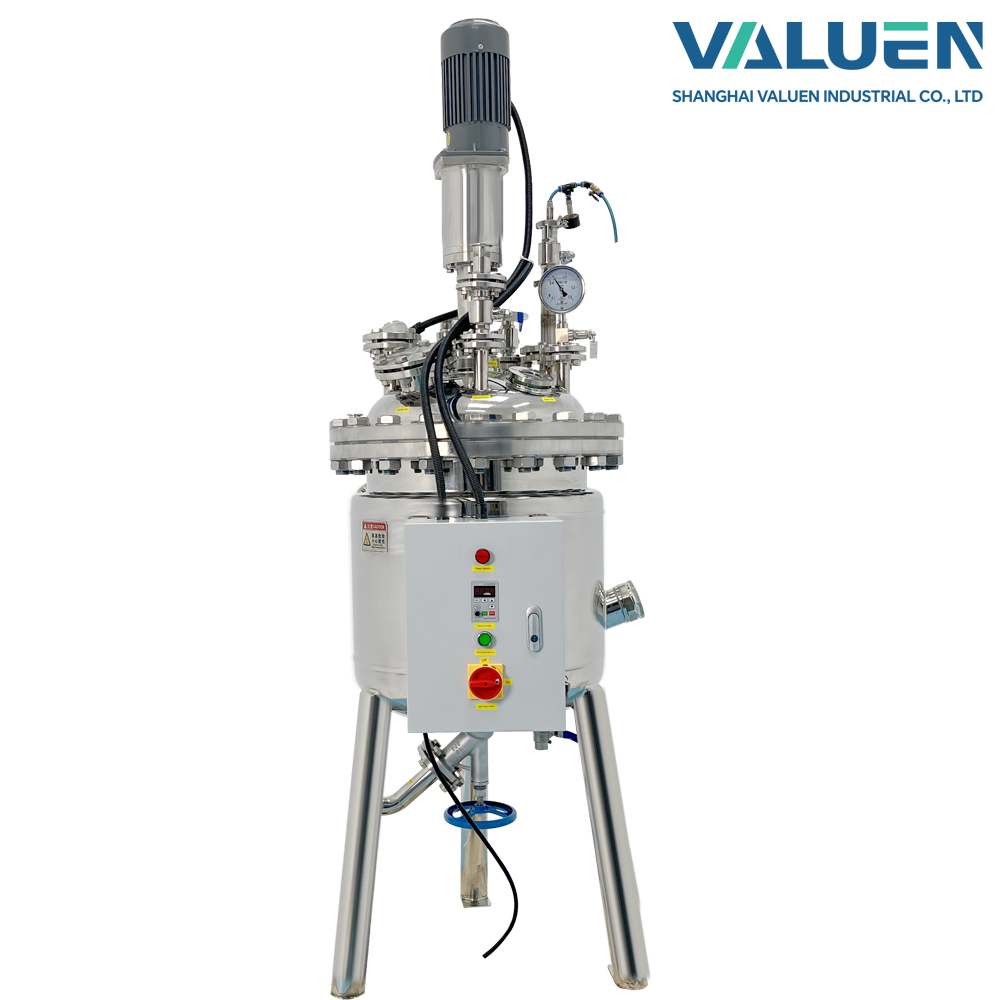
The process of choosing a high pressure reactor capacity requires careful analysis of multiple technical and operational factors. Your decision will directly impact batch cycle times, product quality consistency, and capital expenditure. A well-sized high pressure reactor minimizes wasted energy, reduces downtime, and aligns with your production roadmap. This guide walks through the essential criteria that enable you to make an informed, data-driven selection.
Understanding Your Production Volume Requirements
Calculating Daily and Annual Throughput Needs
Begin by quantifying your exact production volume targets. Determine your required daily batch volume, the number of batches per day, and your annual production forecast. For a high pressure reactor, capacity is typically measured in liters or gallons. If you need to process 500 liters per day across two batches, you require a high pressure reactor with at least 250 liters of usable working volume. However, most manufacturers recommend using only 80 percent of the rated capacity as the safe working volume. This means your high pressure reactor should have a total capacity of approximately 312 liters to safely accommodate your needs.
Planning for Future Growth and Scale
Production demands often grow over time. When selecting a high pressure reactor, consider your business growth trajectory over the next three to five years. A high pressure reactor chosen at minimum capacity today may force costly replacement or debottlenecking investments tomorrow. Selecting a high pressure reactor with 20 to 30 percent spare capacity provides flexibility for growth without major capital redeployment. This forward-thinking approach protects your investment and maintains competitive agility in expanding markets.
Evaluating Thermal Performance and Cycle Time
Heating and Cooling Rate Requirements
The thermal characteristics of your high pressure reactor directly affect batch cycle time and productivity. A larger high pressure reactor requires more energy to heat its contents and more time to cool after reaction completion. If your process demands fast heating to precise temperatures, a high pressure reactor with excellent heat transfer surface area relative to volume is essential. Smaller high pressure reactor designs often provide better surface-area-to-volume ratios, enabling faster thermal response. Conversely, if your reactions are exothermic and require slow, controlled cooling, a high pressure reactor with greater thermal mass may actually improve safety and consistency.
Pressure Rating and Operating Conditions
Your high pressure reactor must match the maximum operating pressure of your chemistry. Reactions requiring pressures above 300 bar demand a specialized high pressure reactor engineered for that duty. Higher-pressure high pressure reactor vessels are heavier, more expensive, and require thicker walls to contain the force safely. If your process pressure is only 50 bar, choosing a high pressure reactor rated for 300 bar represents unnecessary cost and weight penalty. Match the pressure rating of your high pressure reactor precisely to your application to optimize both safety margins and economic efficiency.
Assessing Mixing Efficiency and Agitation Needs
Impeller Design and Mixing Intensity
The capacity of a high pressure reactor influences the effectiveness of mixing and mass transfer. In a larger high pressure reactor, the distance from the impeller to the vessel wall increases, potentially creating dead zones or incomplete mixing. High-viscosity reactions or heterogeneous systems demand a high pressure reactor with proportionally sized agitation equipment to maintain uniform composition throughout the batch. Conversely, liquid-phase reactions with low viscosity may mix adequately in a larger high pressure reactor at lower impeller speeds, reducing energy consumption. Evaluate whether a high pressure reactor's geometry and impeller arrangement can deliver the mixing intensity your chemistry requires at your target batch size.
Mass Transfer and Reaction Kinetics
Reactions involving gas-liquid mass transfer, such as hydrogenation or carbonylation, are highly sensitive to high pressure reactor geometry. The gas-liquid interface area per unit volume decreases in a larger high pressure reactor, potentially slowing reaction rates and reducing yield. If your process is mass-transfer-limited, a high pressure reactor with a taller, narrower geometry or specially designed sparging systems can maintain adequate interfacial area. Understanding your reaction's kinetic regime allows you to select a high pressure reactor that preserves reaction efficiency at your chosen batch scale.
Factoring Material and Safety Considerations
Pressure Vessel Code Compliance and Material Selection
A high pressure reactor must comply with pressure equipment directives and industry standards such as ASME or PED regulations. Larger high pressure reactor volumes typically require materials like stainless steel, which offer superior corrosion resistance and pressure-holding capability compared to carbon steel. The wall thickness of a high pressure reactor increases with diameter and operating pressure according to design formulae, directly raising material costs. Selecting the smallest high pressure reactor that meets your production needs minimizes material requirements and regulatory burden. Consult your process chemistry and safety engineering team to ensure your chosen high pressure reactor material is compatible with all reactants, products, and solvents involved.
Safety Relief and Emergency Systems
Every high pressure reactor must be equipped with pressure relief valves, burst discs, and emergency vent capacity sized for worst-case scenarios. A larger high pressure reactor requires proportionally larger relief systems, adding cost and complexity. The design pressure, maximum allowable working pressure, and relief system capacity must all be correctly sized for your chosen high pressure reactor. Safety redundancy often demands that a high pressure reactor has multiple independent relief paths to prevent catastrophic failure. Evaluate the safety infrastructure required for different high pressure reactor capacities as part of your economic comparison.
FAQ
What is the typical working volume ratio for a high pressure reactor?
Most high pressure reactor manufacturers recommend filling the vessel to no more than 80 percent of the rated capacity. This 80-percent rule ensures adequate space for vapor expansion, prevents pressure overshoot, and protects against liquid surging during vigorous reactions. If your high pressure reactor is rated at 500 liters, your safe working volume is approximately 400 liters. Always consult the specific documentation for your high pressure reactor model, as some specialized designs may have different guidelines based on their internal geometry and relief system calibration.
How do you scale up from a laboratory high pressure reactor to production scale?
Scaling a high pressure reactor requires maintaining dimensionless numbers such as power per unit volume, tip speed, or Froude number to preserve reaction kinetics and mixing patterns. A laboratory high pressure reactor operating at 10 liters cannot simply be replaced by a 100-liter high pressure reactor at the same agitator speed. The production-scale high pressure reactor typically requires lower impeller speeds to maintain safe mechanical loads, which may alter heat transfer and mixing. Pilot-scale trials in an intermediate high pressure reactor are recommended to validate thermal profiles, cycle time, and product quality before committing to full production scale.
What capacity high pressure reactor is best for initial process development?
For process development, start with a high pressure reactor capacity between 10 and 50 liters to enable rapid experimentation, minimize raw material consumption, and maintain flexibility in parameter adjustment. A high pressure reactor in this range is economical, heats and cools quickly, and allows fast iteration through design-of-experiments cycles. Once your chemistry is established and your process windows are defined, transition data to your production-scale high pressure reactor. This staged approach with appropriately sized high pressure reactor vessels at each phase reduces overall development cost and accelerates time-to-market.