 EN
EN

When processing essential oils, choosing the right separation method directly affects product purity, thermal stability, and yield. Two techniques often discussed together are fractional distillation and molecular distillation. While both aim to isolate valuable compounds from complex mixtures, they operate on fundamentally different physical principles, deliver different purity outcomes, and suit different production requirements. Understanding these differences is essential for processors who want to make informed equipment decisions.
Molecular distillation has grown significantly in importance within the essential oil and botanical extract industry because it enables separation at extremely low temperatures and high vacuum conditions. This is especially valuable when working with thermally sensitive compounds such as terpenes, tocopherols, and delicate aromatic fractions. Fractional distillation, by contrast, relies on repeated vaporization and condensation cycles at atmospheric or near-atmospheric pressure, which introduces more thermal stress. This article examines both methods in depth so you can determine which approach best fits your processing goals.
How Each Distillation Method Works
The Mechanism Behind Fractional Distillation
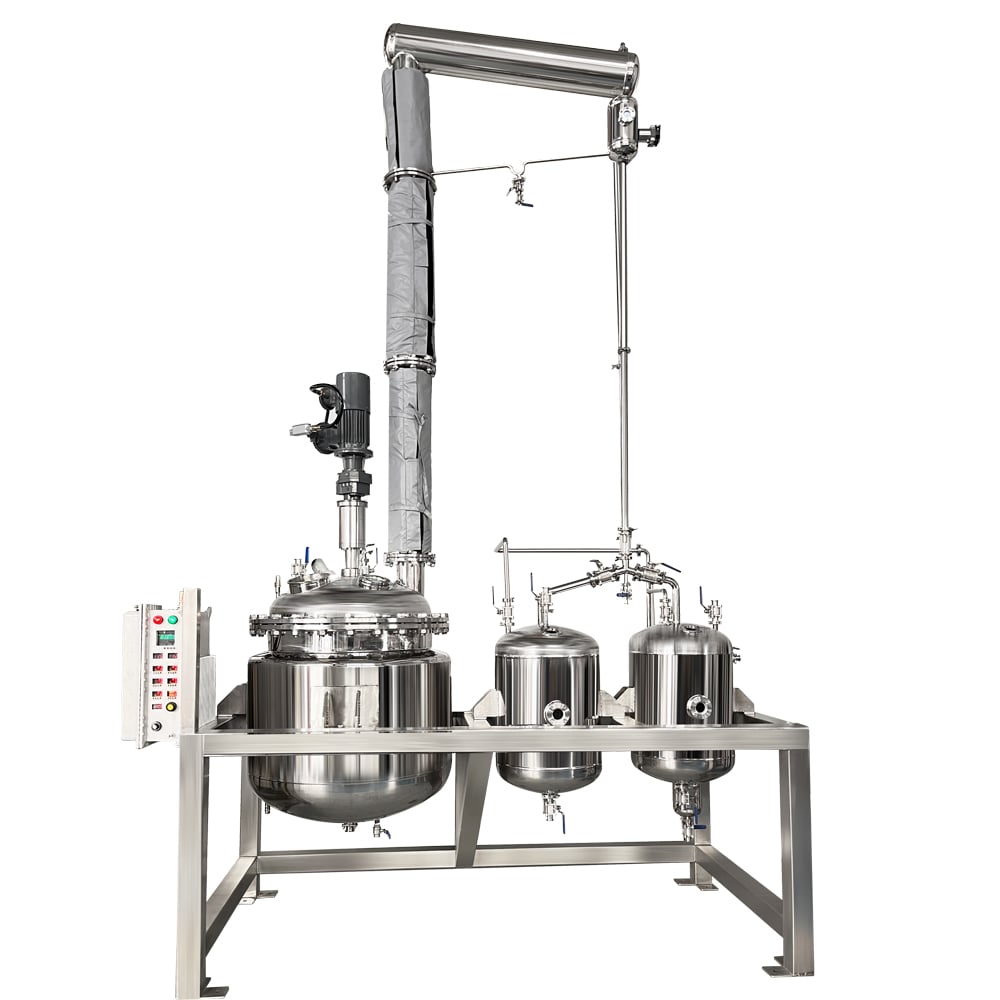
Fractional distillation separates components based on differences in boiling points. A mixture is heated in a flask, and vapors rise through a fractionating column where they repeatedly condense and re-vaporize. Each theoretical plate in the column provides one additional stage of separation. Components with lower boiling points travel higher in the column and are collected first, while heavier fractions are collected later. This method is well-established, cost-effective, and widely used in petroleum refining, alcohol production, and certain food-grade applications. However, because it operates at or near atmospheric pressure, the temperatures required are often high enough to degrade sensitive phytochemicals found in essential oils.
The Mechanism Behind Molecular Distillation
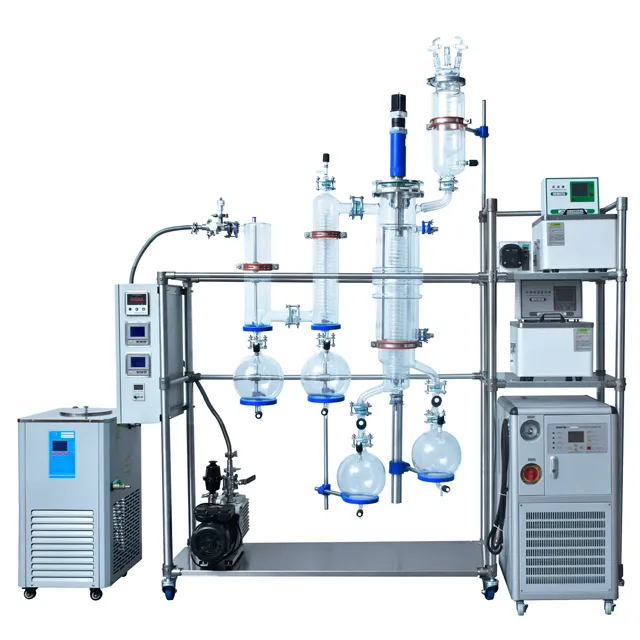
Molecular distillation operates under high vacuum conditions, typically between 0.001 and 1 mbar, which drastically reduces the boiling points of target compounds. In a wiped film molecular distillation system, the feed material is distributed as a thin film on a heated surface by a rotating wiper mechanism. Evaporation occurs rapidly, and vapor molecules travel a very short distance to a condenser positioned just millimeters away. This short path design is the defining feature of molecular distillation and gives it another common name: short path distillation. Because the residence time on the heated surface is measured in seconds, thermal degradation is minimized even for highly sensitive compounds. Molecular distillation achieves separation based on the mean free path of molecules rather than boiling point alone, making it more selective for complex botanical mixtures.
Performance Differences for Essential Oil Processing
Purity and Selectivity
Molecular distillation consistently delivers higher purity fractions when processing essential oils and botanical extracts. Because it separates at the molecular level under vacuum, it can isolate specific fractions such as high-potency terpene concentrates or purified cannabinoid distillates with far greater precision than fractional distillation. The ability to operate molecular distillation at low temperatures also preserves the aromatic profile, color, and bioactive integrity of delicate compounds that would otherwise degrade under the higher temperatures required by fractional distillation. For producers focused on premium-grade essential oil fractions, molecular distillation is the superior choice for achieving consistent, high-purity output.
Thermal Stress and Product Quality
One of the most critical advantages of molecular distillation over fractional distillation is the dramatic reduction in thermal exposure. Essential oil compounds such as linalool, citronellol, and various sesquiterpenes are sensitive to oxidation and polymerization at elevated temperatures. Fractional distillation, even when performed under partial vacuum, exposes these compounds to prolonged heat during the repeated condensation cycles within the column. Molecular distillation eliminates this issue by reducing both process temperature and contact time simultaneously. The result is a lighter color, a cleaner sensory profile, and a higher proportion of intact bioactive molecules in the final product. For essential oil processors aiming for pharmaceutical-grade or food-grade quality standards, molecular distillation provides a clear performance advantage over fractional distillation.
Practical Selection Guidance for Producers
When Fractional Distillation Remains Applicable
Fractional distillation is not without merit. For processing robust essential oils that contain heat-stable compounds, or for applications where initial rough separation is the goal rather than final purification, fractional distillation offers a lower equipment cost and simpler operational setup. It is well-suited to removing bulk solvent residues, separating fatty acids in crude plant oils, or achieving preliminary fractionation before a secondary molecular distillation pass. Many industrial facilities use fractional distillation as a pre-processing step to reduce the load on downstream molecular distillation systems, allowing the higher-precision equipment to operate more efficiently on a cleaner feedstock.
When Molecular Distillation Is the Right Investment
Molecular distillation becomes the logical primary investment when the production goal involves high-value, thermally sensitive compounds. Essential oil processors working with cannabis-derived terpenes, hemp extracts, sandalwood oil fractions, rose absolute refinements, or other premium botanicals consistently rely on molecular distillation for final purification. The technology is also essential when regulatory or market standards require demonstrably low residual solvent levels and high compound-specific purity. A glass wiped film molecular distillation system offers the additional advantage of visual process monitoring, which is valuable during method development and scale-up phases. Molecular distillation also integrates well into continuous processing workflows, offering higher throughput per unit of floor space compared to batch fractional distillation setups at equivalent purity targets.
FAQ
Is molecular distillation better than fractional distillation for all essential oils?
Not necessarily for all cases. Molecular distillation is superior for thermally sensitive, high-value essential oil fractions where purity and low thermal degradation are critical. For simpler, more heat-stable materials or for rough initial separation, fractional distillation may be sufficient and more economical. The best approach often combines both: fractional distillation for pre-processing and molecular distillation for final purification.
What vacuum level does molecular distillation require compared to fractional distillation?
Molecular distillation typically operates at vacuum levels between 0.001 and 1 mbar, which is significantly deeper than the partial vacuum sometimes used in fractional distillation systems. This deep vacuum is what allows molecular distillation to achieve evaporation at temperatures far below the standard boiling points of the target compounds, protecting sensitive aromatic and bioactive molecules from thermal damage.
Can a single molecular distillation pass achieve the desired purity for essential oil fractions?
In many cases, a single molecular distillation pass achieves significant purification, but multiple passes are common when targeting very high purity levels such as those required in pharmaceutical applications. The number of molecular distillation passes needed depends on the complexity of the feedstock, the specific compounds being isolated, and the purity specification of the final product. Each subsequent molecular distillation pass progressively increases the concentration of the target fraction.