 EN
EN

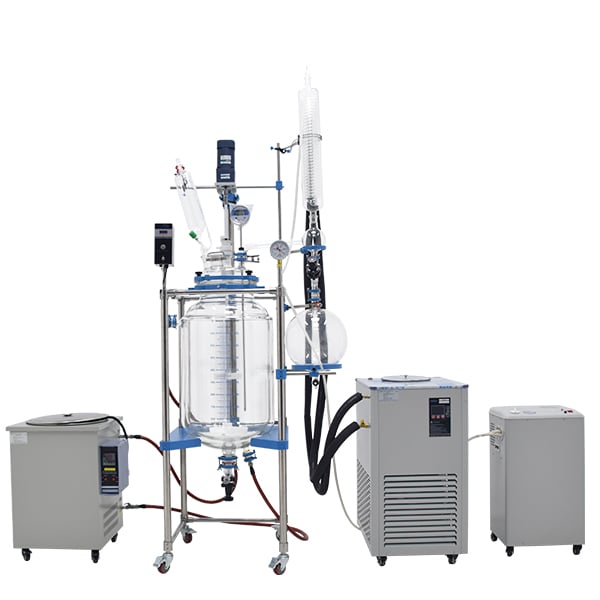
Glass reactors serve as fundamental equipment in pharmaceutical research and development, offering unparalleled visibility and chemical compatibility that makes them indispensable for drug discovery and manufacturing processes. The pharmaceutical industry relies heavily on these transparent vessels to conduct precise chemical reactions, crystallization processes, and synthesis operations under controlled conditions. Their unique properties enable researchers and production teams to monitor reaction progress in real-time while maintaining the purity standards required for pharmaceutical applications.

The versatility of glass reactors in pharmaceutical environments extends from small-scale laboratory synthesis to pilot plant operations and commercial production. These systems provide the chemical inertness, temperature control capabilities, and scalability that pharmaceutical companies need to develop new drugs efficiently while meeting stringent regulatory requirements. Understanding the specific applications of glass reactors helps pharmaceutical professionals select the appropriate equipment for their particular research objectives and production needs.
Drug Discovery and Synthesis Applications
Small Molecule Synthesis
Glass reactors excel in small molecule drug synthesis due to their ability to accommodate diverse chemical environments without contamination risks. Pharmaceutical researchers utilize these systems to develop new active pharmaceutical ingredients through multi-step organic synthesis reactions. The transparency of glass reactors allows chemists to observe color changes, precipitation events, and phase separations that indicate reaction progress or completion.
During medicinal chemistry campaigns, glass reactors enable rapid screening of reaction conditions for lead compound optimization. Research teams can easily modify temperature, pressure, and mixing parameters while maintaining visual contact with the reaction mixture. This real-time monitoring capability significantly reduces the time required to identify optimal synthetic routes for promising drug candidates.
The chemical compatibility of borosilicate glass with organic solvents, acids, and bases makes glass reactors suitable for complex pharmaceutical synthesis involving harsh reaction conditions. Researchers can perform reactions at elevated temperatures or with corrosive reagents without worrying about container degradation affecting product purity or introducing metallic contaminants.
Process Development and Scale-Up
Process development teams rely on glass reactors to establish scalable synthetic routes before transferring reactions to larger production vessels. The controlled environment provided by jacketed glass reactors allows precise temperature regulation during exothermic or endothermic reactions common in pharmaceutical synthesis. This temperature control capability is essential for maintaining reaction selectivity and preventing the formation of unwanted byproducts.
Glass reactors facilitate the optimization of crystallization conditions for active pharmaceutical ingredients, where crystal form and particle size directly impact drug bioavailability and manufacturing efficiency. Process chemists can systematically evaluate cooling rates, seeding strategies, and solvent systems while observing crystal formation through the transparent reactor walls.
The modular design of modern glass reactors supports the integration of analytical probes and sampling systems that enable real-time process monitoring. This capability allows process development teams to collect kinetic data, monitor impurity formation, and validate analytical methods under controlled conditions that closely simulate production environments.
Quality Control and Analytical Applications
Impurity Studies and Degradation Testing
Pharmaceutical quality control laboratories utilize glass reactors to conduct forced degradation studies that identify potential impurities and degradation products in drug substances. These studies require precise control of temperature, pH, and oxidative conditions to simulate long-term storage effects or manufacturing stress conditions. Glass reactors provide the inert environment necessary to ensure that observed degradation results from the drug substance rather than container interactions.
The ability to maintain consistent reaction conditions in glass reactors enables reproducible generation of reference standards for analytical method development. Quality control teams can produce controlled amounts of known impurities or degradation products for use in developing and validating analytical procedures required for regulatory submissions.
Glass reactors support photostability testing by allowing controlled exposure to light sources while maintaining temperature regulation. This capability is crucial for evaluating the photostability of light-sensitive pharmaceutical compounds and developing appropriate packaging and storage recommendations.
Method Validation and Reference Standard Preparation
Analytical laboratories employ glass reactors to prepare reference standards and validate analytical methods under precisely controlled conditions. The inert nature of glass surfaces prevents catalytic degradation or adsorption effects that could compromise the integrity of reference materials used in pharmaceutical testing.
Glass reactors enable the preparation of stability-indicating analytical standards by allowing controlled exposure to specific degradation conditions while monitoring the formation of degradation products. This capability supports the development of analytical methods that can distinguish between the active ingredient and its potential impurities throughout the product lifecycle.
The temperature control capabilities of jacketed glass reactors facilitate thermal stress testing required for analytical method validation. Quality control teams can subject drug substances to elevated temperatures while sampling at predetermined intervals to establish degradation kinetics and validate analytical procedures.
Production and Manufacturing Applications
Pilot Scale Manufacturing
Pilot scale glass reactors bridge the gap between laboratory development and commercial production by providing larger reaction volumes while maintaining the visibility and control characteristics essential for pharmaceutical manufacturing. These systems allow production teams to validate synthetic routes, optimize reaction parameters, and train operators before scaling to full production equipment.
The scalability of glass reactors enables pharmaceutical manufacturers to produce clinical trial materials under conditions that closely approximate commercial manufacturing processes. This capability reduces the risk of scale-up issues and ensures that clinical trial materials accurately represent the final commercial product in terms of purity and quality attributes.
Glass reactors in pilot scale applications support the development of robust manufacturing procedures by allowing systematic evaluation of process parameters such as mixing efficiency, heat transfer rates, and residence time distributions. This information is crucial for designing commercial production processes that consistently meet quality specifications.
Specialized Production Processes
Certain pharmaceutical production processes specifically require glass reactors due to their unique properties and chemical compatibility requirements. High-purity pharmaceutical intermediates and specialty chemicals often demand the inert environment that only glass containers can provide without risk of contamination or catalytic side reactions.
Glass reactors support the production of pharmaceutical chemicals that are sensitive to metallic catalysis or require ultra-high purity standards. The non-reactive surface of borosilicate glass eliminates concerns about trace metal contamination that could affect product quality or introduce unexpected impurities.
Temperature-sensitive pharmaceutical processes benefit from the precise thermal control capabilities of jacketed glass reactors, which can maintain narrow temperature ranges required for maintaining product stability and preventing thermal degradation during manufacturing operations.
Research and Development Innovation
Novel Drug Delivery Systems
Glass reactors play a crucial role in developing novel drug delivery systems such as nanoparticles, liposomes, and polymer-drug conjugates that require precise control of reaction conditions and particle formation processes. The transparency of glass reactors allows researchers to observe particle formation dynamics and optimize preparation parameters for achieving desired size distributions and drug loading characteristics.
Pharmaceutical nanotechnology research relies on glass reactors to maintain sterile conditions during the preparation of drug delivery systems intended for parenteral administration. The smooth glass surfaces are easily sterilized and do not shed particles that could compromise the safety of injectable formulations.
The chemical compatibility of glass reactors with both aqueous and organic solvent systems makes them ideal for developing complex drug delivery systems that require multi-phase reactions or solvent exchange processes during preparation.
Biotechnology and Biopharmaceutical Applications
Biotechnology companies utilize glass reactors for small-scale bioconjugation reactions and chemical modification of biological molecules such as proteins, peptides, and nucleic acids. The inert environment provided by glass reactors prevents unwanted side reactions that could compromise the biological activity of therapeutic proteins.
Glass reactors support the development of antibody-drug conjugates and other complex biopharmaceuticals that require precise control of reaction stoichiometry and environmental conditions. The ability to monitor these reactions visually helps researchers optimize conjugation efficiency and minimize the formation of unwanted aggregates or degradation products.
The temperature control capabilities of glass reactors enable biotechnology researchers to maintain the narrow temperature ranges required for preserving protein stability during chemical modification reactions. This precision is essential for maintaining the therapeutic efficacy of biological drug products.
FAQ
What makes glass reactors particularly suitable for pharmaceutical applications?
Glass reactors offer several advantages for pharmaceutical applications including chemical inertness that prevents contamination, transparency for visual monitoring of reactions, excellent temperature control through jacketed designs, and ease of cleaning and sterilization. These properties are essential for maintaining the purity and quality standards required in pharmaceutical manufacturing and research.
How do glass reactors compare to stainless steel reactors in pharmaceutical production?
While stainless steel reactors are preferred for large-scale production due to their durability and cost-effectiveness, glass reactors excel in applications requiring chemical inertness, visual monitoring, or handling of corrosive materials. Glass reactors are particularly valuable for research and development, quality control testing, and production of high-purity pharmaceutical intermediates where metal contamination must be avoided.
What size ranges of glass reactors are commonly used in pharmaceutical applications?
Pharmaceutical applications typically utilize glass reactors ranging from small laboratory units of 1-5 liters for research and development to pilot scale systems of 50-200 liters for process development and clinical material production. The choice of size depends on the specific application, from early-stage research requiring small quantities to pilot manufacturing for clinical trials.
What safety considerations are important when using glass reactors in pharmaceutical environments?
Safety considerations for glass reactors in pharmaceutical environments include proper pressure and temperature monitoring to prevent thermal shock, use of appropriate safety shields to contain potential glass breakage, regular inspection for cracks or stress points, and proper training of operators on glass reactor limitations. Additionally, emergency procedures should be established for handling glass breakage incidents to prevent contamination of pharmaceutical products.
Table of Contents
- Drug Discovery and Synthesis Applications
- Quality Control and Analytical Applications
- Production and Manufacturing Applications
- Research and Development Innovation
-
FAQ
- What makes glass reactors particularly suitable for pharmaceutical applications?
- How do glass reactors compare to stainless steel reactors in pharmaceutical production?
- What size ranges of glass reactors are commonly used in pharmaceutical applications?
- What safety considerations are important when using glass reactors in pharmaceutical environments?