 EN
EN

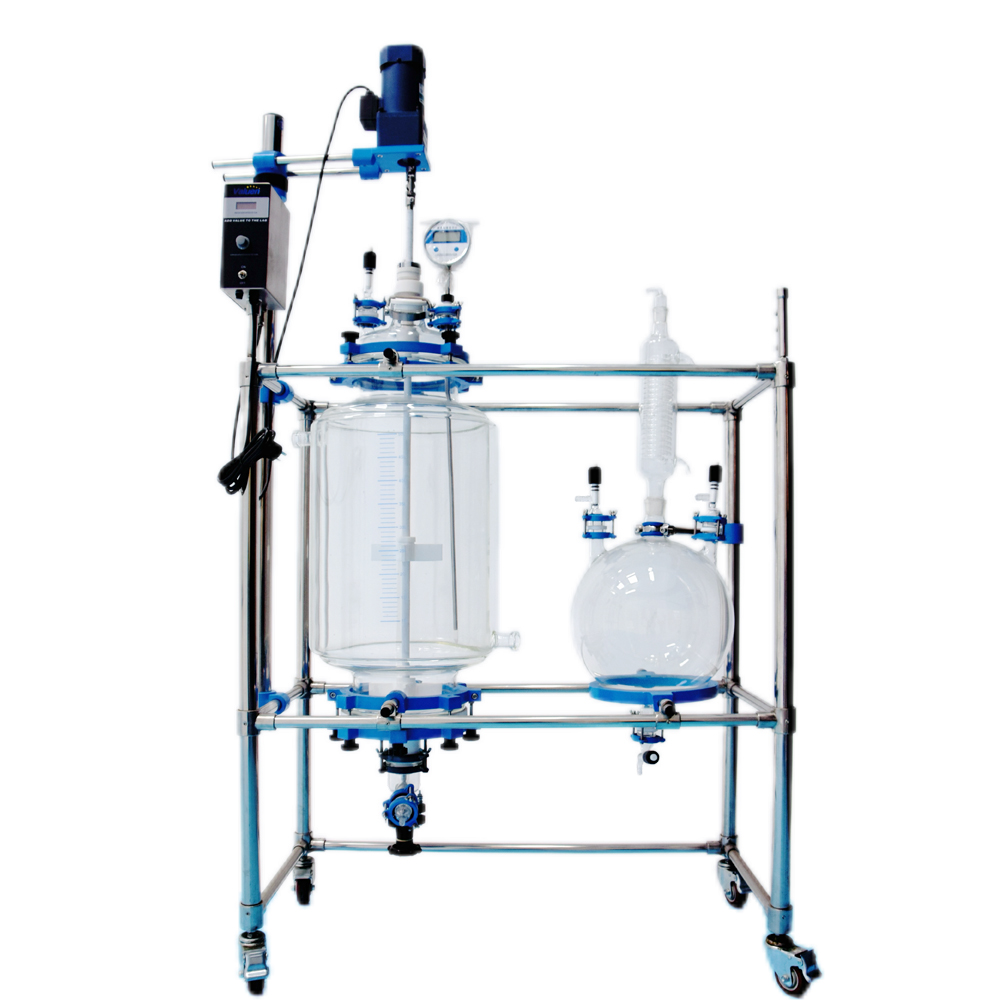
A crystallization reactor is one of the most process-sensitive pieces of equipment in chemical, pharmaceutical, and materials manufacturing. Unlike mixing vessels or simple batch reactors, a crystallization reactor must simultaneously manage thermal gradients, solute concentration, nucleation dynamics, and filtration — often within tightly controlled time windows. Even minor deviations in operating conditions can cascade into significant yield losses, inconsistent crystal morphology, or costly rework cycles. Understanding what actually drives efficiency in these systems is therefore not an academic exercise but a direct business priority for process engineers and production managers alike.
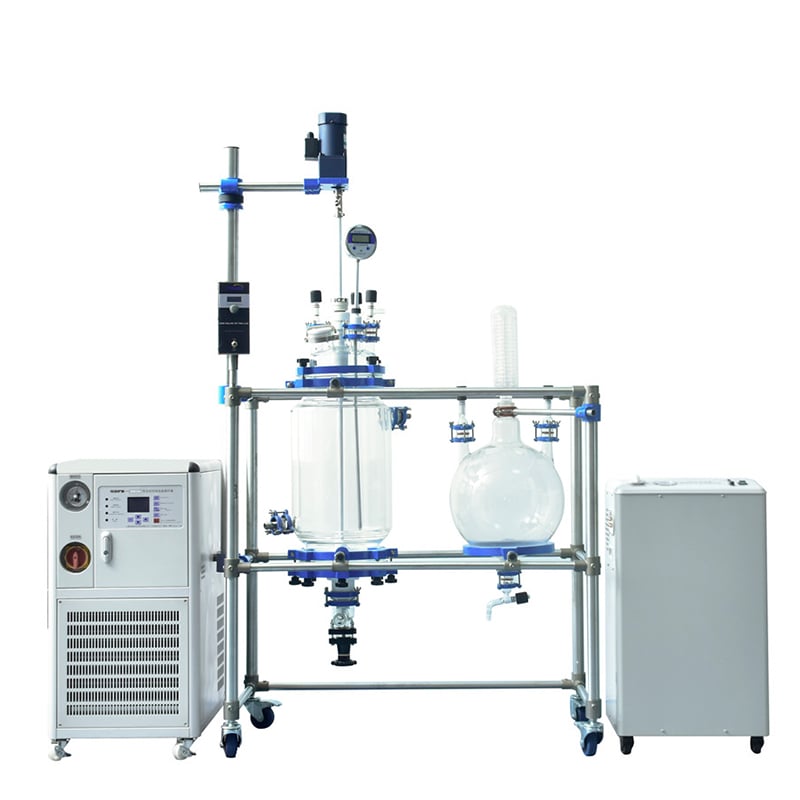
Efficiency in a crystallization reactor system is not defined by a single variable. It emerges from the interaction of temperature control precision, agitation strategy, solvent selection, supersaturation management, and equipment design quality. Each of these factors individually contributes to outcomes, but their combined interplay ultimately determines whether a crystallization process delivers consistent, high-purity product at acceptable throughput. This article examines the core factors that influence crystallization reactor efficiency and explains how each one should be understood, monitored, and optimized in practical industrial or laboratory contexts.
The Role of Temperature Control in Crystallization Reactor Performance
Why Thermal Precision Matters
Temperature is arguably the single most influential variable in any crystallization reactor process. The solubility of most compounds in solution is directly temperature-dependent, which means that the rate at which supersaturation is generated — and therefore the rate of nucleation and crystal growth — is primarily governed by how accurately and consistently temperature is managed. A reactor with poor thermal uniformity will create localized zones of excessive or insufficient supersaturation, leading to uneven crystal size distribution and potential polymorphic impurity formation.
In a jacketed crystallization reactor design, the jacket fluid temperature must be controlled with high precision throughout the cooling or heating ramp. Abrupt temperature changes can trigger uncontrolled primary nucleation events, producing a large number of very fine crystals rather than the fewer, larger crystals typically desired for downstream filtration and purification efficiency. Process engineers typically define controlled cooling ramps — often nonlinear profiles — to manage the nucleation-to-growth ratio in the crystallization reactor.
Temperature gradients within the vessel body are equally important. A crystallization reactor that shows significant variation between the wall surface and the bulk solution interior will experience inconsistent product quality across different production batches. This is why jacket design, internal coil configuration, and fluid circulation rate within the jacket all contribute meaningfully to overall system efficiency.
Jacket Design and Heat Transfer Efficiency
The efficiency of heat transfer through a crystallization reactor jacket depends on several geometric and material factors. The thermal conductivity of the vessel wall, the gap between the inner wall and the outer jacket, and the flow velocity of the heat transfer fluid all interact to determine how quickly and uniformly the internal process temperature responds to setpoint changes. Glass-jacketed designs are popular in laboratory and pilot-scale crystallization reactor applications because they allow visual observation of the crystallization process while maintaining reliable thermal contact.
Fouling on the inner wall of the reactor is a particularly damaging phenomenon in crystallization systems. As crystals begin to grow on cooled surfaces rather than in solution suspension, they form insulating layers that progressively reduce heat transfer efficiency. This effect, known as encrustation, is self-compounding — the more encrustation accumulates, the less effective the cooling becomes, which further disrupts the intended supersaturation profile. Monitoring wall temperature differential and scheduling periodic cleaning are therefore integral parts of maintaining crystallization reactor efficiency over time.
Agitation Strategy and Its Impact on Crystal Quality
Mixing Dynamics and Nucleation Control
Agitation in a crystallization reactor serves multiple purposes: it maintains solute concentration uniformity, promotes heat transfer from the jacket to the bulk solution, suspends growing crystals to prevent settling and agglomeration, and can influence nucleation kinetics directly through shear effects. However, agitation must be carefully calibrated — too little mixing leaves concentration and temperature gradients unresolved, while excessive agitation can shatter growing crystals or induce secondary nucleation through mechanical impact, generating an undesirable population of fine particles.
The geometry of the agitator within the crystallization reactor plays a significant role. Anchor impellers are often preferred for viscous systems because they sweep close to the vessel wall and minimize temperature gradients in that critical region. Pitched-blade turbines offer a balance of axial and radial flow that works well for many medium-viscosity crystallization applications. The choice of impeller geometry should be aligned with the specific compound being crystallized, the solvent system in use, and the target crystal size distribution.
Agitation speed should ideally be profiled throughout the crystallization cycle rather than maintained constant. During the nucleation phase, lower shear may be preferred to allow nuclei to form and stabilize. During the growth phase, sufficient agitation to maintain suspension without excessive fragmentation is the goal. Some advanced crystallization reactor setups incorporate variable-speed drives with programmable agitation profiles that mirror the cooling ramp for optimized crystal habit control.
Preventing Agglomeration and Crystal Breakage
Crystal agglomeration — where individual crystals bind together into clusters — is a persistent challenge in many crystallization reactor processes. Agglomerates are problematic because they trap impurities at the crystal boundaries and create downstream filtration and washing difficulties. High local turbulence near the agitator blades is a common cause of agglomeration, as it creates brief zones of extreme supersaturation where new nuclei can form and bond to existing particles.
Conversely, over-agitation causes crystal breakage, which increases the number of fine particles in the product, reduces average crystal size, and can make filtration significantly more difficult. The efficiency of the downstream filtration step is directly connected to the crystal size distribution produced in the crystallization reactor — large, well-formed crystals filter quickly and wash cleanly, while a fine or agglomerated product can clog filter media and require extended cycle times.
Supersaturation Management as a Central Efficiency Driver
Understanding the Metastable Zone
Supersaturation is the fundamental thermodynamic driving force behind all crystallization. In a crystallization reactor, the process operator must maintain the solution within what is known as the 'metastable zone' — a region where the solution is supersaturated enough to support crystal growth on existing nuclei but not so highly supersaturated that spontaneous primary nucleation produces excessive fines. Staying within this zone throughout the cooling or evaporation cycle is the central challenge of crystallization process design.
The width of the metastable zone varies significantly between compounds and solvent systems. Some materials have wide metastable zones that offer generous process latitude, while others are extremely narrow and require very precise supersaturation control. Inline analytical tools such as focused beam reflectance measurement (FBRM) or attenuated total reflectance Fourier-transform infrared spectroscopy (ATR-FTIR) are increasingly used in conjunction with the crystallization reactor to provide real-time data on particle counts and solute concentration, enabling feedback control of the supersaturation state.
When supersaturation is managed poorly, the efficiency penalty is direct and measurable: lower yields, broader crystal size distributions, polymorphic impurities, and extended cycle times. In pharmaceutical crystallization specifically, the polymorphic form of the active ingredient is a regulatory-critical attribute, making supersaturation control in the crystallization reactor a compliance issue as well as an operational one.
Seeding Strategies and Their Effect on Process Efficiency
Seeding is a widely adopted technique in industrial crystallization that involves introducing a small quantity of pre-formed crystals — 'seed crystals' — into the crystallization reactor at a defined point in the supersaturation profile. When done correctly, seeding suppresses spontaneous primary nucleation by providing ready-made surfaces for crystal growth, allowing the process to proceed via the more controllable secondary nucleation and growth pathway.
The timing, quantity, and particle size of the seed addition critically affect the outcome. Seeds added too early — before sufficient supersaturation has developed — will dissolve rather than grow. Seeds added too late allow primary nucleation to occur first, negating the purpose of seeding entirely. The seed crystal size should ideally be smaller than the target final product size to allow measurable growth within the crystallization reactor cycle, but large enough to be retained effectively during filtration if necessary.
A well-designed seeding protocol in a crystallization reactor can dramatically improve batch-to-batch consistency, increase average crystal size, reduce fines formation, and shorten total cycle time. These efficiency gains translate directly into throughput improvements and reduced downstream processing burden, making seeding one of the highest-leverage process design decisions available to crystallization engineers.
Equipment Design Factors That Influence Crystallization Reactor Efficiency
Vessel Material, Volume, and Geometry
The physical design of the crystallization reactor vessel has direct implications for process efficiency. Borosilicate glass reactors are widely used in laboratory and small pilot-scale applications because they are chemically inert to most solvents used in crystallization, allow full visual monitoring of the crystallization process, and provide reliable performance with minimal contamination risk. The transparency of glass is particularly valuable in crystallization reactor operation because operators can observe nucleation onset, crystal habit, and any wall encrustation without opening the system.
Vessel geometry — specifically the aspect ratio of height to diameter — affects mixing efficiency and heat transfer characteristics. A tall, narrow crystallization reactor will exhibit more axial stratification and may require more powerful agitation to achieve uniform conditions. A wide, shallow vessel provides better surface-area-to-volume ratio for jacket cooling but may sacrifice mixing uniformity. The ideal geometry depends on the compound being processed, the volume scale, and the viscosity of the slurry at the end of the crystallization cycle.
Integrated filter-reactor designs — where the bottom of the crystallization reactor incorporates a filter element — are particularly efficient for laboratory and small-scale production work. They eliminate the transfer step between crystallization and filtration, reducing the risk of crystal damage, temperature deviation, and yield loss that can occur when transferring a crystal slurry between vessels. This integration is a key design feature in many modern small-scale crystallization reactor platforms.
Instrumentation and Process Monitoring Capability
The ability to monitor what is happening inside the crystallization reactor in real time is a major determinant of operational efficiency. Temperature probes positioned at multiple depths, inline turbidity sensors, and particle size analyzers all provide data that enables operators and automated control systems to make timely adjustments. Without this visibility, the crystallization process becomes a 'black box' where problems are only detected at the end of the batch — after the yield or quality impact has already occurred.
Modern crystallization reactor platforms increasingly support digital data logging and connectivity with process control software. This allows the generation of detailed batch records, trend analysis across multiple runs, and the systematic optimization of cooling profiles, seeding points, and agitation speeds. Over time, this data-driven approach compresses the time required to develop and validate a new crystallization process, which itself represents a significant efficiency gain in research and development contexts.
Sensor placement and calibration frequency are practical issues that are sometimes overlooked. A temperature probe positioned near the jacket wall will report a systematically different value from one placed in the center of the bulk solution, and these differences become significant in large-volume crystallization reactor systems. Regular calibration and thoughtful sensor placement are low-cost, high-return investments in process efficiency.
Solvent System and Feed Composition Effects
Solvent Selection and Solubility Characteristics
The solvent system used in a crystallization reactor directly shapes the thermodynamic envelope within which the process operates. The temperature-dependent solubility curve of the target compound in the chosen solvent determines the theoretical yield achievable through cooling crystallization, the steepness of the supersaturation gradient created by a given temperature change, and the likelihood of co-crystallizing impurities. A solvent with a steep solubility curve offers high potential yield per degree of cooling, but also a narrower margin for supersaturation control error.
Antisolvent crystallization — where a second solvent is added to the crystallization reactor to reduce the solubility of the target compound — introduces an additional control variable. The rate of antisolvent addition must be carefully managed to avoid rapid, uncontrolled supersaturation spikes. Improper antisolvent addition rates are a common cause of fine particle formation, yield loss from oiling out, and poor crystal form selectivity. The design of the antisolvent inlet and the mixing intensity at the point of addition within the crystallization reactor are therefore important engineering considerations.
Feed Purity and Impurity Impact
The purity of the feed solution entering the crystallization reactor has a strong influence on process efficiency and product quality. Impurities in the feed can adsorb onto crystal surfaces and inhibit growth, leading to smaller crystals, irregular habits, and extended cycle times. Some impurities act as habit modifiers, changing the crystal shape in ways that affect downstream filtration and dissolution behavior. Others can be incorporated into the crystal lattice, directly compromising product purity regardless of how well the crystallization reactor is otherwise operated.
Understanding the impurity profile of the feed is therefore a prerequisite for designing an efficient crystallization reactor process. When certain impurities are known to cause problems, upstream purification steps or modified solvent systems can be used to reduce their impact. In pharmaceutical manufacturing, where impurity control is tightly regulated, this analysis is a mandatory part of the process development workflow for any crystallization reactor application.
FAQ
What is the most critical factor affecting crystallization reactor efficiency?
Temperature control precision is widely considered the most critical single factor, because it directly governs supersaturation generation — the thermodynamic driver of all crystallization. However, efficiency is ultimately a product of multiple interacting variables including agitation, seeding strategy, and solvent selection, all of which must be co-optimized within the crystallization reactor system for best results.
How does agitation speed affect the crystal size distribution in a crystallization reactor?
Agitation speed influences crystal size by affecting both nucleation rate and crystal breakage. Too little agitation allows concentration and temperature gradients to develop, causing uneven supersaturation and inconsistent nucleation. Too much agitation causes mechanical crystal breakage and secondary nucleation, producing a large population of fine particles. Optimal agitation in a crystallization reactor is typically a profiled, dynamic setting rather than a fixed constant speed throughout the batch cycle.
Why is seeding used in industrial crystallization reactor processes?
Seeding is used to control nucleation by providing pre-existing crystal surfaces for growth, which suppresses the formation of unwanted spontaneous nuclei. This leads to more consistent crystal size distribution, better polymorphic form control, shorter cycle times, and improved batch-to-batch reproducibility in the crystallization reactor. It is a standard technique in pharmaceutical and fine chemical manufacturing where product quality consistency is tightly regulated.
What advantages does a glass-jacketed crystallization reactor offer over metal vessels?
A glass-jacketed crystallization reactor provides direct visual observation of the crystallization process, including nucleation onset, crystal growth, and wall encrustation. Glass is chemically inert to most common solvents, reducing contamination risk. The jacketed design enables precise temperature control through circulating heat transfer fluid. These features make glass-jacketed systems particularly well-suited for laboratory-scale process development, where understanding what is happening inside the crystallization reactor is essential for efficient method development and optimization.
Table of Contents
- The Role of Temperature Control in Crystallization Reactor Performance
- Agitation Strategy and Its Impact on Crystal Quality
- Supersaturation Management as a Central Efficiency Driver
- Equipment Design Factors That Influence Crystallization Reactor Efficiency
- Solvent System and Feed Composition Effects
-
FAQ
- What is the most critical factor affecting crystallization reactor efficiency?
- How does agitation speed affect the crystal size distribution in a crystallization reactor?
- Why is seeding used in industrial crystallization reactor processes?
- What advantages does a glass-jacketed crystallization reactor offer over metal vessels?