 EN
EN

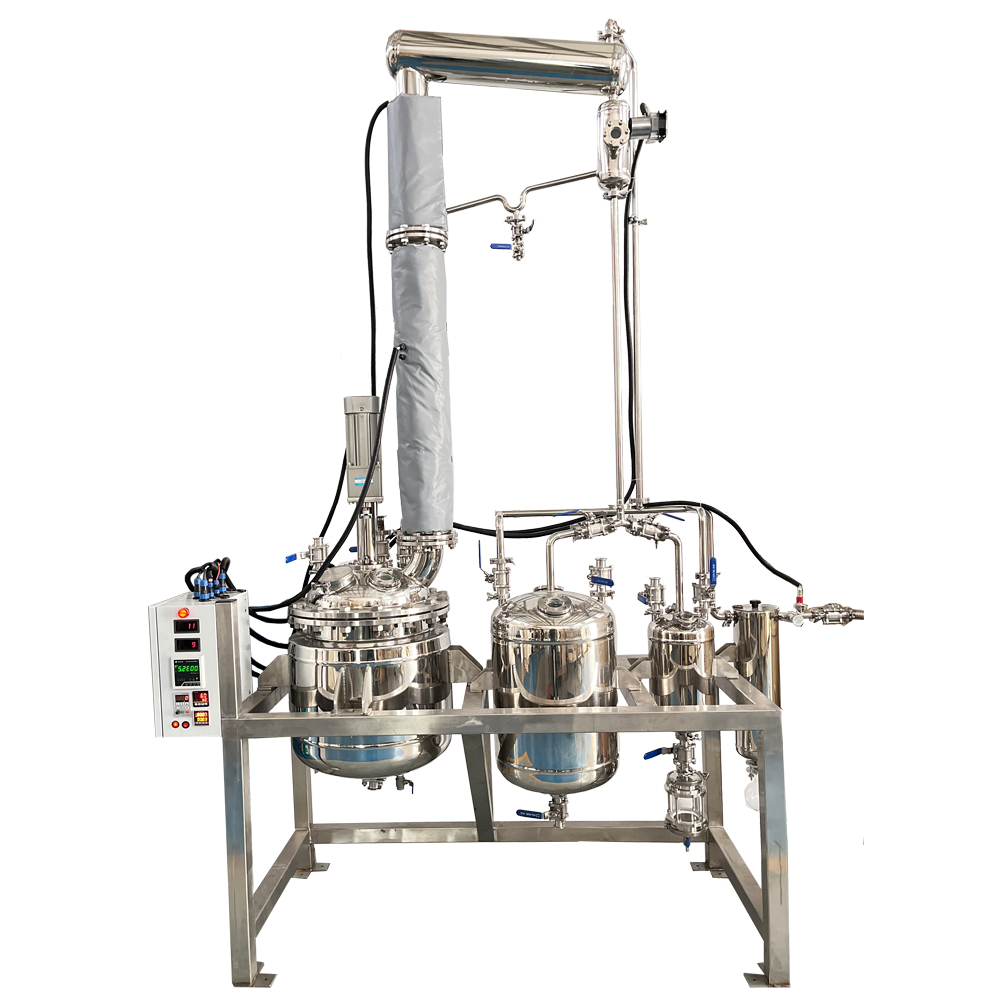
In industrial production, achieving precise separation of mixed compounds is one of the most critical challenges engineers and process designers face. Fractional Distillation stands out as a highly reliable method for separating mixtures into their individual components based on differences in boiling points. Unlike simpler distillation methods, fractional distillation uses a fractionating column that creates multiple theoretical plates, allowing vapors and liquids to interact repeatedly and enabling far more precise separation of components with close boiling points.
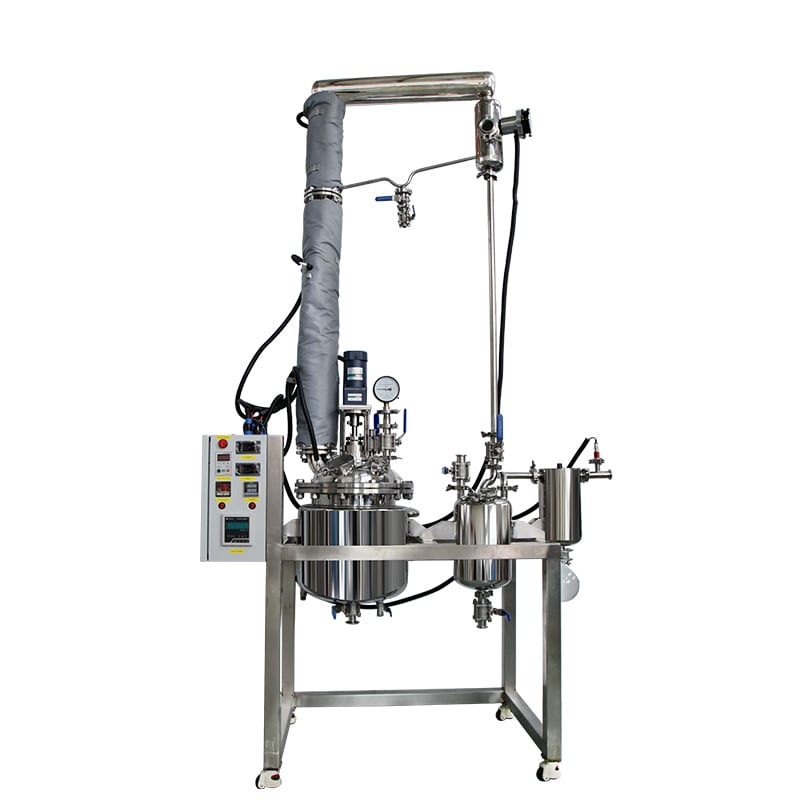
The improvement in separation accuracy that fractional distillation delivers is not incidental — it is a direct result of the physical and thermodynamic principles built into the process itself. For manufacturers in industries ranging from petrochemicals and pharmaceuticals to food processing and essential oil extraction, understanding how and why this method outperforms basic distillation is essential for making informed decisions about production equipment and workflow design. This article explores the mechanisms, operational logic, and practical production benefits that make fractional distillation a gold standard for separation accuracy.
The Core Mechanism Behind Fractional Distillation Accuracy
How the Fractionating Column Works
The fractionating column is the heart of any fractional distillation system. It provides a vertical structure filled with packing material or trays that dramatically increase the surface area available for vapor-liquid contact. As vapor rises through the column and cooler liquid descends, repeated cycles of condensation and re-evaporation occur at each theoretical plate. This back-and-forth exchange allows the lighter, more volatile components to concentrate progressively toward the top of the column while heavier components remain lower.
Each theoretical plate in the column functions as an individual equilibrium stage. The more plates a column has, the greater the resolution between components. This is why fractional distillation can separate compounds with boiling point differences as small as a few degrees Celsius — a task that would be impossible with a simple pot still. The packing efficiency of the column directly determines how many theoretical plates are achieved per unit of height, making column design a critical engineering variable.
Modern fractional distillation systems often use structured or random packing materials to maximize the number of theoretical plates without requiring excessively tall equipment. The geometry and surface texture of the packing material influences how well vapor and liquid phases interact, contributing directly to the resolution of the final separation. This means that investing in high-quality column internals is a direct investment in separation accuracy.
Vapor-Liquid Equilibrium and Component Selectivity
At its thermodynamic core, fractional distillation relies on differences in vapor-liquid equilibrium between components. When a mixture is heated, the component with the lowest boiling point produces a disproportionately high concentration of vapor compared to the liquid phase. Fractional distillation exploits this disparity by allowing multiple equilibrium stages to reinforce the selectivity, steadily enriching the vapor with the target lighter component as it ascends the column.
The relative volatility between two components is what determines how easily they can be separated. When relative volatility is high, separation is straightforward even with a modest number of stages. However, when two components have very similar boiling points and low relative volatility, fractional distillation with a high theoretical plate count becomes indispensable. This is precisely why fractional distillation is favored in applications like alcohol purification or essential oil fractionation, where the components of interest differ only slightly in volatility.
Understanding vapor-liquid equilibrium also helps operators fine-tune reflux ratios — the proportion of condensed vapor returned to the column versus drawn off as product. A higher reflux ratio increases separation accuracy but reduces production throughput, creating a design trade-off that must be optimized for each specific application. Fractional distillation gives engineers the control variables to make this optimization possible in ways that simpler methods simply cannot.
How Reflux Ratio Control Enhances Production Outcomes
The Relationship Between Reflux and Purity
One of the most powerful operational tools in fractional distillation is reflux ratio control. The reflux ratio determines how much of the condensed overhead vapor is returned to the top of the fractionating column rather than being collected as the distillate product. A higher reflux ratio means more liquid is returned, increasing the number of effective contacts between rising vapor and descending liquid within the column. This directly translates into higher purity at the distillate output.
In practical production, this means that operators can dial in the level of purity required for a specific product run simply by adjusting the reflux ratio. For industrial processes where product specifications are strict — such as pharmaceutical intermediates or high-purity solvents — fractional distillation allows the system to be pushed toward maximum purity without redesigning the entire column. This operational flexibility is a significant advantage over fixed separation methods.
However, increasing the reflux ratio does come at a cost. As more liquid is returned to the column, the amount of product collected per unit of time decreases. This means production throughput drops as purity increases. Skilled process engineers use this trade-off to their advantage by running higher reflux ratios during critical separation phases and reducing them during less demanding collection cuts. Fractional distillation is uniquely suited to this kind of dynamic, responsive operation.
Optimizing Reflux for Multi-Component Mixtures
Many industrial feedstocks are not simple two-component mixtures but complex blends of multiple compounds with a range of boiling points. Fractional distillation handles multi-component systems by separating them into fractions, with each fraction corresponding to a boiling point range. The operator sequences through these fractions by gradually increasing the still temperature or reducing system pressure, drawing off each component or fraction at its characteristic point.
For each fraction, the reflux ratio may be adjusted independently to maintain the desired purity. This staged approach to multi-component separation is one of the most compelling arguments for choosing fractional distillation in complex production environments. Operators can collect a light forecut, a heart cut of the primary product, and a heavier tail fraction, with the fractionating column providing the separation precision to keep these fractions as distinct as possible.
In industries like essential oil production or botanical extraction, this kind of multi-fraction control allows producers to isolate specific aroma compounds or active ingredients at levels of purity that justify premium pricing in the market. The accuracy of fractional distillation directly supports both product quality and commercial value in these applications.
Structural Advantages of Fractional Distillation Over Simple Distillation
Why Column Height and Packing Density Matter
A direct comparison between fractional distillation and simple distillation reveals that the structural differences in the equipment are the source of the performance gap. In simple distillation, vapor rises from the heated flask and condenses into the collection vessel without any opportunity for re-equilibration. The result is a distillate that is enriched in the more volatile component, but not to a high degree. If the boiling points of the components are close together, simple distillation produces very poor separation.
Fractional distillation introduces the fractionating column between the flask and the condenser. As column height increases, more theoretical plates are created and more equilibrium stages become available. This is why tall columns with dense packing deliver better separation accuracy than shorter columns with sparse packing. Equipment designers must balance the desired theoretical plate count against physical constraints like ceiling height, pressure drop, and capital cost.
In stainless steel fractional distillation equipment used in laboratory and small-scale industrial settings, column design is often modular, allowing operators to add column sections as their separation needs increase. This scalability makes fractional distillation accessible for both pilot-scale testing and full-scale production, providing a consistent level of separation accuracy throughout the development and manufacturing pipeline.
Temperature Gradient Stability and Separation Sharpness
One of the most important but often overlooked factors in fractional distillation accuracy is the stability of the temperature gradient within the column. During operation, a stable temperature gradient forms from the hot bottom of the column to the cooler top. This gradient defines the separation zones along the column's height and is essential for maintaining consistent, sharp separations between fractions.
Disruptions to this temperature gradient — caused by sudden changes in heating rate, ambient temperature fluctuations, or vapor flooding — can significantly reduce separation sharpness. Flooding occurs when the vapor velocity is so high that it prevents liquid from descending properly, collapsing the gradient and mixing fractions that should remain separate. Well-designed fractional distillation systems include controls to prevent flooding and maintain stable operating conditions throughout a run.
For production environments where reproducibility is paramount, the ability of fractional distillation equipment to maintain stable temperature gradients run after run is a key quality indicator. Consistent gradient stability translates directly into consistent product purity and fraction sharpness, reducing batch-to-batch variation and improving overall production reliability.
Industrial Applications Where Fractional Distillation Delivers Maximum Separation Value
Pharmaceutical and Fine Chemical Production
In pharmaceutical manufacturing, product purity is not a preference — it is a regulatory requirement. Fractional distillation is used to purify solvents, isolate reaction intermediates, and recover valuable reagents from mixed waste streams. The ability to achieve high purity levels with well-defined fraction cuts makes fractional distillation an essential tool in compliance-driven manufacturing environments.
Fine chemical producers face similar demands. When synthesizing specialty chemicals, the target compound must be separated from unreacted starting materials, by-products, and solvents with a high degree of precision. Fractional distillation provides the separation resolution needed to meet tight purity specifications without resorting to expensive chromatographic separation or multi-step purification processes. This makes it both technically effective and economically attractive.
Additionally, the ability to scale fractional distillation from laboratory glassware to stainless steel industrial columns means that separation methods developed at the R and D stage can be transferred to production with predictable results. The same thermodynamic principles apply at both scales, and the main engineering task is replicating the theoretical plate count and reflux conditions in the larger system.
Essential Oil, Botanical, and Aromatic Compound Extraction
The production of high-value aromatic compounds and botanical extracts is another domain where fractional distillation excels. Many essential oils are complex mixtures of terpenes, esters, alcohols, and aldehydes with overlapping boiling ranges. Achieving commercially meaningful fractionation of these mixtures requires equipment that can create sharp separations across a relatively narrow temperature window.
Fractional distillation allows producers to isolate specific fractions — such as monoterpene-rich cuts or sesquiterpene fractions — from a single distillation run. This enables product customization and allows manufacturers to create premium offerings that command higher market prices. The separation accuracy of fractional distillation is directly responsible for the commercial differentiation that these producers seek.
Vacuum-assisted fractional distillation, where the system operates at reduced pressure, is particularly valuable for heat-sensitive botanical compounds. Lowering the system pressure reduces boiling points across all components, allowing separation to occur at temperatures that do not degrade the target compounds. This makes fractional distillation suitable even for delicate, high-value materials that cannot withstand atmospheric-pressure distillation temperatures.
FAQ
What makes fractional distillation more accurate than simple distillation?
Fractional distillation uses a fractionating column that provides multiple theoretical equilibrium stages. Each stage allows vapor and liquid to re-equilibrate, progressively enriching the rising vapor with lighter components. Simple distillation performs only a single equilibrium stage, making it unsuitable for separating compounds with similar boiling points. The number of theoretical plates in the fractionating column directly determines the degree of separation accuracy achievable.
How does reflux ratio affect the purity of the distillate in fractional distillation?
The reflux ratio controls how much condensed vapor is returned to the column versus collected as product. A higher reflux ratio increases the number of effective equilibrium contacts within the column, resulting in higher distillate purity. However, increasing the reflux ratio reduces production throughput. Operators must balance purity requirements against productivity targets when selecting the appropriate reflux ratio for each application of fractional distillation.
Is fractional distillation suitable for heat-sensitive materials?
Yes, fractional distillation can be adapted for heat-sensitive materials by operating under vacuum conditions. Reducing system pressure lowers the boiling points of all components, allowing separation to occur at lower temperatures that reduce the risk of thermal degradation. This makes vacuum fractional distillation particularly valuable in pharmaceutical, botanical, and fine chemical applications where preserving the integrity of sensitive compounds is critical.
What factors should be considered when selecting fractional distillation equipment for production?
Key factors include the number of theoretical plates the column can provide, the quality and type of packing material, the reflux ratio control mechanism, materials of construction for chemical compatibility, and the ability to operate under vacuum if needed. For most industrial applications, stainless steel construction is preferred for its durability, chemical resistance, and ease of cleaning. The scale of operation — from small pilot runs to continuous production — also influences which configuration of fractional distillation equipment is most appropriate.
Table of Contents
- The Core Mechanism Behind Fractional Distillation Accuracy
- How Reflux Ratio Control Enhances Production Outcomes
- Structural Advantages of Fractional Distillation Over Simple Distillation
- Industrial Applications Where Fractional Distillation Delivers Maximum Separation Value
-
FAQ
- What makes fractional distillation more accurate than simple distillation?
- How does reflux ratio affect the purity of the distillate in fractional distillation?
- Is fractional distillation suitable for heat-sensitive materials?
- What factors should be considered when selecting fractional distillation equipment for production?