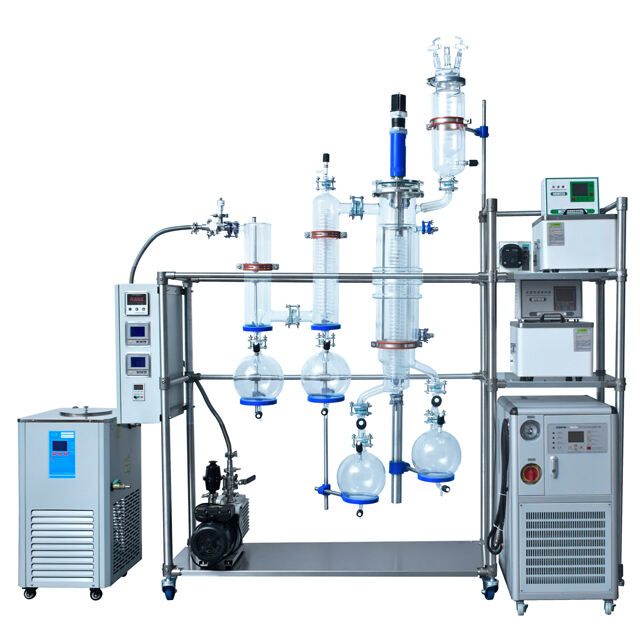
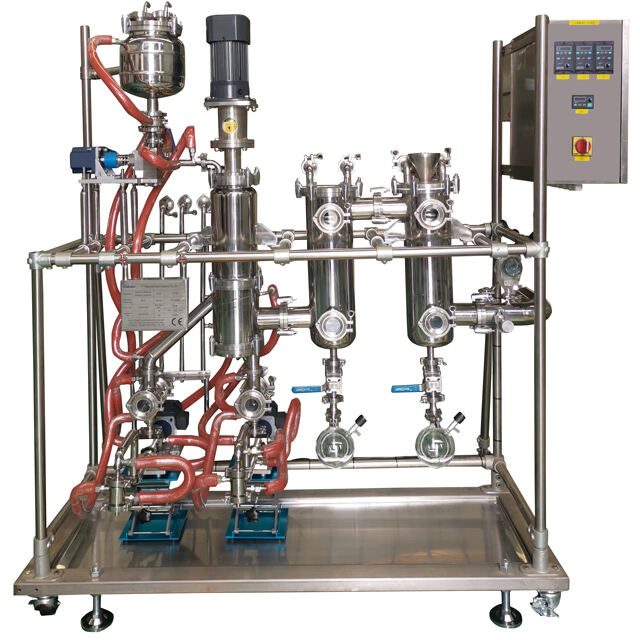
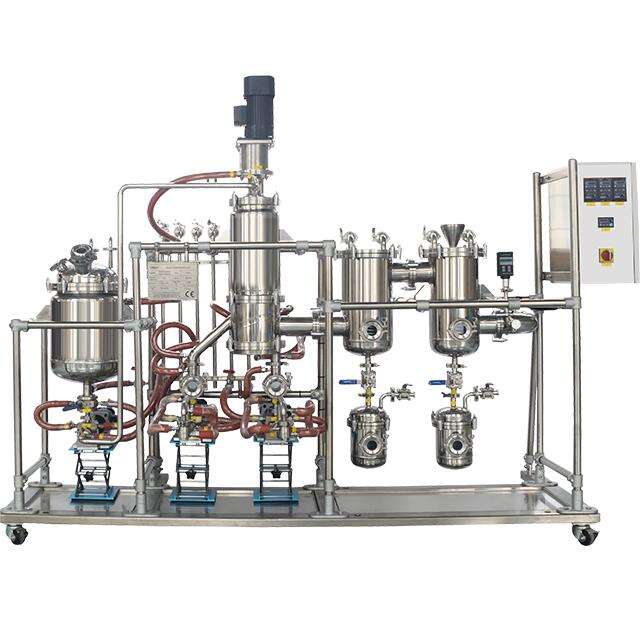
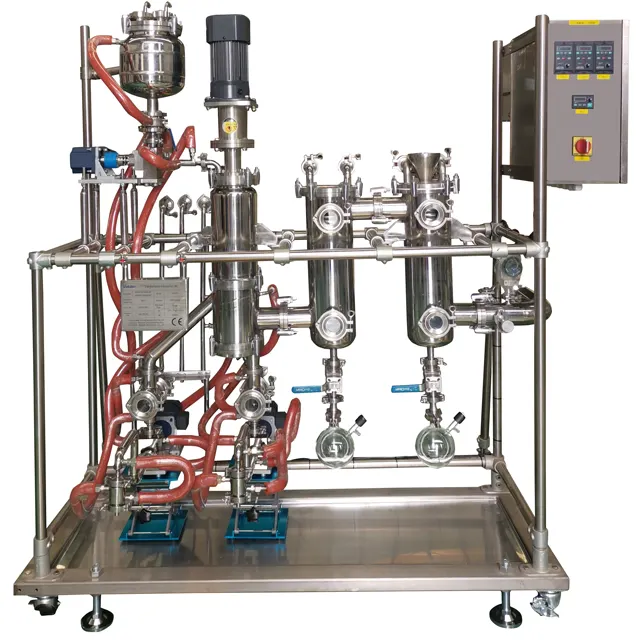
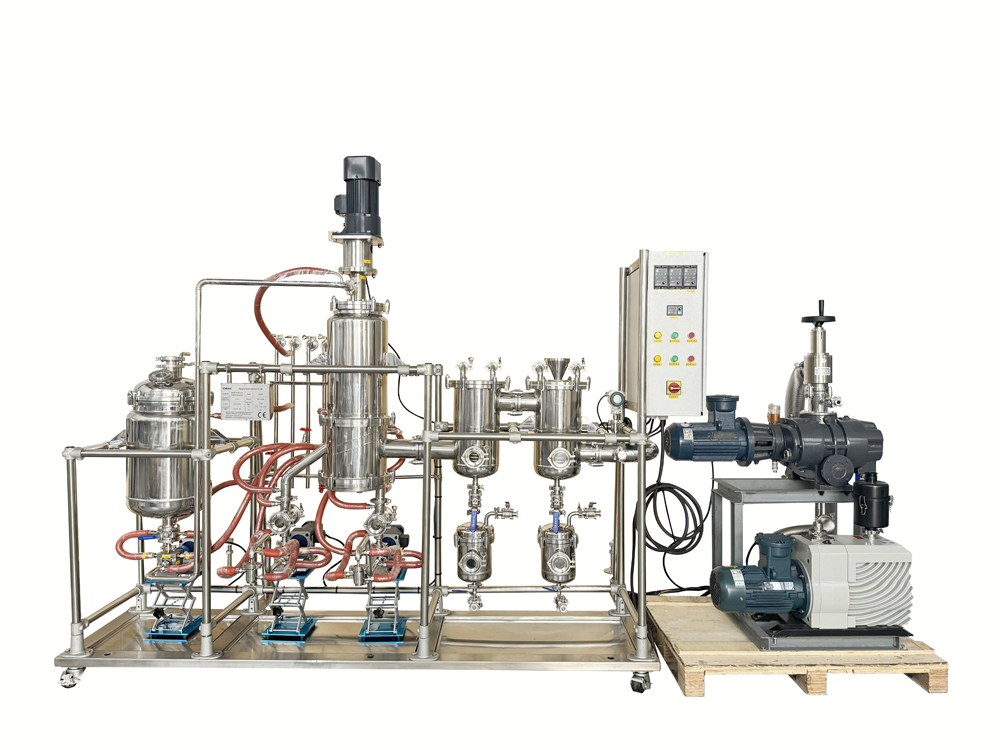
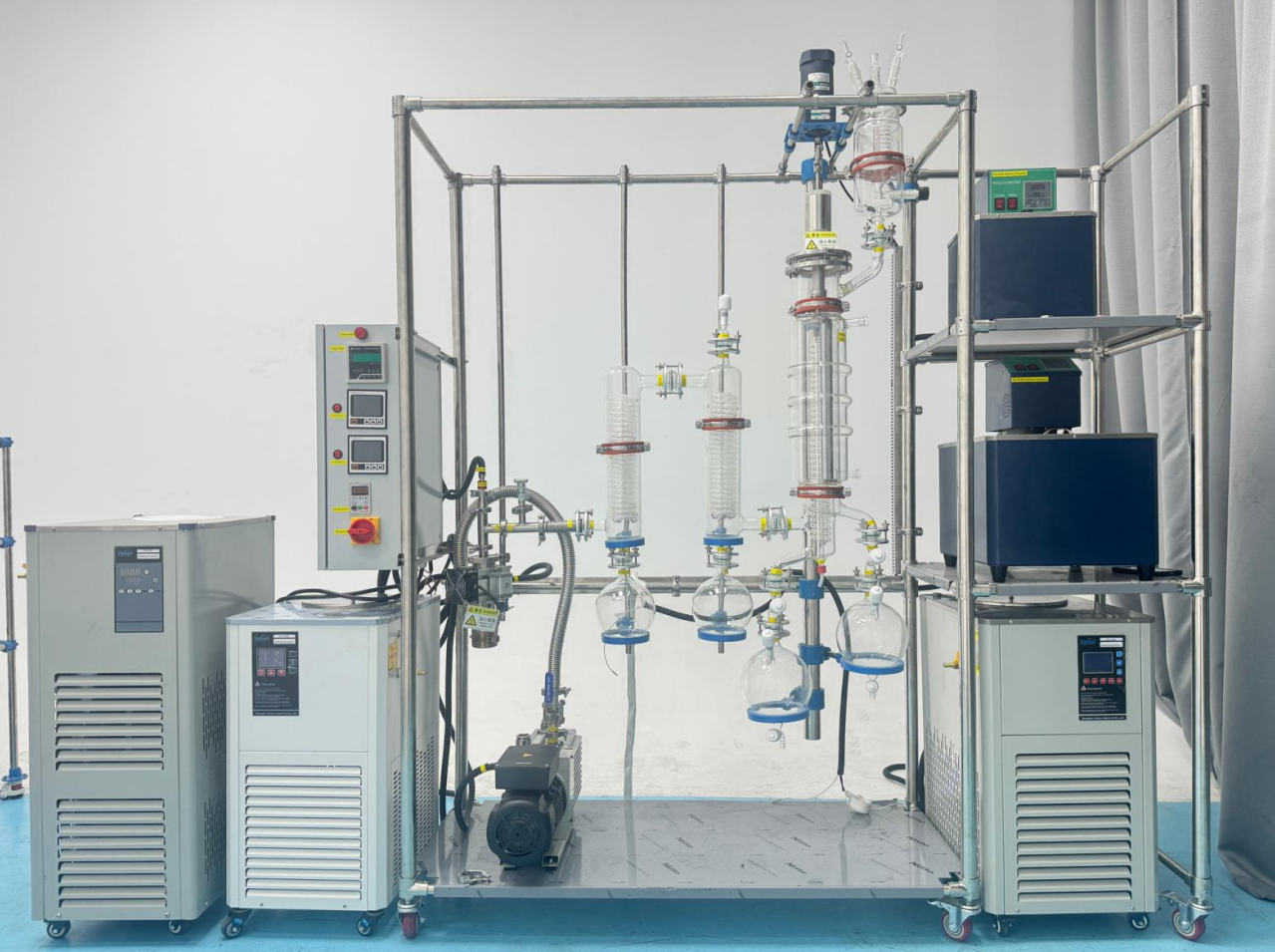
pilot scale wiped film evaporator
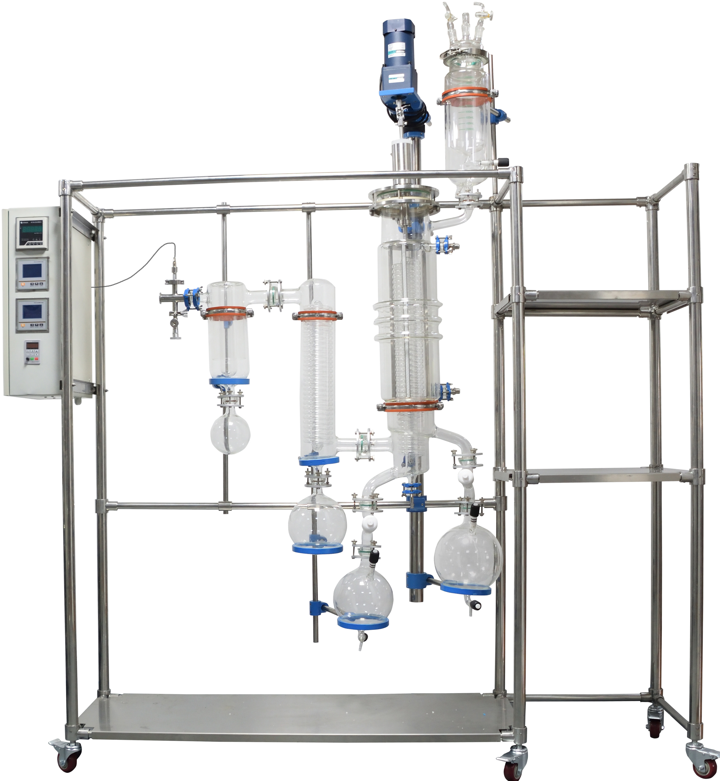
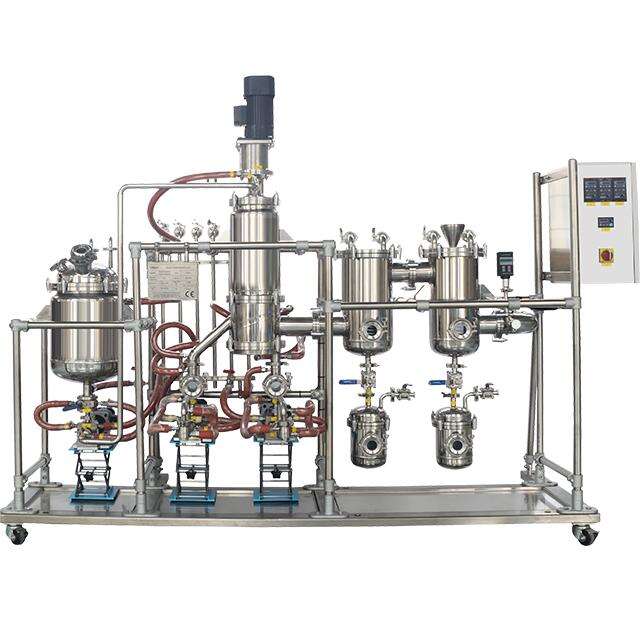
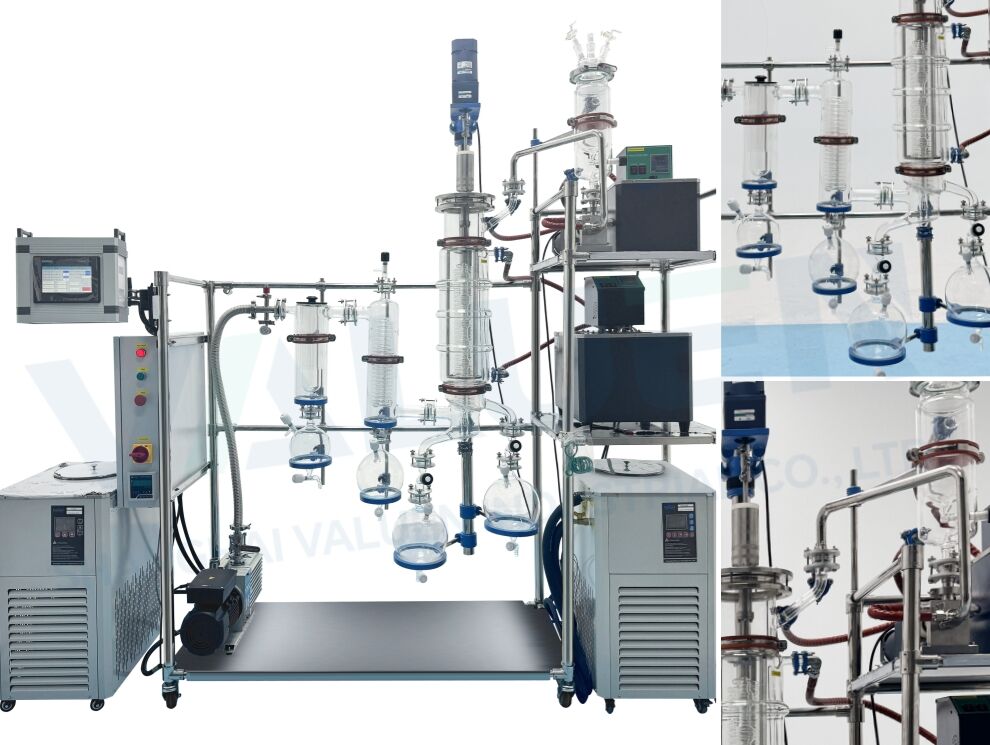
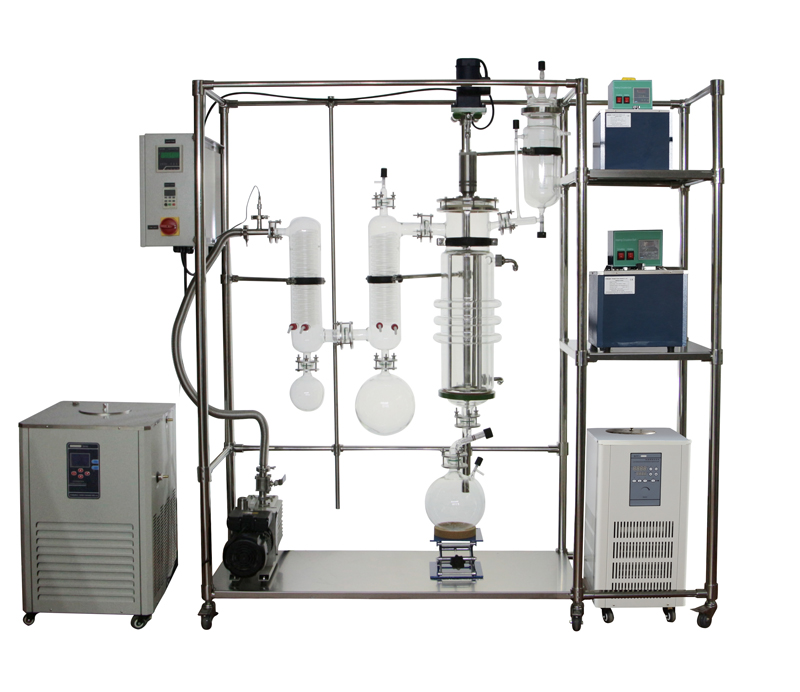
A pilot scale wiped film evaporator represents a crucial intermediate step between laboratory research and full-scale industrial production, offering researchers and manufacturers an effective solution for testing and optimizing evaporation processes. This sophisticated equipment operates on the principle of thin-film evaporation, where materials are spread into an extremely thin layer across a heated surface using mechanical wipers or blades. The pilot scale wiped film evaporator maintains consistent film thickness while ensuring uniform heat transfer throughout the process. The main functions of this equipment include concentration of heat-sensitive materials, solvent recovery, purification of chemical compounds, and removal of volatile substances from various solutions. The technological features that distinguish a pilot scale wiped film evaporator include precise temperature control systems, variable wiper speed adjustment, efficient vapor removal mechanisms, and integrated condensation units. These systems typically incorporate advanced materials of construction such as borosilicate glass or stainless steel to ensure chemical compatibility and durability. The evaporator utilizes both mechanical and thermal energy to create optimal conditions for separation processes while minimizing thermal degradation of sensitive compounds. Applications span across multiple industries including pharmaceuticals, where the pilot scale wiped film evaporator serves for drug formulation testing and active ingredient concentration. Chemical processing facilities utilize these systems for polymer concentration, resin purification, and specialty chemical production. Food and beverage industries employ pilot scale wiped film evaporators for extract concentration, flavor compound isolation, and natural product purification. Environmental applications include waste treatment processes and solvent recovery operations. The pilot scale design allows operators to gather critical process data, optimize operating parameters, and validate scale-up calculations before investing in larger production equipment. This intermediate scale provides valuable insights into heat transfer coefficients, residence time distributions, and product quality characteristics under controlled conditions.
 EN
EN