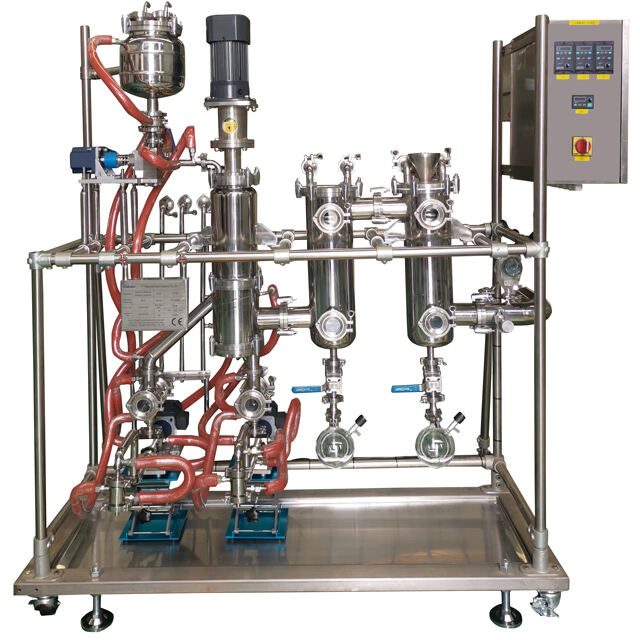
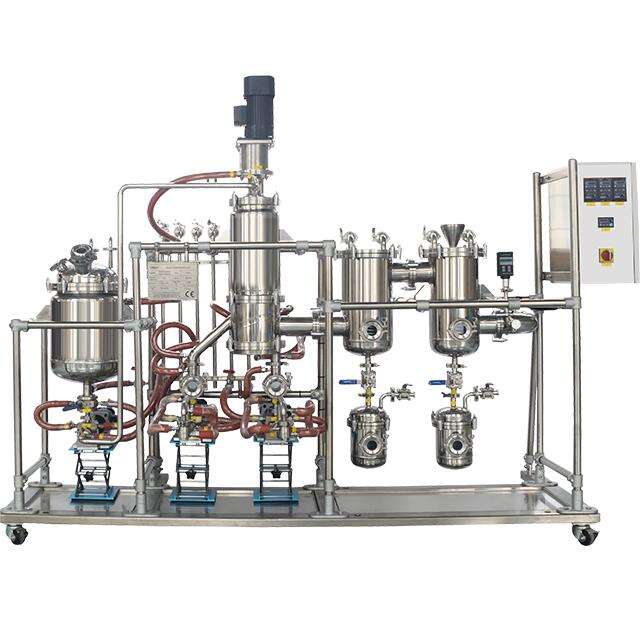
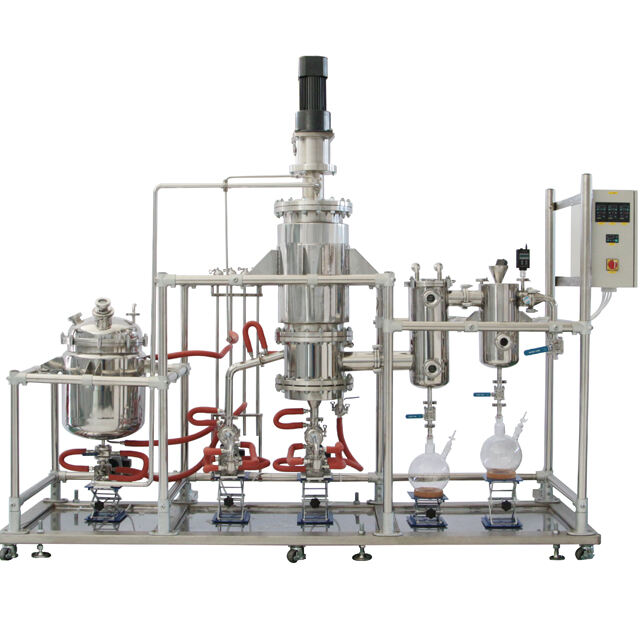
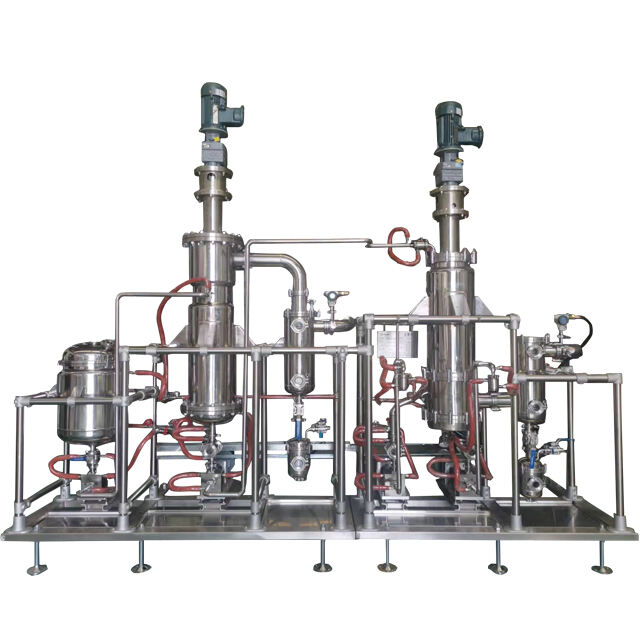
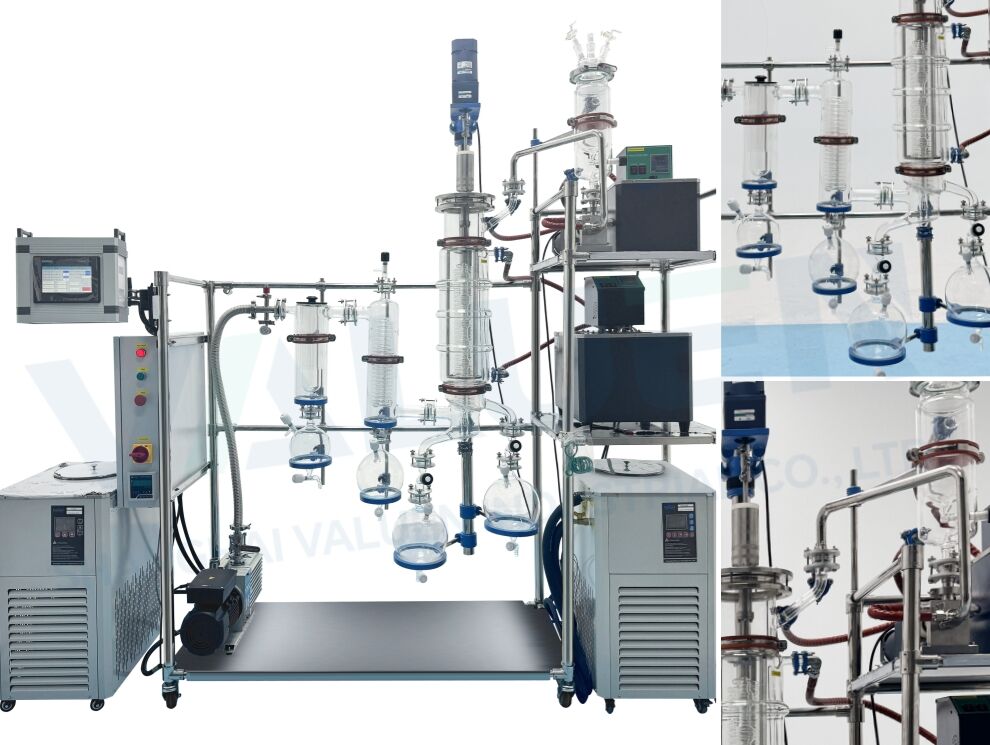
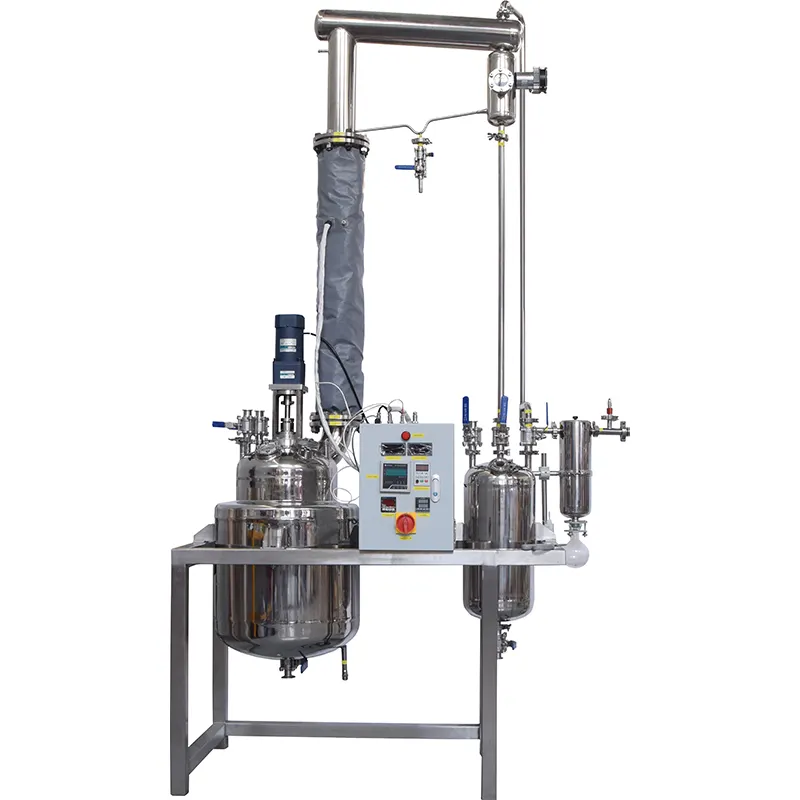
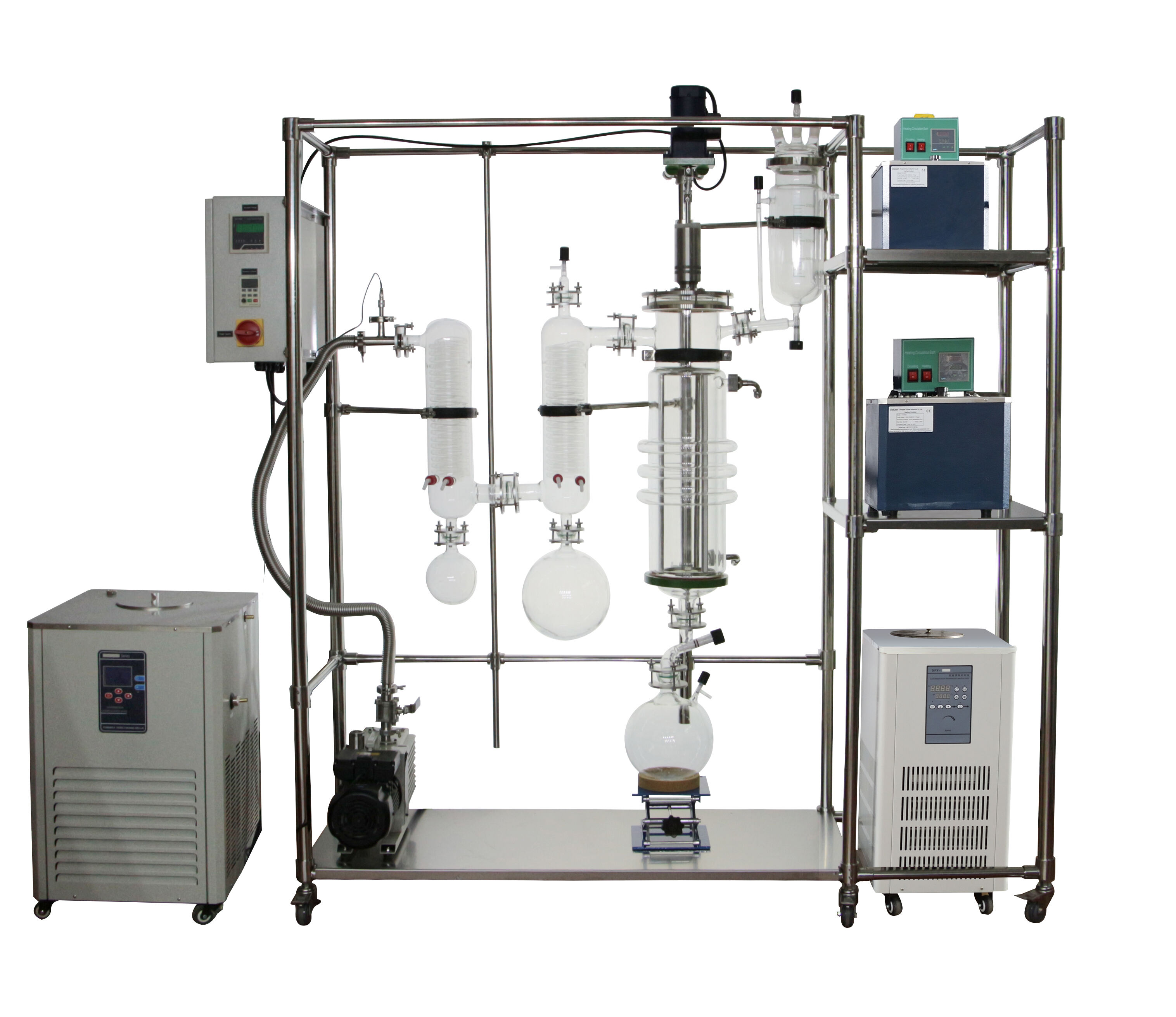
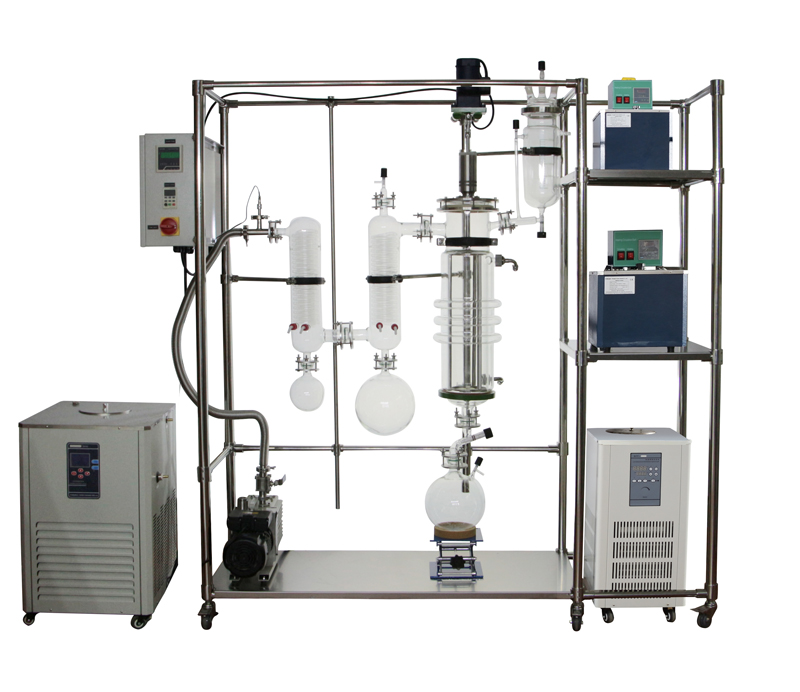
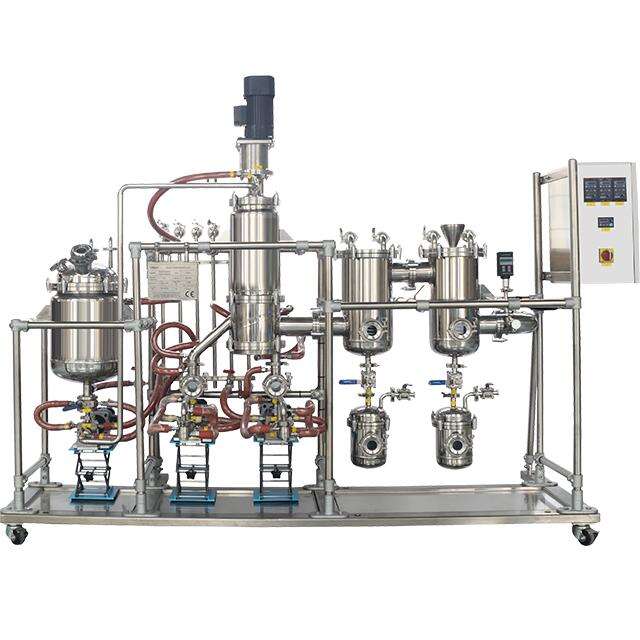
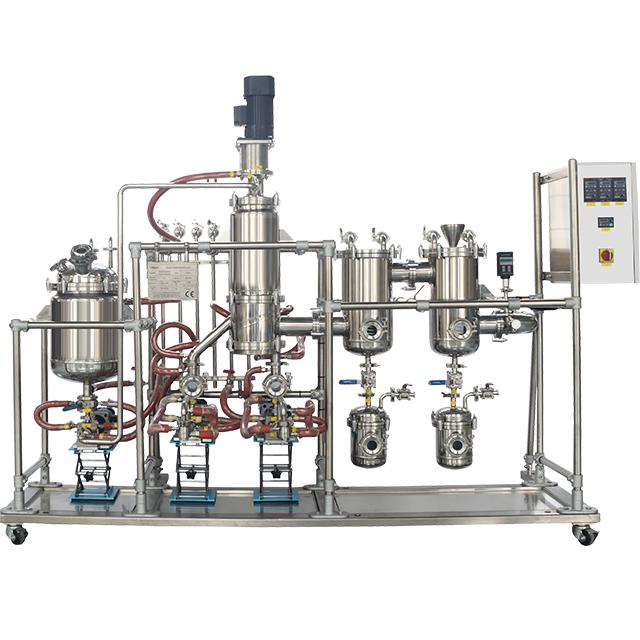
Laboratory Wiped Film Evaporator: Advanced Thin-Film Technology for Efficient Sample Processing

Get a Free Quote

Our representative will contact you soon.
Email
Name
Contact Number
Company Name
Message
0/1000

laboratory wiped film evaporator

A laboratory wiped film evaporator represents a cutting-edge solution for efficient solvent removal and sample concentration in research and analytical environments. This sophisticated instrument utilizes a mechanically wiped thin-film principle to create optimal heat and mass transfer conditions, making it an indispensable tool for modern laboratories. The laboratory wiped film evaporator operates by forming an extremely thin liquid film on a heated surface, typically a cylindrical chamber or rotor, which is continuously wiped by rotating blades or rollers. This mechanism ensures uniform heat distribution and prevents thermal degradation of sensitive compounds. The primary functions of a laboratory wiped film evaporator include solvent recovery, product purification, concentration of heat-sensitive materials, and removal of volatile components from various solutions. The technology features precise temperature control systems, vacuum operation capabilities, and adjustable residence times that accommodate different processing requirements. Advanced models incorporate digital monitoring systems, programmable parameters, and safety interlocks to ensure consistent performance and operator protection. The evaporator's design allows for continuous or batch processing, depending on laboratory needs and sample volumes. Key technological features include corrosion-resistant materials construction, easy-to-clean surfaces, and modular components that facilitate maintenance and upgrades. The heating system typically employs thermal oil, steam, or electrical elements to provide controlled energy input. Vacuum systems create reduced pressure conditions that enable evaporation at lower temperatures, preserving the integrity of thermally sensitive compounds. Applications span across pharmaceutical research, chemical synthesis, food science, environmental analysis, and material science laboratories. The laboratory wiped film evaporator proves particularly valuable for concentrating botanical extracts, recovering expensive solvents, purifying chemical intermediates, and processing viscous materials that conventional evaporation methods cannot handle effectively. Its versatility makes it suitable for handling various viscosities, from low-viscosity solvents to highly viscous solutions, while maintaining excellent heat transfer efficiency and preventing product degradation.

Popular Products

The laboratory wiped film evaporator delivers exceptional performance benefits that significantly enhance laboratory productivity and sample quality. One of the most compelling advantages is its superior heat transfer efficiency, which reduces processing times by up to 70 percent compared to traditional evaporation methods. The continuous wiping action creates turbulence in the liquid film, promoting rapid heat exchange and eliminating hot spots that could damage sensitive compounds. This efficiency translates directly into cost savings through reduced energy consumption and increased throughput capacity. The gentle processing conditions represent another major advantage, as the laboratory wiped film evaporator operates under vacuum at lower temperatures than conventional methods. This capability preserves the chemical integrity of heat-sensitive materials, preventing decomposition and maintaining product quality. Researchers can process delicate compounds, natural extracts, and pharmaceutical intermediates without compromising their structural properties or biological activity. The equipment's versatility stands out as a significant benefit, handling viscosities ranging from water-thin solvents to honey-thick concentrates with equal effectiveness. This flexibility eliminates the need for multiple specialized instruments, reducing capital investment and laboratory space requirements. The laboratory wiped film evaporator accommodates batch sizes from small research quantities to pilot-scale volumes, making it suitable for various project scales. Solvent recovery capabilities provide substantial economic benefits, particularly when working with expensive or hazardous solvents. The system captures and purifies solvents for reuse, reducing waste disposal costs and environmental impact while recovering valuable materials that would otherwise be lost. Many laboratories report solvent recovery rates exceeding 95 percent, representing significant cost savings over time. Operational simplicity enhances user experience, as modern laboratory wiped film evaporators feature intuitive controls and automated functions that minimize operator training requirements. Digital displays provide real-time monitoring of critical parameters, while programmable recipes ensure consistent results across different operators and processing sessions. The self-cleaning design reduces maintenance time and prevents cross-contamination between samples. Safety features protect both operators and samples, including automatic shutdown systems, pressure relief valves, and explosion-proof components for handling volatile solvents. These integrated safety measures create a secure working environment while maintaining regulatory compliance. The compact footprint optimizes laboratory space utilization, fitting into existing fume hoods or dedicated workstations without requiring extensive facility modifications.

Latest News

How to Optimize Reactor Performance with Stainless Steel Material Selection and Mixing Design

12

Nov

How to Optimize Reactor Performance with Stainless Steel Material Selection and Mixing Design

Industrial chemical processing demands precise control over reaction conditions, temperature management, and material compatibility. The selection of appropriate reactor systems significantly impacts product quality, operational efficiency, and long-...
View More
What Industries Benefit Most From Advanced Fractional Distillation Systems?

24

Dec

What Industries Benefit Most From Advanced Fractional Distillation Systems?

Industrial separation processes have evolved significantly over the past century, with fractional distillation equipment emerging as one of the most critical technologies for achieving high-purity separations. This sophisticated process leverages dif...
View More
What Are the Key Advantages of a Rotary and Liftable Stainless Steel Reactor?

20

Jan

What Are the Key Advantages of a Rotary and Liftable Stainless Steel Reactor?

Modern industrial processing demands equipment that combines efficiency, versatility, and durability. A rotary and liftable stainless steel reactor represents a significant advancement in chemical processing technology, offering manufacturers the fle...
View More
What Design Features Matter in a Rotary and Liftable Stainless Steel Reactor?

20

Jan

What Design Features Matter in a Rotary and Liftable Stainless Steel Reactor?

Modern industrial chemical processing demands precision, efficiency, and reliability in every piece of equipment. Among the most critical components in pharmaceutical, chemical, and biotechnology manufacturing is the rotary and liftable stainless ste...
View More

Get a Free Quote

Our representative will contact you soon.
Email
Name
Contact Number
Company Name
Message
0/1000

laboratory wiped film evaporator

Advanced Thin-Film Technology for Maximum Efficiency

Advanced Thin-Film Technology for Maximum Efficiency

The laboratory wiped film evaporator employs revolutionary thin-film technology that creates unparalleled processing efficiency through precise mechanical control of liquid film thickness. This sophisticated system utilizes rotating wipers or blades that continuously spread the liquid into an ultra-thin layer across a heated surface, typically measuring only 0.1 to 0.5 millimeters thick. This extremely thin film formation dramatically increases the surface area-to-volume ratio, creating optimal conditions for rapid evaporation while minimizing thermal exposure time. The mechanical wiping action prevents the formation of dry spots and ensures uniform heat distribution across the entire processing surface, eliminating the risk of local overheating that could degrade sensitive compounds. The laboratory wiped film evaporator's design incorporates adjustable wiper speeds and configurations that can be optimized for different material properties and processing requirements. High-viscosity materials benefit from slower wiper speeds that provide adequate mixing and film formation, while low-viscosity solvents can be processed at higher speeds for maximum throughput. The continuous renewal of the liquid surface through wiping action maintains optimal heat transfer coefficients throughout the entire processing cycle, resulting in consistent performance regardless of changing material properties during concentration. This technology enables the laboratory wiped film evaporator to handle materials that would be impossible to process using conventional evaporation methods, including highly viscous polymers, sticky resins, and thermally sensitive biologicals. The precise control over film thickness and residence time allows researchers to optimize processing conditions for each specific application, achieving superior separation efficiency while preserving product quality. Temperature gradients within the thin film remain minimal due to the short thermal diffusion distances, ensuring uniform heating and preventing thermal degradation. The system's ability to process materials at temperatures significantly below their normal boiling points, combined with the enhanced heat transfer characteristics of thin films, makes the laboratory wiped film evaporator an invaluable tool for preserving the integrity of heat-sensitive compounds during concentration and purification processes.
Versatile Processing Capabilities for Diverse Applications

Versatile Processing Capabilities for Diverse Applications

The laboratory wiped film evaporator demonstrates remarkable versatility in handling an extensive range of materials and processing conditions, making it an essential instrument for diverse research applications across multiple scientific disciplines. This adaptability stems from its ability to accommodate viscosities spanning six orders of magnitude, from water-like solvents with viscosities of 1 centipoise to highly viscous materials exceeding 100,000 centipoise, all within a single instrument configuration. The laboratory wiped film evaporator's flexible design allows researchers to process everything from organic solvents and aqueous solutions to polymeric materials, botanical extracts, and pharmaceutical intermediates without requiring different equipment setups. The system's modular construction enables easy configuration changes to match specific processing requirements, including different rotor designs, heating methods, and collection systems. Interchangeable components allow the same laboratory wiped film evaporator to handle corrosive chemicals, high-temperature applications, and cryogenic processing with appropriate material selections and safety measures. The equipment excels in applications requiring precise control over processing conditions, such as the concentration of heat-sensitive natural products where maintaining biological activity is crucial. Pharmaceutical researchers benefit from the laboratory wiped film evaporator's ability to remove residual solvents from drug intermediates while preserving molecular structure and purity. Food science applications leverage the gentle processing conditions to concentrate flavor compounds, essential oils, and nutritional extracts without thermal degradation. Environmental laboratories use the system for sample preparation and contaminant extraction, taking advantage of its ability to handle complex matrices and achieve high recovery rates. The laboratory wiped film evaporator's continuous processing capability makes it suitable for pilot-scale operations and process development work, bridging the gap between laboratory research and industrial applications. Research institutions appreciate the instrument's ability to handle both routine analytical procedures and specialized research projects with equal effectiveness. The system's capacity for handling multiple solvents simultaneously through fractional evaporation enables complex separation processes that would require multiple steps using conventional methods. This versatility translates into significant time and cost savings while expanding the range of possible experimental designs and research applications.
Precision Control and Automated Operation Systems

Precision Control and Automated Operation Systems

Modern laboratory wiped film evaporators incorporate sophisticated control systems that deliver unprecedented precision in managing critical processing parameters, ensuring consistent results and optimal performance across diverse applications. These advanced control platforms feature microprocessor-based controllers that monitor and adjust temperature, vacuum pressure, rotation speed, and feed rate with exceptional accuracy, maintaining setpoints within narrow tolerances throughout extended processing periods. The laboratory wiped film evaporator's integrated sensors continuously track multiple parameters simultaneously, providing real-time feedback to the control system for immediate adjustments when conditions deviate from optimal ranges. Digital temperature controllers with PID algorithms maintain heating surface temperatures within ±1°C of setpoints, while precision vacuum regulators ensure consistent pressure conditions that are crucial for repeatable evaporation rates. The automated operation capabilities significantly reduce operator workload and minimize the potential for human error, particularly important when processing valuable or limited samples. Programmable recipe storage allows researchers to save and recall specific processing conditions for different materials, ensuring consistent results across multiple runs and different operators. The laboratory wiped film evaporator's data logging functions automatically record all critical parameters throughout the processing cycle, creating comprehensive documentation for quality assurance, regulatory compliance, and process optimization efforts. Advanced models feature touchscreen interfaces that provide intuitive operation while displaying real-time process data in graphical formats that facilitate quick assessment of system performance. Safety interlocks integrated into the control system prevent unsafe operating conditions by automatically shutting down the laboratory wiped film evaporator if parameters exceed predetermined limits, protecting both equipment and operators. Remote monitoring capabilities enable researchers to observe processing progress from remote locations, while alarm systems provide immediate notification of any abnormal conditions requiring attention. The control system's self-diagnostic functions continuously monitor component health and performance, providing predictive maintenance alerts that help prevent unexpected downtime. Integration with laboratory information management systems enables seamless data transfer and comprehensive record-keeping, essential for regulated environments and research documentation requirements. These sophisticated control features transform the laboratory wiped film evaporator from a simple evaporation device into an intelligent processing system that optimizes performance automatically while providing the flexibility needed for advanced research applications.

Get a Free Quote

Our representative will contact you soon.
Email
Name
Contact Number
Company Name
Message
0/1000