 EN
EN

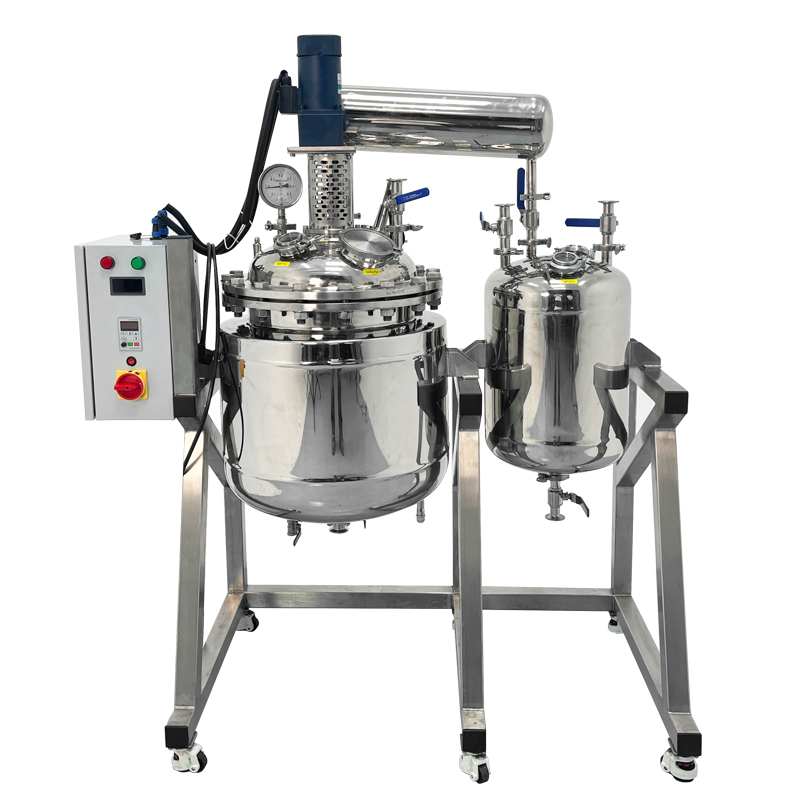
Process intensification has emerged as a revolutionary approach in chemical engineering, fundamentally changing how industrial processes are designed and operated. At the heart of this transformation lies the distillation reactor, a sophisticated piece of equipment that combines reaction and separation operations into a single unit. This innovative technology represents a paradigm shift from traditional sequential processing methods to more efficient, integrated systems that deliver superior performance while reducing operational complexity and costs.

The integration of reaction and distillation processes represents one of the most significant advances in modern chemical manufacturing. Traditional approaches typically involve separate reactors and distillation columns, requiring multiple equipment units, extensive piping systems, and complex control strategies. The distillation reactor eliminates these inefficiencies by performing both functions simultaneously, creating a streamlined process that maximizes productivity while minimizing resource consumption. This technological advancement has become increasingly important as industries seek to improve sustainability and reduce environmental impact through more efficient manufacturing processes.
Fundamentals of Distillation Reactor Technology
Operating Principles and Mechanisms
The distillation reactor operates on the principle of simultaneous chemical reaction and vapor-liquid equilibrium separation. Within the reactor vessel, reactants undergo chemical transformation while the resulting products are continuously separated based on their volatility differences. This concurrent operation creates a synergistic effect where the removal of products drives the reaction equilibrium forward, often resulting in higher conversion rates and improved selectivity compared to conventional batch or continuous stirred tank reactors.
The mass transfer and heat transfer phenomena within a distillation reactor are more complex than in traditional equipment due to the simultaneous occurrence of reaction and separation. The reactor design must accommodate both the kinetic requirements of the chemical reaction and the thermodynamic requirements for effective separation. This dual functionality requires careful consideration of factors such as residence time distribution, temperature profiles, and vapor-liquid contact efficiency to ensure optimal performance for both reaction and separation operations.
Design Configuration and Internal Components
Modern distillation reactor designs incorporate various internal configurations to optimize both reaction and separation performance. Structured packings, tray systems, or specialized reactive internals provide the necessary surface area for mass transfer while maintaining appropriate conditions for chemical reaction. The selection of internal components depends on the specific reaction kinetics, thermodynamic properties of the system, and desired product specifications.
The reactor configuration also includes sophisticated temperature and pressure control systems to maintain optimal operating conditions throughout the vessel. Heat integration systems allow for efficient energy utilization, often incorporating reboilers and condensers that work in concert with the reactive zone. Advanced control systems monitor key process variables such as temperature, pressure, composition, and flow rates to ensure consistent product quality and safe operation of the distillation reactor system.
Process Intensification Benefits and Applications
Enhanced Mass Transfer and Reaction Efficiency
One of the primary advantages of implementing a distillation reactor in process intensification strategies is the significant enhancement in mass transfer efficiency. The continuous removal of products from the reaction zone eliminates product inhibition effects and drives equilibrium-limited reactions toward completion. This phenomenon is particularly beneficial for reversible reactions where product accumulation typically limits conversion in conventional reactor systems.
The enhanced mass transfer characteristics of a distillation reactor also contribute to improved heat management within the system. The vaporization of products helps remove reaction heat, providing better temperature control and reducing the risk of hot spot formation. This improved thermal management enables operation at higher reaction rates while maintaining product quality and equipment integrity. The distillation reactor design allows for precise temperature profiling throughout the reactive zone, optimizing both conversion and selectivity.
Energy Integration and Sustainability Improvements
Energy efficiency represents a critical advantage of distillation reactor technology in process intensification applications. The integration of reaction heat with distillation energy requirements creates opportunities for substantial energy savings compared to separate reaction and separation units. Heat generated by exothermic reactions can directly contribute to the vaporization energy needed for distillation, reducing overall utility requirements and improving process economics.
The sustainability benefits extend beyond energy savings to include reduced equipment footprint, lower capital investment, and decreased waste generation. By eliminating the need for intermediate storage tanks, transfer pumps, and connecting piping between separate reaction and separation units, the distillation reactor reduces both initial investment costs and ongoing maintenance requirements. This simplified process configuration also reduces the potential for product degradation and contamination that can occur during transfers between multiple processing units.
Industrial Implementation and Case Studies
Chemical Manufacturing Applications
The chemical manufacturing industry has successfully implemented distillation reactor technology across numerous production processes, particularly in the synthesis of fine chemicals, pharmaceuticals, and specialty products. Esterification reactions represent one of the most common applications, where the continuous removal of water byproduct drives the equilibrium toward product formation while simultaneously purifying the desired ester product through distillation.
Pharmaceutical manufacturing has embraced distillation reactor technology for producing high-purity intermediates and active pharmaceutical ingredients. The ability to achieve both reaction completion and product purification in a single unit operation is particularly valuable in pharmaceutical applications where product purity requirements are stringent. The controlled environment within a distillation reactor also minimizes the risk of contamination and degradation that can occur in multi-step processes involving product transfers and storage.
Petrochemical and Refining Operations
Petrochemical and refining operations have adopted distillation reactor technology for various upgrading and conversion processes. Catalytic distillation units combine reaction and separation for processes such as alkylation, isomerization, and hydrogenation reactions. These applications demonstrate the scalability of distillation reactor technology from laboratory-scale operations to large industrial installations processing thousands of tons per day.
The integration of catalytic reaction and distillation in petrochemical applications has enabled the development of more efficient processes for producing gasoline additives, aromatics, and other valuable petrochemical products. The distillation reactor configuration allows for optimal catalyst utilization while maintaining the high separation efficiency required for meeting strict product specifications in these demanding applications.
Design Considerations and Optimization Strategies
Process Modeling and Simulation
The design and optimization of a distillation reactor requires sophisticated process modeling techniques that account for the complex interactions between reaction kinetics and vapor-liquid equilibrium. Advanced simulation software incorporates detailed mass and energy balance calculations, reaction rate equations, and thermodynamic models to predict system performance under various operating conditions. These modeling tools are essential for determining optimal design parameters such as reactor height, diameter, internal configuration, and operating pressure and temperature.
The modeling process must also consider the dynamic behavior of the distillation reactor during startup, shutdown, and upset conditions. Transient analysis helps identify potential operational challenges and guides the development of appropriate control strategies. The integration of computational fluid dynamics with reaction and separation modeling provides detailed insights into local mixing patterns, temperature distributions, and concentration profiles within the distillation reactor vessel.
Catalyst Selection and Integration
Catalyst selection for distillation reactor applications requires careful consideration of both catalytic activity and physical properties that affect separation performance. Heterogeneous catalysts must maintain their activity and selectivity under the temperature and pressure conditions required for effective distillation. The catalyst support material and particle size distribution influence both reaction rates and pressure drop characteristics within the distillation reactor column.
The physical integration of catalysts within the distillation reactor structure presents unique engineering challenges. Catalyst loading techniques must ensure uniform distribution while maintaining accessibility for replacement and regeneration. Some distillation reactor designs incorporate removable catalyst cartridges or structured catalyst elements that facilitate maintenance operations without requiring complete column shutdown.
Economic and Environmental Impact Assessment
Capital and Operating Cost Analysis
The economic advantages of distillation reactor technology stem from both reduced capital investment and lower operating costs compared to conventional process configurations. The elimination of separate reaction and separation units reduces equipment costs, foundation requirements, and installation expenses. Additionally, the reduced number of process units simplifies utility distribution systems, control systems, and safety systems, further contributing to capital cost savings.
Operating cost benefits include reduced energy consumption due to heat integration, lower labor requirements due to simplified operations, and decreased maintenance costs due to fewer equipment items. The distillation reactor configuration also typically requires less plot space than equivalent separate units, providing additional value in locations where land costs are significant. These economic advantages make distillation reactor technology particularly attractive for new plant construction and facility modernization projects.
Environmental Benefits and Regulatory Compliance
Environmental benefits of distillation reactor implementation include reduced energy consumption, lower emissions, and decreased waste generation. The improved energy efficiency translates directly to reduced greenhouse gas emissions and lower environmental impact. The elimination of intermediate storage and transfer operations reduces the potential for fugitive emissions and accidental releases.
The enhanced process control achievable with distillation reactor technology also contributes to improved product consistency and reduced off-specification production. This improved quality control reduces waste generation and the need for product reprocessing or disposal. Many regulatory agencies recognize these environmental benefits and may provide incentives or expedited permitting for projects incorporating process intensification technologies like distillation reactors.
Future Developments and Technological Advances
Advanced Materials and Construction Techniques
Future developments in distillation reactor technology focus on advanced materials that can withstand more severe operating conditions while providing enhanced performance characteristics. Specialized alloys, ceramic materials, and composite structures offer improved corrosion resistance, thermal stability, and mechanical strength. These material advances enable operation at higher temperatures and pressures, expanding the range of applications suitable for distillation reactor technology.
Additive manufacturing techniques are beginning to influence distillation reactor internal design, allowing for complex geometries that optimize both reaction and separation performance. These manufacturing capabilities enable the production of highly efficient structured packings and reactive internals with precisely controlled surface areas and void fractions. The ability to customize internal configurations for specific applications represents a significant advancement in distillation reactor optimization.
Process Control and Automation Innovations
Advanced process control systems incorporating artificial intelligence and machine learning algorithms are transforming distillation reactor operation and optimization. These systems can analyze vast amounts of operational data to identify optimal operating conditions and predict equipment performance issues before they occur. Predictive maintenance capabilities reduce unplanned downtime and extend equipment life while maintaining peak performance.
Real-time optimization systems continuously adjust operating parameters to maintain optimal performance as feedstock compositions and operating conditions vary. These control systems integrate reaction kinetic models with separation efficiency calculations to maximize overall system performance while ensuring product quality specifications are consistently met. The implementation of digital twin technology allows operators to test process modifications and optimization strategies without risking actual production operations.
FAQ
What are the main advantages of using a distillation reactor compared to separate reaction and distillation units
A distillation reactor offers several key advantages including reduced capital and operating costs, improved energy efficiency through heat integration, enhanced reaction conversion due to continuous product removal, smaller equipment footprint, and simplified process control. The integration eliminates the need for intermediate storage tanks and transfer equipment while reducing the potential for product contamination or degradation during handling operations.
How does catalyst selection affect distillation reactor performance
Catalyst selection significantly impacts both reaction and separation performance in a distillation reactor. The catalyst must maintain activity and selectivity under distillation conditions while minimizing pressure drop and mass transfer limitations. Physical properties such as particle size, shape, and mechanical strength affect column hydraulics and separation efficiency. Proper catalyst selection ensures optimal performance for both reaction conversion and product purification within the integrated system.
What types of chemical reactions are best suited for distillation reactor applications
Distillation reactors are particularly well-suited for equilibrium-limited reactions where continuous product removal drives conversion, reactions producing volatile products that can be easily separated by distillation, and processes requiring simultaneous purification and reaction. Common applications include esterification, etherification, alkylation, and various organic synthesis reactions where the products have significantly different boiling points from the reactants.
What are the key design considerations when implementing a distillation reactor system
Key design considerations include reaction kinetics and thermodynamics, vapor-liquid equilibrium relationships, heat and mass transfer requirements, pressure drop limitations, catalyst integration methods, control system complexity, safety considerations, and economic optimization. The design must balance reaction performance with separation efficiency while ensuring safe and reliable operation under all anticipated operating conditions and potential upset scenarios.
Table of Contents
- Fundamentals of Distillation Reactor Technology
- Process Intensification Benefits and Applications
- Industrial Implementation and Case Studies
- Design Considerations and Optimization Strategies
- Economic and Environmental Impact Assessment
- Future Developments and Technological Advances
-
FAQ
- What are the main advantages of using a distillation reactor compared to separate reaction and distillation units
- How does catalyst selection affect distillation reactor performance
- What types of chemical reactions are best suited for distillation reactor applications
- What are the key design considerations when implementing a distillation reactor system