 EN
EN

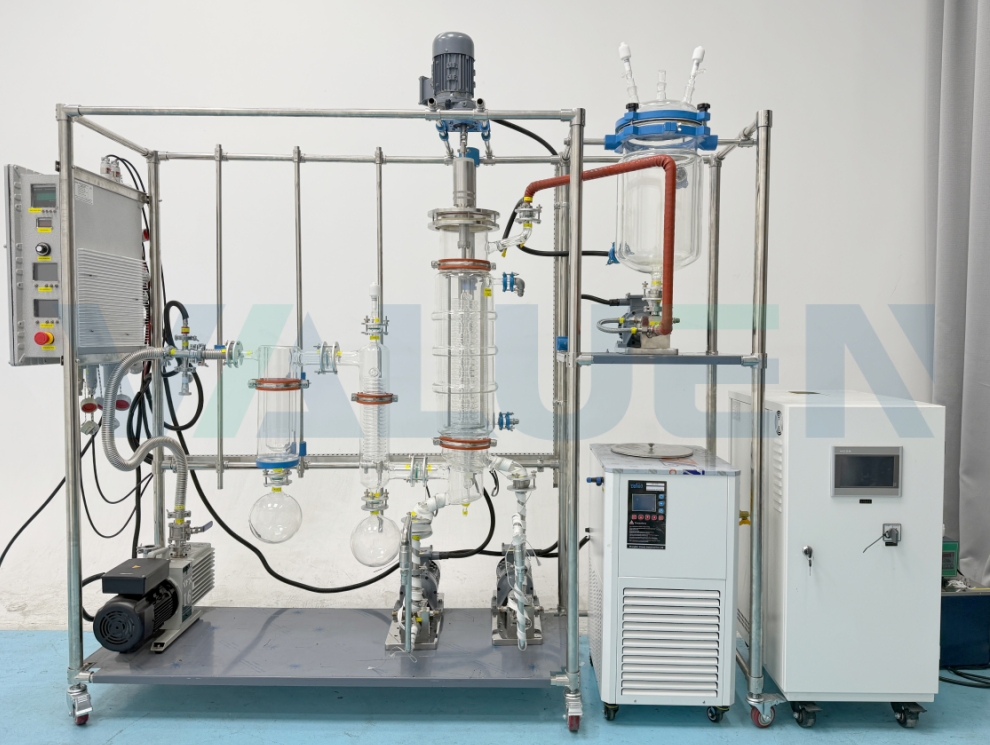
Um à prova de explosões sistema de destilação molecular de vidro uma solução essencial para a separação e purificação de materiais de alto valor, termossensíveis e à base de solventes . À medida que os setores exigem cada vez mais alta pureza, operação mais segura e condições suaves de processamento, a destilação molecular tornou-se uma tecnologia fundamental — especialmente em farmacêuticos, óleos essenciais, nutracêuticos e produtos químicos especializados .
Este artigo explica como funciona um sistema de destilação molecular em vidro à prova de explosão , suas principais considerações de projeto e como selecionar a configuração adequada para sua aplicação.
O Que É a Destilação Molecular em Vidro?
A destilação molecular em vidro é um tipo de destilação de curto caminho realizado sob alto vácuo , onde o caminho livre médio das moléculas é maior do que a distância entre a superfície do evaporador e o condensador.
Em comparação com a destilação convencional, a destilação molecular oferece:
Extremamente baixas temperaturas de operação
Tempo de residência curto
Degradação térmica mínima
Alta eficiência de separação para componentes com pontos de ebulição próximos
A construção em vidro permite excelente resistência química, visibilidade e flexibilidade , tornando-a ideal para sistemas de laboratório e de escala piloto.
Por Que o Design à Prova de Explosão é Fundamental
Muitos processos de destilação molecular envolvem solventes inflamáveis ou voláteis , como etanol, hexano ou compostos à base de terpenos. Nesses casos, um sistema de destilação molecular à prova de explosão (Ex-proof) é essencial para garantir a operação segura.
Principais riscos de segurança abordados pelo design Ex-proof:
Ignição de vapores de solvente
Faíscas elétricas provenientes de motores ou controladores
Acúmulo de eletricidade estática
Superaquecimento das linhas de descarga
Um sistema à prova de explosão reduz significativamente o risco operacional, ao mesmo tempo que cumpre as normas internacionais de segurança para manipulação de solventes.
Componentes Principais de um Ex-proof Sistema de destilação molecular de vidro
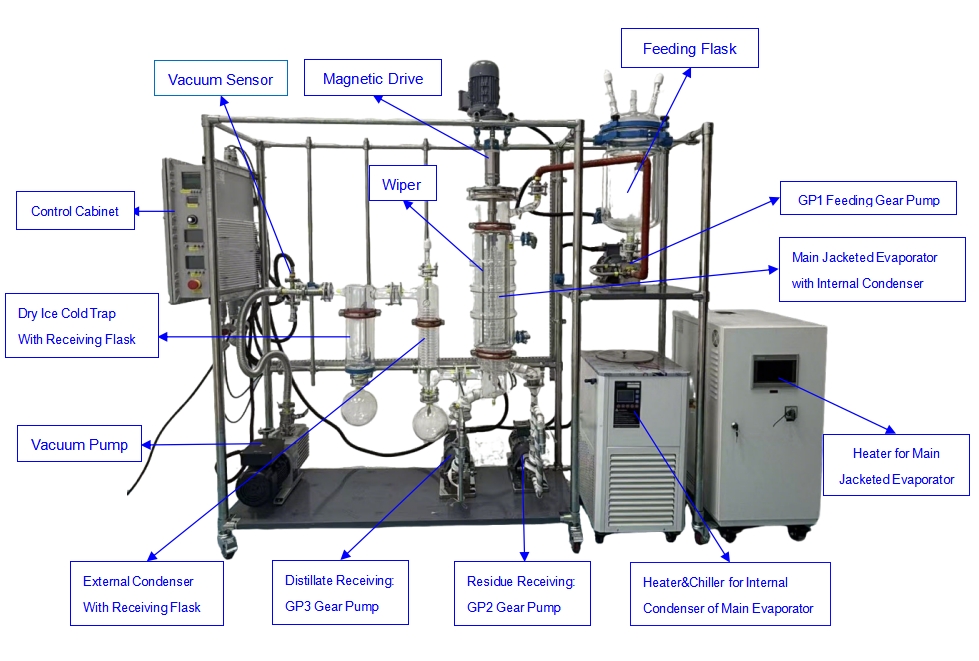
1. Evaporador de filme raspado
O coração do sistema, onde o material forma um filme fino uniforme na superfície aquecida. Lâminas raspadoras de PTFE são comumente utilizadas para melhorar a transferência de calor e evitar a acumulação de material.
2. Sistema de alto vácuo
Um alto vácuo estável reduz o ponto de ebulição dos compostos-alvo, permitindo sua separação em temperaturas suaves e protegendo materiais sensíveis ao calor.
3. Acionamento e bombas à prova de explosão
Motores à prova de explosão para agitadores e bombas de engrenagem
Componentes elétricos à prova de explosão
Bombas independentes para descarga da fração leve e da fração pesada
4. Tanque de Alimentação com Jaqueta
Garante o controle de temperatura e a manipulação segura de materiais alimentadores viscosos ou à base de solventes.
5. Linhas Aquecidas de Descarga
As fitas aquecedoras evitam a solidificação ou cristalização, assegurando operação contínua e suave.
Automação em Sistemas de Destilação Molecular
Moderno sistemas de destilação molecular de vidro adotar cada vez mais operação automatizada , o que oferece vantagens significativas:
Controle de processo estável e repetível
Redução da dependência do operador
Consistência do Produto Aprimorada
Alimentação e descarga contínuas
Sistemas automatizados normalmente controlam:
Taxa de alimentação
Velocidade do agitador
Temperatura de aquecimento
Nível de vácuo
Coleta de frações
Isso é particularmente importante para produção em escala-piloto e validação de processo .
Aplicações típicas da destilação molecular à prova de explosão
Uma unidade de destilação molecular em vidro à prova de explosão é amplamente utilizada em:
Óleos essenciais e extratos botânicos
(terpenos, canabinoides, compostos aromáticos)Intermediários farmacêuticos e princípios ativos (APIs)
(separação de alta pureza em condições compatíveis com as Boas Práticas de Fabricação)Nutracêuticos
(vitaminas, lipídios, óleos ômega)Aromas e fragrâncias
(componentes aromáticos sensíveis ao calor)Produtos químicos especiais e finos
Como Escolher o Sistema Adequado de Destilação Molecular
Ao selecionar um sistema de destilação molecular em vidro, considere os seguintes fatores:
Propriedades do material
Ponto de ebulição, viscosidade, teor de solvente, sensibilidade térmicaCapacidade de Processamento
Laboratório, escala piloto ou produção em pequena escalaRequisitos de Segurança
Necessidade de motores, controladores e bombas à prova de explosãoNível de automação
Sistemas manuais, semiautomáticos ou totalmente automatizadosEscalabilidade Futura
Capacidade de ampliação para diâmetros maiores do evaporador (por exemplo, 6 polegadas, 8 polegadas)
Conclusão
Um sistema de destilação molecular em vidro à prova de explosão combina separação suave, altos padrões de segurança e eficiência do processo . Para indústrias que trabalham com solventes voláteis e compostos de alto valor, oferece uma solução confiável para purificação, concentração e fracionamento — sem comprometer a qualidade do produto.
Com projeto adequado e automação, os sistemas de destilação molecular em vidro são ideais para Pesquisa e desenvolvimento (P&D), testes em escala piloto e produção nas fases iniciais , oferecendo um caminho claro para ampliação industrial.
Procurando uma Solução Personalizada de Destilação Molecular?
Nós fornecemos sistemas de destilação molecular em vidro sob medida , incluindo configurações à prova de explosão, opções de automação e integração completa de equipamentos auxiliares.
? Contate-Nos: [email protected]
Nossa equipe técnica está pronta para apoiar sua aplicação.
Sumário
- O Que É a Destilação Molecular em Vidro?
- Por Que o Design à Prova de Explosão é Fundamental
- Componentes Principais de um Ex-proof Sistema de destilação molecular de vidro
- Automação em Sistemas de Destilação Molecular
- Aplicações típicas da destilação molecular à prova de explosão
- Como Escolher o Sistema Adequado de Destilação Molecular
- Conclusão