 EN
EN

Stirring speed is one of the most critical operational parameters that directly influences how reactions progress inside a chemical reactor. The rate at which a chemical reactor mixes its contents determines not only reaction uniformity but also heat distribution, mass transfer efficiency, and final product quality. Understanding the relationship between stirring speed and chemical reactor performance is essential for process engineers, chemists, and production managers who need to optimize batch or continuous operations.
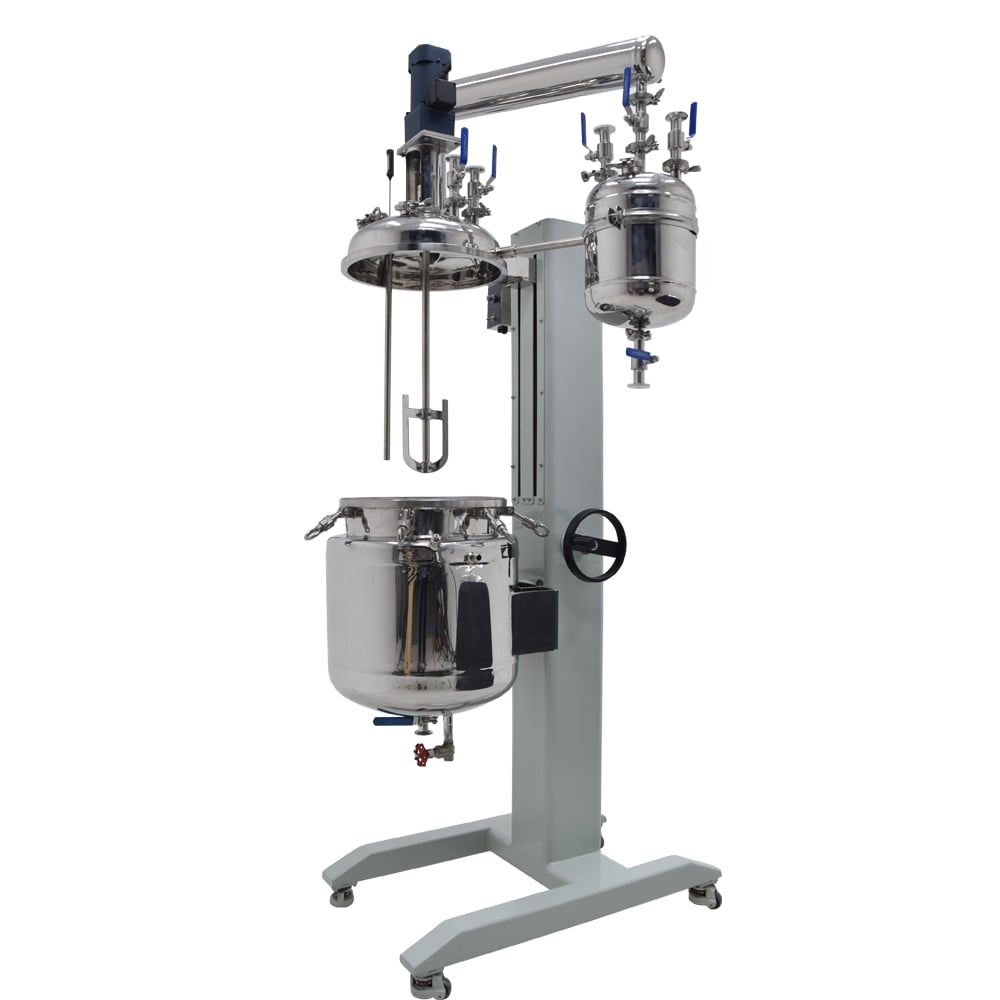
The performance of a chemical reactor depends heavily on how effectively the agitator moves material through the vessel. When stirring speed increases or decreases, the chemical reactor's internal environment changes dramatically, affecting reaction kinetics, temperature profiles, and product consistency. This article examines how stirring speed functions as a control lever within any chemical reactor system and what practical outcomes engineers should expect.
How Stirring Speed Influences Mixing in a Chemical Reactor
Homogeneity and Reaction Uniformity
Inside a chemical reactor, higher stirring speeds promote faster mixing and more uniform distribution of reactants. When a chemical reactor operates at insufficient agitation, concentration gradients persist throughout the vessel, meaning some regions experience higher reactant concentrations than others. This uneven distribution causes side reactions, incomplete conversions, and variable product quality. A well-designed chemical reactor achieves homogeneity through appropriate stirring speed, ensuring every molecule of reactant encounters similar conditions during the reaction window.
The optimal stirring speed for any chemical reactor depends on fluid viscosity, vessel geometry, impeller design, and desired reaction rate. In a chemical reactor handling low-viscosity fluids, moderate stirring speeds may achieve adequate mixing. However, when dealing with more viscous media, a chemical reactor requires higher speeds or specialized impeller types to prevent stagnant zones and dead areas where reactions proceed slowly or incompletely.
Mass Transfer Enhancement
Stirring speed directly affects mass transfer rates at the interface between different phases within a chemical reactor. For gas-liquid reactions, increased agitation in the chemical reactor expands interfacial area and reduces diffusion layer thickness, allowing gases to dissolve faster. For liquid-liquid reactions, a chemical reactor with higher stirring speeds breaks dispersed phases into smaller droplets, dramatically increasing the contact surface area available for reaction. This mass transfer enhancement in a chemical reactor can accelerate overall reaction rates by orders of magnitude compared to static or slowly stirred conditions.
Temperature Control and Heat Transfer in a Chemical Reactor
Heat Distribution Across the Vessel
Many chemical reactions generate or consume thermal energy, requiring careful temperature management. Inside a chemical reactor equipped with a jacketed vessel or internal cooling coils, stirring speed determines how effectively heat transfers between the reaction mass and the cooling or heating medium. When a chemical reactor operates at low stirring speeds, hot spots can develop near the reaction zone while cooler regions remain near the vessel walls. This temperature gradient reduces the efficiency of the chemical reactor and may cause local acceleration of unwanted side reactions or decomposition.
A chemical reactor running at higher stirring speeds promotes rapid distribution of heat throughout the vessel, maintaining a more uniform temperature profile. This homogeneous temperature environment inside the chemical reactor ensures consistent reaction kinetics across all fluid elements, leading to better predictability and reproducibility. For exothermic reactions, a chemical reactor requires sufficient agitation to prevent thermal runaway, as poor heat distribution can cause localized temperature spikes that damage products or trigger hazardous decomposition.
Energy Consumption and Optimization
While higher stirring speeds improve heat transfer and mixing within a chemical reactor, they also increase power consumption and mechanical stress on equipment. Every chemical reactor operator must balance improved performance against rising operational costs and potential equipment wear. Engineers optimize this tradeoff by selecting the minimum stirring speed that achieves the necessary mixing intensity and heat transfer rate without excessive energy use. For many industrial chemical reactor operations, this optimal speed lies in a well-defined range that prior testing or modeling can establish.
Reaction Kinetics and Product Quality Inside a Chemical Reactor
Reaction Rate and Conversion Efficiency
Stirring speed influences the apparent reaction rate within a chemical reactor because improved mixing accelerates encounters between reactant molecules. In a chemical reactor with inadequate agitation, the reaction may appear slower than laboratory kinetics predict, because mixing becomes the rate-limiting step rather than the chemical transformation itself. As stirring speed increases in the chemical reactor, reaction times shorten and overall conversion improves until the chemical reactor reaches a point where mixing no longer limits performance. Beyond this threshold, further stirring speed increases provide diminishing returns for the chemical reactor.
Different reactions have different sensitivity to stirring speed within a chemical reactor. Fast reactions and reactions between immiscible phases show strong dependence on stirring speed, whereas slow reactions or well-mixed single-phase systems may show minimal effect. A well-designed chemical reactor study or pilot trial identifies this relationship for each specific process, enabling operators to set the chemical reactor to the most economical speed.
Byproducts and Selectivity
Inadequate stirring in a chemical reactor can favor unwanted secondary reactions or decomposition pathways. When a chemical reactor lacks sufficient agitation, local concentration spikes of one reactant may trigger side reactions that would not occur under well-mixed conditions. Conversely, some reactions benefit from controlled concentration gradients that a chemical reactor can maintain by adjusting stirring speed. Achieving high selectivity often requires careful tuning of the stirring speed within a chemical reactor to balance reaction pathway preference against operational efficiency.
FAQ
What happens if stirring speed is too low in a chemical reactor?
Low stirring speed in a chemical reactor results in poor mixing, concentration gradients, uneven temperature distribution, and localized hot or cold spots. These conditions slow the overall reaction rate, increase conversion time, reduce product consistency, and may promote unwanted side reactions. A chemical reactor operating at insufficient speed may achieve significantly lower yields than expected from laboratory kinetics, making process scale-up unpredictable.
Can stirring speed be too high in a chemical reactor?
Yes, excessively high stirring speed in a chemical reactor wastes energy, increases equipment wear and maintenance costs, and may cause product degradation through mechanical shear or heat generation from friction. For shear-sensitive materials or certain polymerization reactions, a chemical reactor operating at very high speeds can break polymer chains or destabilize emulsions. Most industrial processes operate a chemical reactor at a carefully optimized speed that balances mixing efficiency against these practical constraints.
How do engineers determine the ideal stirring speed for their chemical reactor?
Engineers determine optimal stirring speed through pilot-scale testing, computational fluid dynamics modeling, and empirical guidelines for the chemical reactor type and process. They measure conversion, selectivity, temperature uniformity, and power consumption across a range of speeds, then select the speed that maximizes product quality and efficiency. Previous literature data for similar reactions often provides a starting point for a chemical reactor experiment or optimization campaign.